


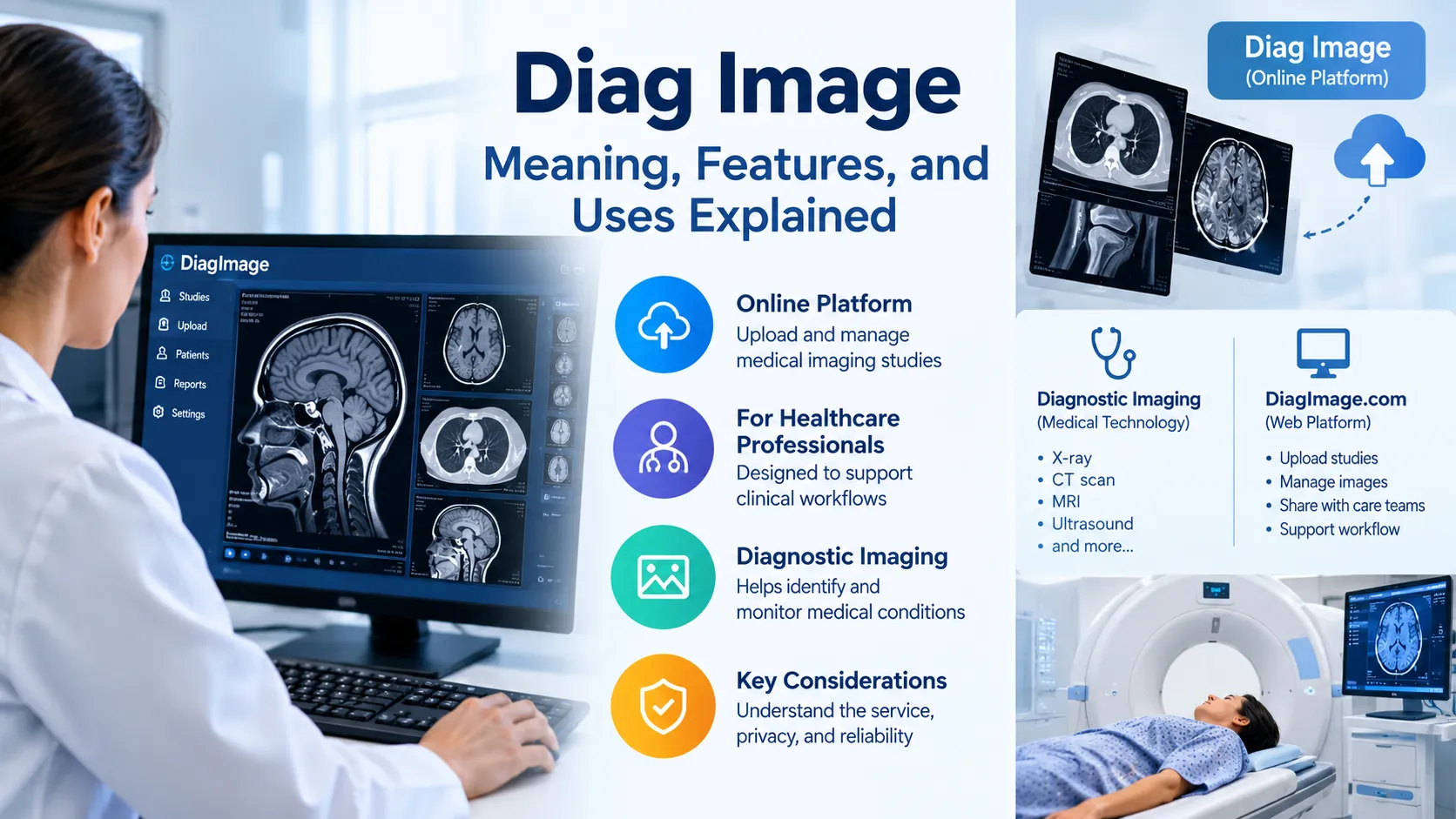
Diag Image is a term that can refer to diagnostic images used to identify medical conditions or, more specifically, to the online platform at DiagImage.com, which presents itself as a workspace for healthcare professionals to upload and manage medical imaging studies. The exact meaning depends on the context, and it is important to distinguish a website’s advertised services from established medical imaging technology.
Understanding Diag Image involves looking at its online platform, the role of diagnostic imaging in healthcare, how medical images are handled, and what patients and healthcare professionals should consider before using an unfamiliar service.

What Is Diag Image?
Diag Image has two possible interpretations. In medical contexts, it can be shorthand for a diagnostic image or diagnostic imaging. On the internet, it can also refer to a specific website or software service, so the surrounding context matters.
The medical meaning is well established. According to the US National Library of Medicine’s MedlinePlus resource, diagnostic imaging uses medical tests to produce pictures of internal body structures. Doctors use these images to investigate symptoms, identify injuries, monitor diseases, and plan treatment.
The term itself is not the name of a universally recognized medical scan. If you encounter “Diag Image” in a hospital portal, report, invoice, or website, check the surrounding information before assuming what it means.
Diag Image Website and Its Main Features
The website at DiagImage.com describes itself as a digital workspace for US healthcare professionals, radiology coordinators, and imaging researchers. Its homepage promotes tools for submitting medical imaging studies, coordinating reviews, and sharing information between clinical teams.
According to the website, its proposed capabilities include the following.
| Feature | What the website says it offers |
|---|---|
| Image uploads | A centralized place to submit imaging studies |
| Review workflows | Queues for organizing studies and coordinating specialist reviews |
| Annotations | Shared notes and information associated with imaging studies |
| Historical comparisons | Tools for comparing earlier and newer scans |
| Audit records | Records intended to help track access and activity |
| Research support | Imaging metadata organization and workflows for research teams |
| Notifications | Alerts about changes in study status |
| Cloud administration | Usage, storage, and system administration tools |
These are descriptions taken from the site’s own homepage, not independently verified performance results. The available public information does not establish how extensively the platform is used by healthcare organizations or independently demonstrate its claimed operational benefits.
Who Is Diag Image Designed For?
The website identifies several intended user groups.
- Radiologists who interpret medical images and prepare diagnostic reports.
- Radiology coordinators and technicians who help manage imaging workflows.
- Clinicians who request or review imaging studies.
- Medical researchers who organize imaging data for research projects.
- Healthcare administrators responsible for access controls, records, and operational processes.
Whether the service is appropriate for any of these groups depends on its actual functionality, integrations, contractual terms, and security arrangements.
Also Read: LogiFetch Explained: Features, Safety, and Windows Support
How Diagnostic Imaging Works
Diagnostic imaging creates pictures of the body’s internal structures using different technologies. Each method produces different kinds of information, and healthcare professionals select an appropriate examination based on the patient’s symptoms and clinical needs.
The main types include the following.
1. X-rays
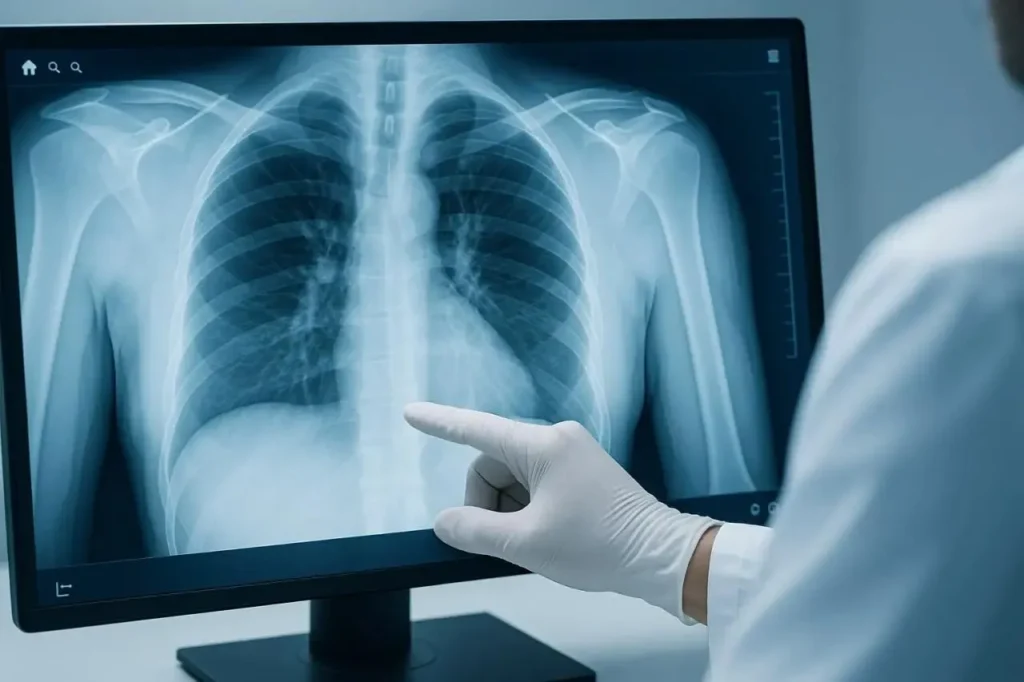
X-rays use ionizing radiation to create images, particularly of bones and certain chest structures. They are commonly used to investigate fractures and some lung conditions.
2. CT scans
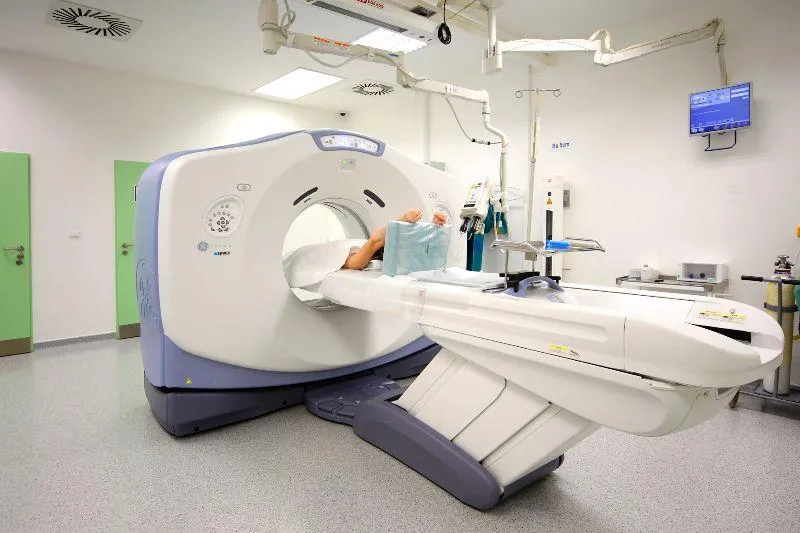
Computed tomography combines X-ray measurements to produce detailed cross-sectional images. Clinicians may use CT to examine internal injuries, organs, blood vessels, and other structures.
3. MRI scans
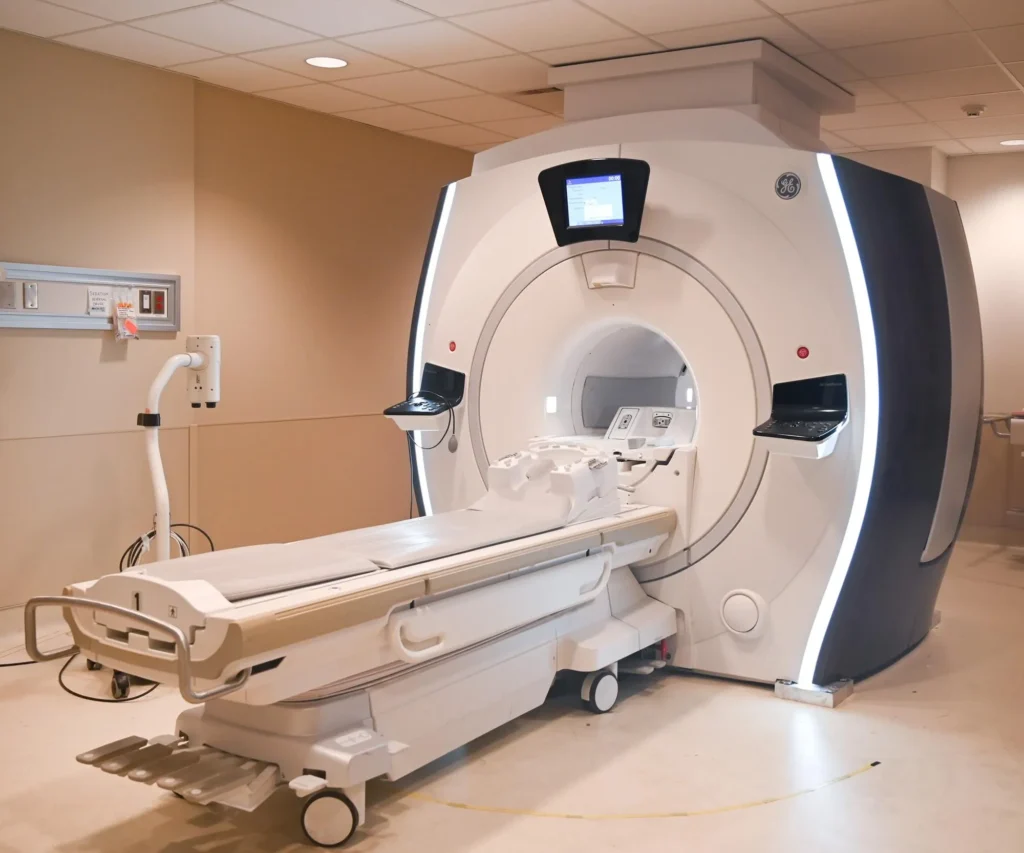
Magnetic resonance imaging uses strong magnetic fields and radio waves rather than ionizing radiation to produce detailed images. It is particularly useful for examining many soft tissues, including the brain, spinal cord, joints, and muscles.
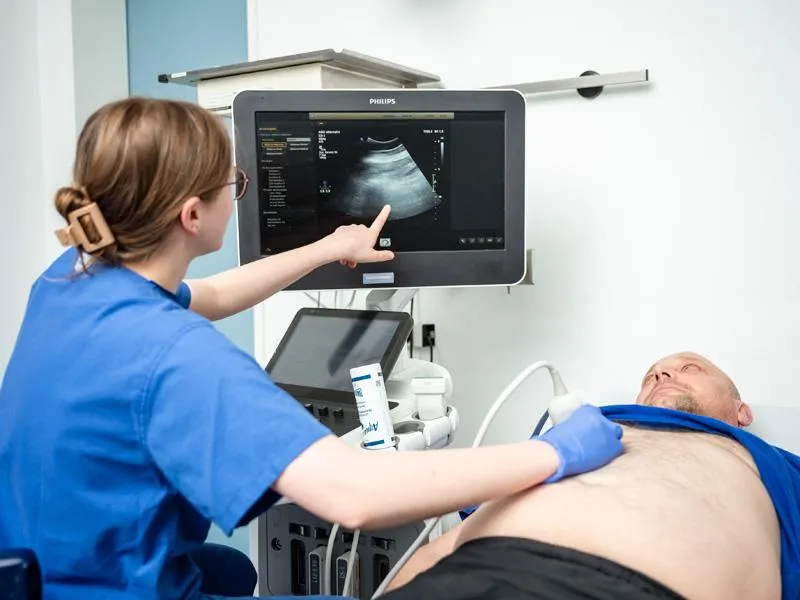
4. Ultrasound
Ultrasound uses high-frequency sound waves to create images. It is widely used in pregnancy care and to examine organs, blood flow, and other structures.
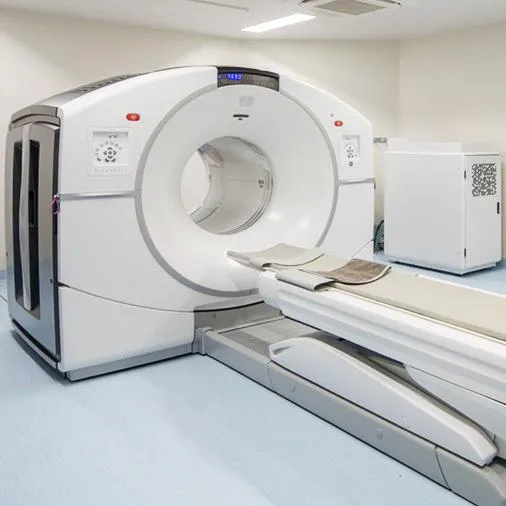
5. Nuclear medicine imaging
These examinations use radioactive tracers to show aspects of organ function or biological activity. PET and SPECT are examples used in selected cancer, neurological, and other clinical evaluations.
The important distinction is that these methods are not interchangeable. A clinician selects the examination that best addresses the medical question, taking potential risks and the patient’s circumstances into account.
How a Digital Imaging Platform Fits Into Healthcare
A digital imaging platform can support the process between acquiring a scan and interpreting its findings. It may help organize files, attach clinical information, coordinate reviews, and make studies available to authorized professionals.
For example, imagine a patient has a CT scan at a regional hospital and needs a specialist’s opinion elsewhere. A suitable platform could help the hospital transfer the study and relevant clinical details securely, allowing the specialist to review the images without relying on physical media.
The general workflow may look like this:
1. Medical imaging examination
An imaging device creates the study.
2. Secure image transfer
The study is transferred to an authorized system.
3. Review and collaboration
Qualified professionals examine the images and related information.
4. Clinical interpretation
The findings are documented and communicated to the treating clinician.
This is a general example of a digital imaging workflow, not a verified technical specification of Diag Image. The website describes similar capabilities, but its public homepage does not provide enough independently verified technical detail to confirm every implementation step.
Benefits and Limitations of Diag Image
A well-designed medical imaging workspace can make it easier for healthcare teams to coordinate studies and manage clinical information. However, the benefits of an individual platform depend on its implementation and real-world performance.
Potential Benefits
- Centralized organization: Imaging studies and associated information may be easier to locate.
- Remote collaboration: Authorized specialists can potentially review studies from different locations.
- Workflow coordination: Shared queues and notifications may reduce communication delays.
- Research support: Consistent metadata and organized records can help researchers manage imaging datasets.
- Traceability: Appropriate audit logs can help organizations review access and system activity.
These are potential benefits of the capabilities described by the website, not independently confirmed outcomes for Diag Image.
Important Limitations
There are several questions prospective users should resolve before relying on the platform.
First, the publicly available information reviewed for this article does not establish its pricing, ownership, independent security certifications, customer base, or long-term reliability. It also does not provide enough evidence to assess its integrations with hospital information systems, picture archiving and communication systems (PACS), or electronic health records.
Second, uploading a scan is not the same as interpreting it. A file-management service should not be confused with a validated diagnostic system, and the availability of annotations or automated quality checks does not establish that the service can independently diagnose a medical condition.
Finally, healthcare teams need to confirm that their existing clinical workflows, professional responsibilities, and regulatory obligations are adequately supported before adopting any new platform.
Is Diag Image Safe to Use?
Safety depends on which meaning of Diag Image you have in mind. Diagnostic imaging is an established part of healthcare, but a particular online platform must be assessed separately for privacy, security, reliability, and clinical suitability.
DiagImage.com describes its service as designed around US healthcare privacy requirements. However, a website’s own statement does not independently establish that it meets every applicable legal or technical requirement.
The US Department of Health and Human Services explains that a cloud service provider handling electronic protected health information on behalf of a covered entity or business associate generally needs an appropriate HIPAA-compliant business associate agreement and must meet applicable requirements. HHS also emphasizes risk assessment and safeguards for electronic health information.
Before using Diag Image for real patient information, healthcare organizations should verify:
- Whether the provider offers a suitable business associate agreement where required.
- How data is encrypted during transfer and storage.
- Whether access permissions, authentication, and audit logging are available.
- Where patient information is stored and which parties can access it.
- How long files are retained and how they can be exported or securely deleted.
- What procedures apply to security incidents, backups, and service interruptions.
- Whether the service supports the organization’s clinical, technical, and legal requirements.
Patients should avoid uploading identifiable medical images to an unfamiliar service until they understand how the information will be handled. A scan may contain names, dates, medical record numbers, or embedded metadata even when the visible image appears anonymous.
Diag Image vs. Diagnostic Imaging
The distinction between the term and the medical process is important.
| Aspect | Diag Image website | Diagnostic imaging |
|---|---|---|
| Meaning | A particular online service | A medical field and set of examination methods |
| Main purpose | Advertised as organizing imaging workflows | Producing images to support clinical evaluation |
| Examples | Uploads, review queues, collaboration | X-rays, CT, MRI, ultrasound, PET |
| Clinical interpretation | Depends on the actual service and professional workflow | Performed by qualified healthcare professionals as appropriate |
| Verification | Requires assessment of the individual provider | Established medical practice with recognized methods |
A healthcare professional can use diagnostic imaging without using DiagImage.com. Likewise, the appearance of the words “diag image” in a medical document does not automatically mean that the document relates to this website.
How to Decide Whether to Use Diag Image
The right decision depends on your purpose.
If you are a patient trying to understand a scan, start with the examination name and the radiologist’s report. Ask your healthcare provider to explain the findings and their significance rather than relying on an unfamiliar online service.
If you work in healthcare, evaluate Diag Image as a potential vendor. Request technical documentation, security policies, contract terms, evidence supporting its compliance claims, and a demonstration using non-sensitive sample data. Confirm that the platform works with your existing systems before moving actual patient records.
If you are researching the website itself, distinguish its published claims from independently verified facts. Its homepage communicates a clear focus on imaging uploads and collaboration, but the publicly available evidence reviewed here is insufficient to establish its ownership, commercial track record, pricing, or independently validated security status.
Frequently Asked Questions
1. What does Diag Image mean?
Diag Image can refer to a diagnostic image or diagnostic imaging, which involves creating pictures of the body’s internal structures for medical evaluation. It can also refer to the website DiagImage.com, which advertises an online workspace for managing medical imaging studies.
2. What is DiagImage.com used for?
According to its homepage, DiagImage.com is designed to help healthcare professionals upload imaging studies, coordinate reviews, manage annotations, compare historical scans, and organize research workflows. These are provider-described capabilities, and their implementation has not been independently verified here.
3. Is Diag Image a medical scan?
No. The phrase itself does not identify a specific, standardized scan. Medical imaging examinations include X-rays, CT scans, MRI scans, ultrasound, and nuclear medicine studies.
4. Can Diag Image diagnose medical conditions?
The publicly reviewed website describes imaging management and collaboration features, but the available evidence does not establish that it is a validated autonomous diagnostic tool. Medical images should be interpreted within the appropriate clinical context by qualified professionals.
5. Is DiagImage.com HIPAA compliant?
The website states that its service is designed for US healthcare environments and emphasizes HIPAA-related considerations. However, those statements alone do not independently verify compliance. Healthcare organizations should review the provider’s agreements, safeguards, and documentation before transferring protected health information.
6. Should patients upload their medical scans to Diag Image?
Patients should first confirm that the service is intended for their use and understand its privacy policy, data handling practices, and access controls. If the service is unfamiliar or its safeguards cannot be verified, ask the healthcare provider who ordered the scan to recommend a suitable way to share it.
Also Read: Active System Console: Features, Uses, and Safety Guide
