


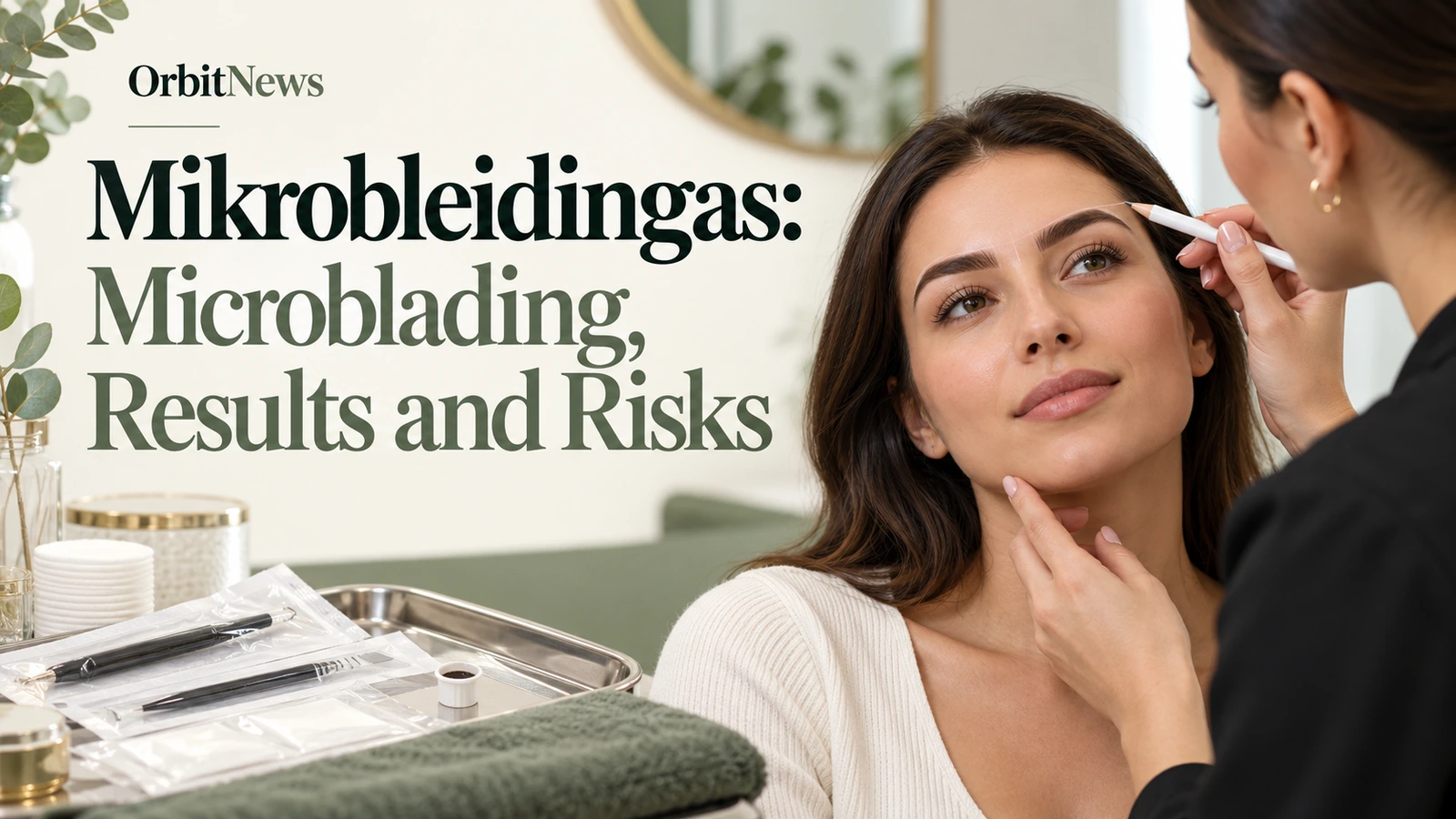
Mikrobleidingas is the Lithuanian term commonly used for eyebrow microblading, a cosmetic technique that places pigment into the skin to create hair-like strokes. It can change the appearance of sparse or uneven brows, but it is a form of cosmetic tattooing rather than a treatment that makes new eyebrow hair grow.
A good decision involves more than choosing a shape from a photograph. The practitioner, pigment, hygiene, healed appearance and your individual circumstances all matter. This guide explains the term, the questions worth asking and why realistic expectations are essential before a procedure involving the skin.

What Mikrobleidingas Means
Lithuanian service listings such as Fresha’s mikrobleidingas category use the term for eyebrow microblading. In English-language searches, microblading is the more familiar wording. The spelling difference is linguistic; it does not by itself identify a special pigment or a distinct guaranteed result.
The technique aims to imitate individual brow hairs through fine pigment strokes. The desired appearance should be discussed in relation to your existing brows and preferences. A photograph of another person can communicate an idea, but it cannot establish how a particular procedure will heal on your skin.
Microblading Is Different From Everyday Brow Makeup
A pencil or powder sits on the surface and can be removed as part of a normal makeup routine. Microblading introduces pigment into the skin. That makes the decision more consequential than trying a new temporary brow product.
Terms such as semi-permanent can suggest that an unwanted result will simply disappear on a predictable date. Do not rely on that interpretation. Ask what fading, residual pigment and future maintenance may look like, and discuss the limits of changing the result before agreeing to treatment.
Understand the Risks Before Choosing a Practitioner
The FDA’s permanent makeup fact sheet identifies risks including infection, allergic reactions and difficult removal. It also notes that contaminated ink can cause infection even when equipment hygiene is otherwise observed. These points concern cosmetic tattooing broadly and should not be read as a prediction for every individual procedure.
The same source explains that unwanted pigment can be hard to remove and that complete removal without scarring may not be possible. A promise of easy reversal deserves careful questioning. US regulatory information should not be presented as a statement of the rules governing every other country.
Ask About Training, Hygiene and Records
The American Academy of Dermatology’s guidance on permanent makeup encourages considering practitioner training and hygiene, discussing concerns with a dermatologist and retaining information about the pigment used. Ask how the practitioner records the manufacturer and batch or lot details for your treatment.
Request a clear explanation of the process and written aftercare information. An attractive portfolio is useful for discussing style, but it does not answer every question about professional competence or infection control. Check the requirements that apply where the service is being provided.
| Consultation topic | Question to ask |
|---|---|
| Design | Can we review the proposed shape before proceeding? |
| Experience | Can I see examples of healed work relevant to my goals? |
| Pigment | Will its manufacturer and batch details be recorded? |
| Hygiene | How are single-use items and contamination risks managed? |
| Aftercare | What written guidance and contact route will I receive? |
| Follow-up | What is included and what would cost extra? |
Use Healed Examples to Discuss Expectations
Immediate photographs show only one moment in the process. Ask the practitioner to explain the difference between a freshly completed result and a healed result, and whether the images provided show which stage they represent.
Look for consistency in the information accompanying the portfolio rather than judging only a dramatic before-and-after contrast. Lighting, makeup and image processing can affect appearance. A useful consultation should make room for uncertainty and individual variation rather than promise an exact duplicate of someone else’s brows.
Discuss Personal Circumstances Before Treatment
Tell the practitioner about relevant skin concerns, allergies, medications and ongoing medical treatment during the consultation. If suitability is uncertain, seek advice from an appropriately qualified clinician before proceeding. Do not change prescribed treatment on the basis of a beauty appointment.
The purpose is to assess your situation, not to apply an online checklist as a diagnosis. A service provider should be able to explain the limits of their role and when medical input is needed. Pressure to book immediately should not replace a proper discussion of your questions.
A Specialist NHS Example Has a Specific Context
In July 2024, the Royal Free London NHS announcement described a specialist microblading service for cancer patients. It illustrates a carefully defined clinical context in which eyebrow appearance can matter to people experiencing treatment-related hair loss.
That announcement is not evidence that every commercial procedure is suitable during cancer treatment or that the service is available to everyone. Anyone receiving treatment should discuss timing and suitability with their own care team and follow the actual service’s referral and eligibility process.
Aftercare and Follow-Up Need Clear Instructions
Ask for written instructions specific to the procedure and a clear route for reporting concerns. Do not combine conflicting advice from unrelated social-media posts or apply products simply because they were recommended to someone else.
If you think you are having an infection, allergic reaction or other concerning change, seek medical assessment rather than relying solely on a cosmetic correction appointment. This article does not prescribe a universal healing timetable, aftercare product or treatment for a complication.
Compare the Full Service, Including Future Decisions
Ask what the quoted appointment includes, whether a follow-up is included and how future maintenance is charged. No universal price or lifespan applies to every practitioner and every person. A cheap headline figure does not describe the full service.
Take time to consider whether you want a lasting change or would prefer temporary brow styling. The best consultation helps you understand both the intended appearance and the limits of the procedure. An informed choice includes the option to postpone or decline it.
Frequently Asked Questions
Is mikrobleidingas the same search topic as microblading?
Yes. It is a Lithuanian term commonly used for eyebrow microblading.
Does it grow new eyebrow hair?
No. It creates the appearance of hair-like strokes using pigment.
Is the result risk-free?
No. Cosmetic tattooing can involve infection, allergic reactions and removal difficulties.
How long will it last?
Do not assume a fixed duration. Discuss fading, residual pigment and maintenance with the practitioner.
What should I ask for before treatment?
A consultation, clear risk discussion, practitioner information, pigment records and written aftercare guidance.
Related Reading on OrbitNews
Explore OrbitNews fashion and beauty coverage and our guide to tracing the original source of online advice.
