


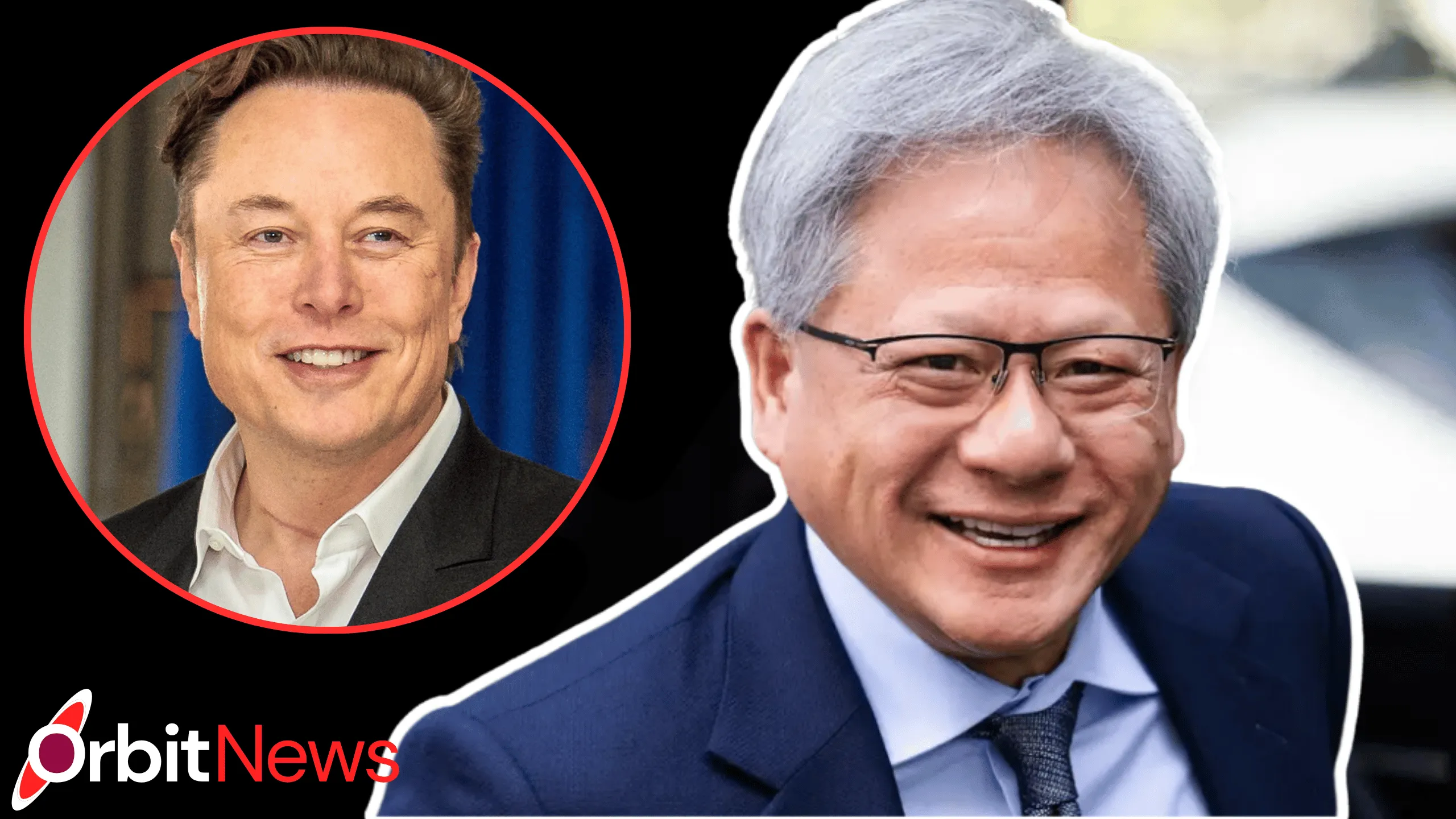
Jensen Huang and Elon Musk are not co-founders and do not run a joint company, but their business relationship has become increasingly important in the artificial intelligence race. Musk’s AI ventures have relied heavily on NVIDIA computing hardware, NVIDIA has invested in xAI, and Huang has repeatedly praised Musk’s ability to build massive AI infrastructure at unusual speed.
The connection between Jensen Huang and Elon Musk stretches back at least a decade. It began publicly with NVIDIA supplying an early AI supercomputer to OpenAI while Musk was one of the organization’s co-chairs, and it later expanded through Tesla, xAI, the Colossus supercomputer project and SpaceXAI. By 2026, the relationship involves hardware supply, AI infrastructure, investment and continued technical collaboration.
Who Are Jensen Huang and Elon Musk?
Jensen Huang is the co-founder, president and CEO of NVIDIA. He helped establish NVIDIA in 1993, and the company evolved from a graphics-chip maker into one of the central suppliers of processors, networking systems and software used to build modern artificial intelligence systems.
Elon Musk leads several technology businesses, including Tesla and SpaceX. He was also a co-chair of OpenAI when the organization was publicly launched in December 2015. OpenAI’s original announcement identified Sam Altman and Musk as its two co-chairs.
Their companies operate in different parts of the technology stack. Huang’s NVIDIA primarily supplies the computing infrastructure on which AI systems are trained and deployed, while Musk’s companies build products using AI, including autonomous vehicles, robots and the Grok family of models.
What Is the Connection Between Jensen Huang and Elon Musk?
The simplest answer is that NVIDIA has repeatedly supplied the computing foundation for major AI projects associated with Musk.
That relationship has taken several forms:
| Period | Jensen Huang / NVIDIA | Elon Musk venture | Significance |
|---|---|---|---|
| 2016 | NVIDIA delivered its first DGX-1 system | OpenAI | Early direct connection between Huang and Musk |
| 2024 | NVIDIA H100 GPUs and Spectrum-X networking | xAI Colossus | Foundation of xAI’s massive training cluster |
| 2024 | NVIDIA became a strategic xAI investor | xAI | Relationship expanded beyond hardware sales |
| 2025 | Huang personally delivered DGX Spark | SpaceX / Musk | Symbolic renewal of their decade-long AI connection |
| 2026 | NVIDIA participated again in xAI financing | xAI | Deeper financial relationship |
| 2026 | NVIDIA Vera system evaluated for AI workloads | SpaceXAI | Collaboration continued after SpaceX acquired xAI |
The relationship is therefore better described as a supplier, investor and technology-partner relationship than a formal partnership between Huang and Musk personally.
The Relationship Started With OpenAI in 2016
One of the earliest important moments came in August 2016.
NVIDIA CEO Jensen Huang personally delivered the company’s first DGX-1 AI supercomputer to OpenAI in San Francisco. NVIDIA’s archive described the recipient as OpenAI and “OpenAI sponsor Elon Musk.”
This mattered because DGX-1 represented NVIDIA’s attempt to package extremely powerful GPU computing specifically for deep learning. NVIDIA had introduced DGX-1 earlier that year as a purpose-built deep-learning supercomputer containing eight Tesla P100 GPUs.
Musk was directly involved with OpenAI at the time. The organization’s December 2015 launch announcement listed him and Sam Altman as co-chairs. Musk eventually left OpenAI’s board in February 2018.
Years later, Huang repeatedly returned to that 2016 delivery when discussing his relationship with Musk and the growth of AI computing.
xAI Made NVIDIA Much More Important to Musk
The connection became far more commercially significant after Musk founded xAI in 2023.
Training frontier AI models requires enormous amounts of computational power. Instead of building only a modest research cluster, xAI embarked on one of the most aggressive GPU deployments in the industry.
Its centerpiece became Colossus, the Memphis-based supercomputer used to train Grok models.
NVIDIA reported in October 2024 that the initial Colossus installation included 100,000 NVIDIA Hopper GPUs together with NVIDIA Spectrum-X Ethernet networking. According to NVIDIA, construction of the supporting facility and computer took 122 days, while only 19 days passed between the first rack arriving and the beginning of model training.
Musk publicly credited the xAI team, NVIDIA and other suppliers for the project.
Why Jensen Huang Praised Elon Musk’s Colossus Build
The speed of the Colossus deployment attracted particular attention from Huang.
In a 2024 discussion, Huang described xAI’s execution as extraordinary, arguing that deploying and coordinating such a large collection of GPUs, networking equipment, cooling infrastructure and software would normally be a much longer engineering project. Reporting on the interview quoted Huang calling the achievement “superhuman.”
His praise was not simply about installing chips.
A cluster containing tens or hundreds of thousands of GPUs requires several systems to work together:
- electrical power and backup infrastructure
- high-speed networking
- cooling
- storage
- server racks
- training software
- scheduling and orchestration
- synchronization between thousands of processors
A problem in one part of that stack can reduce the useful performance of the entire cluster.
NVIDIA said Colossus’s Spectrum-X network maintained high data throughput during large-scale Grok training, illustrating why networking became nearly as important as the GPUs themselves.
How Large Did xAI’s NVIDIA Infrastructure Become?
The project quickly expanded beyond its initial 100,000 GPUs.
xAI later said Colossus had been doubled to approximately 200,000 GPUs. Its official Colossus page described a system built initially in 122 days and expanded to the 200,000-GPU level within another 92 days.
By May 2026, SpaceXAI said Colossus 1 contained more than 220,000 NVIDIA GPUs, including H100, H200 and GB200 accelerators.
The company’s January 2026 financing announcement made an even broader claim: xAI said Colossus I and II together ended 2025 with more than one million H100-GPU equivalents. “H100 equivalents” is a compute-normalized measurement rather than a statement that one million physical H100 cards were installed, so the two figures should not be treated as contradictory physical GPU counts.
NVIDIA Became an Investor in Musk’s xAI
The relationship eventually moved beyond buying NVIDIA products.
When xAI announced a $6 billion Series C financing round in December 2024, it identified NVIDIA and AMD as strategic investors supporting the company’s infrastructure expansion.
NVIDIA participated again when xAI announced its $20 billion Series E round in January 2026. xAI again described NVIDIA as a strategic investor helping support the expansion of its GPU infrastructure.
The official announcements did not disclose exactly how much of either round came from NVIDIA, so claims assigning a precise NVIDIA investment amount should be treated cautiously unless supported by separate company or regulatory disclosures.
This investment relationship gives NVIDIA exposure not only to hardware sales generated by xAI but also to the growth of the AI company itself.
Also Read: Carlos Slim and Elon Musk
The SpaceX Acquisition Changed the Corporate Structure
Another major change arrived on February 2, 2026.
SpaceX announced that it had acquired xAI. xAI’s own announcement confirmed the transaction, while SpaceX described the deal as an effort to combine AI, rockets, satellite communications and other technologies under a more vertically integrated organization.
SpaceX’s subsequent disclosures describe xAI as the foundation of its AI segment.
As a result, references to Musk’s AI organization increasingly use the name SpaceXAI.
That corporate change did not end the relationship with NVIDIA.
NVIDIA and SpaceXAI Were Still Working Together in 2026
Evidence from NVIDIA in August 2026 shows that the technical relationship continued after the SpaceX-xAI combination.
NVIDIA said its team brought its new Vera CPU system to SpaceXAI’s Palo Alto offices. Musk was shown the system and asked engineers about its cores, memory layout and cooling architecture.
According to NVIDIA, SpaceXAI was evaluating Vera for reinforcement-learning workloads and agent-based simulation pipelines.
That is significant because it shows Musk’s organization evaluating newer parts of NVIDIA’s platform rather than limiting the relationship to the H100 generation used to create the original Colossus cluster.
Jensen Huang Personally Delivered Another NVIDIA Computer to Musk
The two executives also recreated their 2016 interaction in October 2025.
Huang traveled to Starbase, Texas, and personally delivered one of the first NVIDIA DGX Spark computers to Musk at SpaceX. NVIDIA described the event as a deliberate callback to Huang’s DGX-1 delivery to OpenAI nine years earlier.
DGX Spark uses NVIDIA’s Grace Blackwell technology and provides up to one petaflop of AI performance with 128 GB of unified memory in a desktop-scale system.
The delivery was largely symbolic compared with the vast number of GPUs required by Colossus, but it demonstrated the unusual level of public contact between the two CEOs.
Tesla Is Also a Major Part of the NVIDIA Connection
Musk’s dependence on GPU computing is not limited to xAI.
Tesla has required very large training systems for its driver-assistance software, autonomy research and humanoid-robot development.
In June 2024, Musk said Tesla was likely to spend approximately $3 billion to $4 billion on NVIDIA hardware during that year. He said NVIDIA hardware represented roughly two-thirds of the cost involved in Tesla’s AI training superclusters.
Tesla subsequently reported that its AI training compute increased by more than 400% during 2024.
By the first half of 2026, Tesla said it had more than doubled its on-site Texas compute capacity in megawatt terms. Its Cortex 1 and Cortex 2 infrastructure supports neural-network development for vehicles and the Optimus humanoid robot.
But Tesla Is Trying to Build More of Its Own AI Chips
The NVIDIA relationship should not be interpreted as permanent dependence.
Tesla is simultaneously developing its own semiconductor technology.
Its January 2026 update said development of its internally designed AI5 and AI6 inference processors was progressing, with production planned for 2027 and 2028 respectively.
Tesla also signed a major semiconductor-manufacturing agreement with Samsung. Reuters reported in July 2025 that the approximately $16.5 billion agreement was expected to include production of Tesla’s future AI6 chip at Samsung’s Texas facility.
By July 2026, Tesla said construction and equipment procurement were underway for its own semiconductor fabrication project in Austin.
This creates an interesting dynamic. Musk’s companies remain major consumers of NVIDIA infrastructure while simultaneously trying to develop more vertically integrated computing systems of their own.
Does Tesla’s Custom Silicon Make Musk a NVIDIA Competitor?
Potentially in some areas, but the overlap should not be exaggerated.
NVIDIA sells general AI computing platforms that can train and run a wide variety of models. Tesla’s AI chips are designed primarily around Tesla’s own autonomy, robotics and related workloads.
Tesla could reduce its need for NVIDIA hardware if its custom systems become sufficiently capable, particularly for inference. Yet the scale and complexity of training frontier models can still make external accelerators valuable.
This means Musk can simultaneously be a major NVIDIA customer and develop technology that reduces dependence on NVIDIA.
That arrangement is common in the AI industry. Several of NVIDIA’s biggest customers also design their own processors.
The 2024 GPU Allocation Controversy
The extraordinary demand for NVIDIA hardware also produced tension between Musk’s own companies.
Reuters reported in June 2024, citing a CNBC report based on NVIDIA communications, that Musk had asked NVIDIA to redirect some AI processors originally designated for Tesla toward X and xAI. The report said approximately 12,000 H100 GPUs were involved and that Tesla deliveries would consequently be delayed.
The episode demonstrated how scarce high-end AI processors had become and how strongly Musk was prioritizing xAI’s rapid infrastructure buildout at the time.
It should not, however, be interpreted as evidence of a dispute between Musk and Huang personally. The reporting concerned allocation of NVIDIA equipment among Musk-controlled companies.
Are Jensen Huang and Elon Musk Friends?
Public evidence supports a friendly professional relationship, but describing them as close personal friends would go beyond what can be firmly established.
They have met repeatedly, spoken positively about each other’s work and participated in public and private technology discussions.
Huang has been especially complimentary about Musk’s engineering ability. A Tesla filing quoting a September 2025 BG2 podcast appearance records Huang comparing Musk to the “ultimate GPU,” referring to his ability to process many complicated problems simultaneously.
Their repeated direct interactions suggest familiarity and mutual professional respect. The available evidence is much stronger for a business and technology relationship than for claims about their private friendship.
Do Huang and Musk Agree About the Future of AI?
They share a belief that AI will become enormously important, but their views are not identical.
Both have advocated very large investments in computing infrastructure and have spoken about AI becoming central to transportation, robotics, science and other industries.
Their positions on AI risk and the appropriate speed of development have diverged at times. In September 2026, Reuters reported that Musk supported calls from several AI leaders for slowing some frontier development amid safety concerns, while Huang argued against slowing overall AI progress.
That difference is another reason the relationship should not be portrayed as a unified alliance. They cooperate commercially while maintaining their own views about technology strategy and policy.
Why the Jensen Huang and Elon Musk Relationship Matters
Their connection illustrates how the current AI industry is structured.
Companies such as xAI can design models and applications, but they still require enormous physical infrastructure. That infrastructure depends on GPUs, CPUs, memory, networking, power, cooling and data centers.
NVIDIA occupies much of that underlying computing layer.
Musk, meanwhile, has pursued some of the industry’s largest AI infrastructure projects. His companies therefore represent both an important NVIDIA customer base and an example of how rapidly demand for AI computing is expanding.
The relationship also reveals a possible long-term tension: Musk wants more control over his own semiconductor supply, while NVIDIA benefits from remaining the preferred computing platform for companies such as Tesla and SpaceXAI.
For now, those two goals continue to coexist.
FAQ
Are Jensen Huang and Elon Musk business partners?
Not in the traditional sense of jointly owning or operating a company. NVIDIA supplies technology to Musk’s businesses and has invested in xAI, creating a substantial commercial and strategic relationship.
Did Jensen Huang give Elon Musk NVIDIA’s first AI supercomputer?
Huang personally delivered NVIDIA’s first DGX-1 to OpenAI in 2016 while Musk was an OpenAI co-chair. NVIDIA later described Musk as being among the team that received the system.
Does Elon Musk’s xAI use NVIDIA GPUs?
Yes. Colossus was originally built around 100,000 NVIDIA Hopper GPUs and subsequently expanded. SpaceXAI said in May 2026 that Colossus 1 contained more than 220,000 NVIDIA GPUs from the H100, H200 and GB200 families.
Has NVIDIA invested in Elon Musk’s xAI?
Yes. xAI identified NVIDIA as a strategic investor in both its December 2024 Series C round and its January 2026 Series E financing. The amount invested specifically by NVIDIA was not disclosed in those announcements.
Does Tesla still need NVIDIA if it develops its own chips?
Tesla is developing custom AI5 and AI6 processors and its own semiconductor capabilities, which could reduce reliance on outside chips for some workloads. However, Tesla has also operated large AI training clusters, and historically it has purchased substantial amounts of NVIDIA computing hardware.
Are Jensen Huang and Elon Musk competitors?
Their main businesses are not direct competitors. NVIDIA primarily develops computing platforms, while Musk’s companies build vehicles, robots, rockets, communications systems and AI products. Competition could increase around custom AI chips and infrastructure as Musk’s companies become more vertically integrated.
Also Read: Alberto Baillères and Elon Musk
