


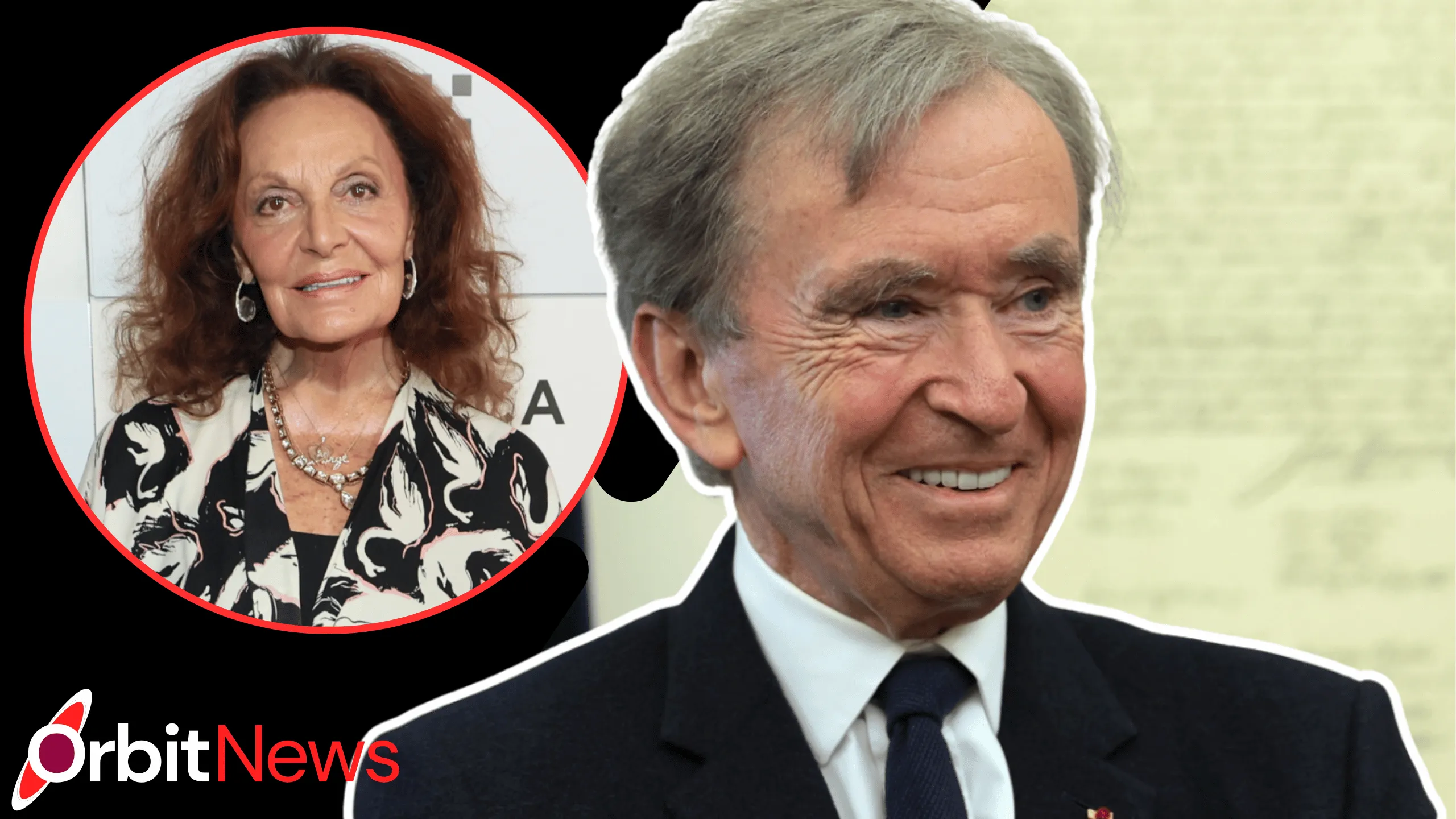
Bernard Arnault and Diane von Furstenberg are two of the most influential figures in modern luxury fashion, but they are not related, married, or known to be business partners. Their connection is primarily through the international fashion industry, where their careers, professional circles, major events, and luxury networks have crossed repeatedly over several decades.
As of September 2026, Arnault remains Chairman and CEO of LVMH, while von Furstenberg remains closely associated with the independent DVF fashion house she founded. There is no credible evidence that LVMH owns Diane von Furstenberg, that Arnault controls the DVF company, or that the two have entered a major commercial partnership.
Who Are Bernard Arnault and Diane von Furstenberg?
Bernard Arnault and Diane von Furstenberg reached the highest levels of fashion through very different business models.
Arnault built and expanded a multinational luxury conglomerate containing dozens of prestigious houses. Von Furstenberg built an internationally recognized designer label around her own name, creative identity and one of fashion’s most enduring garments, the wrap dress.
| Detail | Bernard Arnault | Diane von Furstenberg |
|---|---|---|
| Primary role | Chairman and CEO of LVMH | Fashion designer and founder of DVF |
| Main organization | LVMH Moët Hennessy Louis Vuitton | Diane von Furstenberg, or DVF |
| Business model | Multi-brand global luxury group | Founder-led designer fashion brand |
| Major fashion association | Dior, Louis Vuitton, Fendi, Givenchy and other LVMH houses | DVF and the iconic wrap dress |
| Industry leadership | LVMH corporate leadership | Former CFDA president and chairwoman |
| Direct business relationship with the other | None publicly established | None publicly established |
Bernard Arnault’s Role in Global Luxury
Bernard Arnault was born in Roubaix, France, on March 5, 1949. According to LVMH’s official biography, he entered the luxury business after taking control of Financière Agache in the 1980s and used Christian Dior as a foundation for his strategy. He became the majority shareholder of LVMH in 1989 and has served as Chairman and CEO since then.
LVMH today operates on a scale far beyond a conventional fashion company. The group reported €80.8 billion in revenue for 2025, with more than 75 maisons, approximately 211,000 employees and more than 6,280 stores worldwide.
The group’s interests extend across fashion and leather goods, watches and jewelry, perfumes and cosmetics, wines and spirits, hospitality and selective retailing. Its fashion portfolio includes names such as Louis Vuitton, Christian Dior, Fendi, Givenchy and Loewe.
Arnault was still Chairman and CEO in 2026. LVMH reported first-half 2026 revenue of €38.6 billion and profit from recurring operations of €8.7 billion.
Diane von Furstenberg’s Fashion Legacy
Diane von Furstenberg founded her label in 1972 after beginning her career in Italy’s textile industry. Her breakthrough came with the wrap dress in 1974, a simple jersey design that became closely associated with the growing independence of working women during the decade.
DVF’s official history says that more than one million dresses had been sold by 1976. The wrap dress ultimately became the product most strongly associated with the designer and remains a central part of the brand decades later.
Von Furstenberg also became an influential institutional figure in American fashion. She was elected president of the Council of Fashion Designers of America in 2006, later became chairwoman and remained in leadership until Tom Ford succeeded her in 2019.
The CFDA credits her tenure with expanding the organization’s membership and strengthening its support for designers, industry programs and emerging talent.
What Is the Connection Between Bernard Arnault and Diane von Furstenberg?
The strongest documented connection between Bernard Arnault and Diane von Furstenberg is their long-standing presence within the same elite international fashion network.
They have appeared at some of the same ceremonies and fashion events, and von Furstenberg has maintained relationships with members of the wider Arnault family. However, available corporate records and credible fashion reporting do not establish a significant shared company, investment, acquisition or formal partnership between Arnault and DVF.
That distinction matters because a search for both names together can easily create the impression that there is a deeper financial or personal relationship.
Diane von Furstenberg Attended an Event Honoring Arnault in 2011
One of the clearest documented examples occurred in April 2011.
British Vogue reported that Bernard Arnault received the Corporate Citizenship Award from the Woodrow Wilson International Center for Scholars. The celebration included prominent figures such as Hillary Clinton, Tony Blair, designer Marc Jacobs and Diane von Furstenberg.
This confirms that Arnault and von Furstenberg have moved within the same high-level business, fashion and cultural circles.
It does not, however, demonstrate a commercial partnership.
They Were Part of the Same Dior Fashion Circle
Their careers also crossed through Christian Dior.
When Raf Simons presented his first haute couture collection for Dior in July 2012, Bernard Arnault was the leader of the luxury group behind the house. Diane von Furstenberg was among the prominent designers who attended the highly publicized debut.
The event was a major moment in modern Dior history. It brought together figures including Donatella Versace, Marc Jacobs, Alber Elbaz and von Furstenberg, illustrating just how closely connected the top layer of international fashion can be despite competing companies and brands.
Is Diane von Furstenberg Owned by Bernard Arnault or LVMH?
No credible evidence indicates that Bernard Arnault or LVMH owns the Diane von Furstenberg fashion house.
This is one of the most important points to clarify about the keyword.
When DVF reorganized its operations following several difficult years, reporting from Vogue Business stated that the von Furstenberg family had retained ownership of the brand while Chinese company Glamel managed the global business under a licensing arrangement. DVF later decided to bring its design and management operations back in-house.
That ownership history is inconsistent with claims that DVF secretly became an LVMH brand.
LVMH’s publicly disclosed portfolio and corporate reporting likewise do not identify Diane von Furstenberg as one of its maisons.
How the Arnault Family Has Intersected With Diane von Furstenberg
Although a direct Bernard Arnault-DVF business relationship is not established, other members of the Arnault family have appeared regularly within von Furstenberg’s social and professional world.
Antoine Arnault and Natalia Vodianova
In 2016, Antoine Arnault and Natalia Vodianova hosted an intimate Paris dinner celebrating the French publication of von Furstenberg’s memoir The Woman I Wanted to Be.
Guests included Delphine Arnault, Maria Grazia Chiuri, Carla Bruni-Sarkozy, Haider Ackermann and other major figures in fashion and culture.
Antoine Arnault and Vodianova also attended ceremonies surrounding von Furstenberg’s receipt of France’s Légion d’Honneur in 2020. The CFDA specifically documented Antoine Arnault and Natalia Vodianova among the guests.
These appearances indicate genuine social and industry ties between von Furstenberg and members of the Arnault family.
They should not be interpreted as evidence that LVMH owns or financially controls DVF.
Also Read: Li Ka-shing and Diane von Furstenberg
Their Different Approaches to Building Fashion Businesses
The most interesting comparison between Arnault and von Furstenberg is not a secret relationship. It is how differently they created lasting influence in the same industry.
Arnault Built a House-of-Brands Empire
Arnault’s strategy has centered on acquiring, developing and protecting individual luxury houses under a larger corporate structure.
Rather than turning every company into a single LVMH-branded operation, the group maintains separate identities for Louis Vuitton, Dior, Fendi, Givenchy, Celine, Loewe, Bulgari, Tiffany & Co. and other businesses.
The result is a diversified luxury group covering multiple categories and markets.
LVMH’s 2025 figures illustrate the scale of that model, with more than €80 billion in annual revenue and operations spanning 81 countries.
Von Furstenberg Built a Personality-Driven Designer Brand
DVF developed around the designer herself.
Its identity has historically depended heavily on von Furstenberg’s personal story, prints, color, feminine silhouettes and especially the wrap dress. The company also relied extensively on licensing and distribution partnerships as it expanded internationally.
That model produced enormous cultural recognition but also made the business different from the large, capital-intensive conglomerates dominating much of luxury fashion.
DVF’s official brand description still places the wrap dress, expressive prints, ease and confidence at the heart of its identity.
DVF’s Recent Restructuring and Revival
The current status of DVF makes the distinction from LVMH even clearer.
In 2024, DVF announced that it was bringing operations back in-house after approximately four years during which Chinese partner Glamel had managed much of the global business. Graziano De Boni, who had joined as CEO, was given responsibility for rebuilding the company.
The von Furstenberg family retained ownership throughout the Glamel arrangement, according to Vogue Business.
A new creative phase followed.
In May 2026, DVF appointed Henry Zankov as artistic director. Zankov had previously worked for the company before establishing his own label and later returned through collaborations with DVF.
By September 2026, the brand had returned to the New York Fashion Week runway for Spring/Summer 2027 with Zankov leading its creative direction. DVF’s own website describes the collection as a reinterpretation of the company’s archival codes.
This current structure places DVF under its own leadership rather than within Arnault’s LVMH group.
Where Their Influence Overlaps
Arnault and von Furstenberg represent two complementary sides of modern fashion power.
Arnault’s influence comes primarily through ownership, investment, management and the strategic development of luxury houses. His decisions have influenced which designers run major European labels, how established brands expand internationally and how luxury companies operate at enormous global scale.
Von Furstenberg’s influence has been more directly connected to design, cultural identity, industry organization and advocacy.
Her long CFDA leadership gave her an institutional role in American fashion that went beyond running her own company. The CFDA says she served first as president and later chairwoman from 2006 through 2019.
In that sense, their careers overlap less through corporate ownership and more through the international ecosystem that connects designers, executives, fashion houses, industry organizations, philanthropy and major cultural events.
Bernard Arnault and Diane von Furstenberg Today
As of September 2026, both remain active names in the luxury industry, although their responsibilities are very different.
Arnault continues to serve as Chairman and CEO of LVMH. The group’s official governance information lists several of his children, including Alexandre, Antoine, Delphine and Frédéric Arnault, on its board or within senior leadership roles.
Von Furstenberg remains the founder and defining public figure behind DVF, while day-to-day rebuilding is being led by CEO Graziano De Boni and the company’s new creative era by artistic director Henry Zankov.
The two therefore remain part of the same international luxury world without operating as a shared business organization.
FAQ
Are Bernard Arnault and Diane von Furstenberg related?
No. There is no documented family relationship between Bernard Arnault and Diane von Furstenberg. They come from separate families and built independent careers in the luxury-fashion industry.
Does Bernard Arnault own Diane von Furstenberg?
There is no reliable evidence that Bernard Arnault or LVMH owns the DVF brand. Credible reporting states that the von Furstenberg family retained ownership even when management of the company was outsourced to Glamel.
Have Bernard Arnault and Diane von Furstenberg worked together?
No major direct business partnership between them has been publicly documented. They have attended shared industry and cultural events, including a 2011 celebration honoring Arnault and major Dior fashion presentations.
Is Diane von Furstenberg part of LVMH?
No. DVF is not listed as an LVMH maison, and available reporting describes the von Furstenberg family as retaining ownership of the fashion brand.
Does Diane von Furstenberg know the Arnault family?
There is clear evidence that she has social and professional connections with members of the family. Antoine Arnault and Natalia Vodianova hosted a Paris celebration for her memoir in 2016, while Antoine and other members of the Arnault circle have attended events honoring her.
What is the biggest difference between Arnault and von Furstenberg’s fashion careers?
Arnault is primarily a luxury-business executive who built a multinational group containing dozens of maisons. Von Furstenberg is primarily a designer and founder whose influence comes from her namesake brand, the wrap dress and her leadership within organizations such as the CFDA.
Also Read: Noah Centineo and Diane von Furstenberg
