


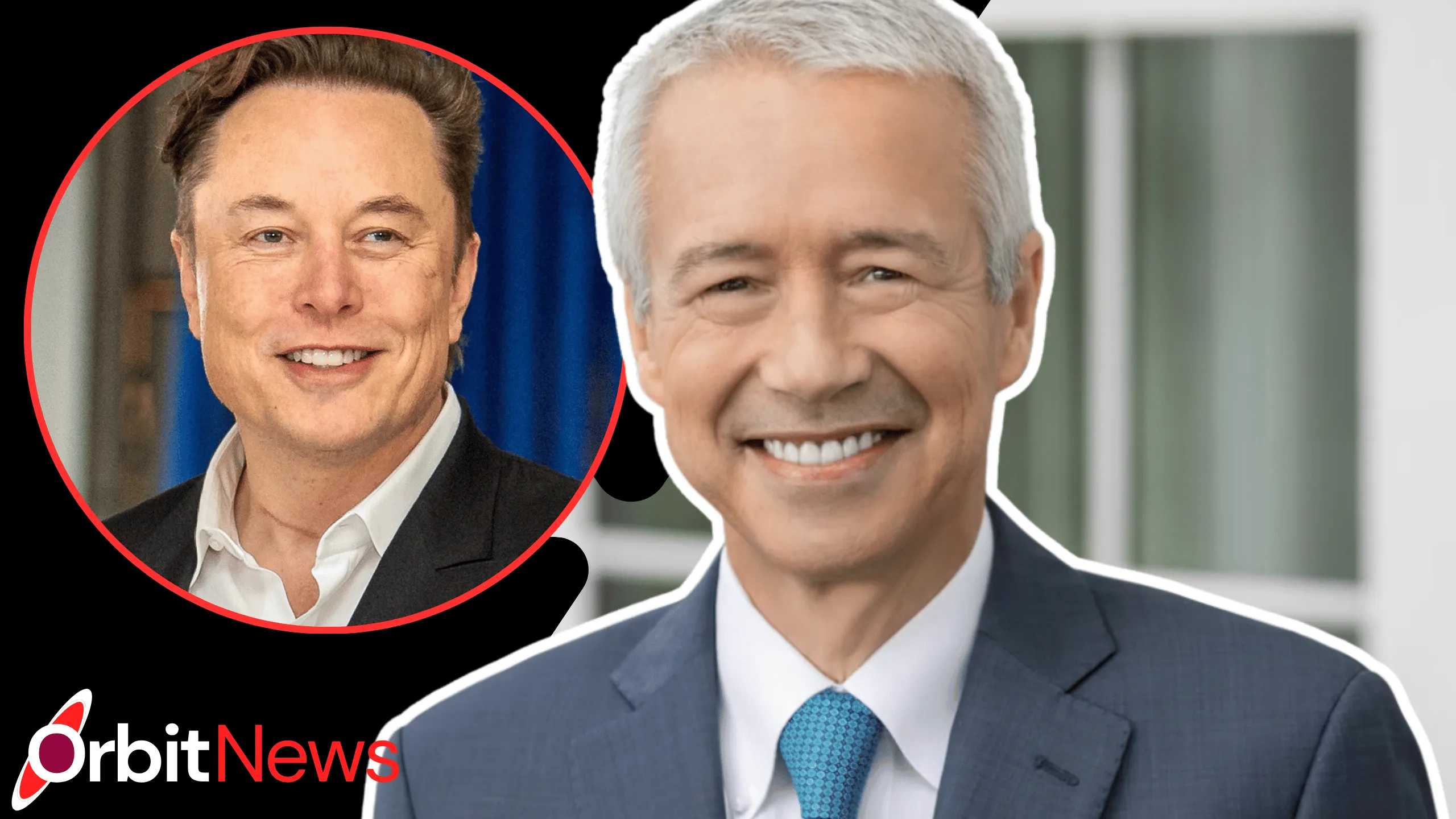
Joaquin Duato and Elon Musk are prominent business leaders whose work increasingly touches technology, artificial intelligence, robotics, and human health. However, there is no verified public evidence as of September 25, 2026, of a direct business partnership, investment relationship, board connection, or joint venture between Duato and Musk.
Duato leads Johnson & Johnson, one of the world’s largest healthcare companies, while Musk remains closely associated with Tesla, SpaceX, Neuralink, and artificial intelligence ventures. Their paths overlap most clearly at the broader intersection of healthcare and advanced technology, particularly AI, robotics, neuroscience, and medical devices.
Joaquin Duato and Elon Musk: Quick Comparison
| Detail | Joaquin Duato | Elon Musk |
|---|---|---|
| Primary current role | Chairman and CEO of Johnson & Johnson | CEO and Technoking of Tesla; also leads major technology ventures |
| Main industries | Pharmaceuticals, medical devices, healthcare technology | Electric vehicles, energy, aerospace, AI, neurotechnology |
| Major organization | Johnson & Johnson | Tesla, SpaceX, Neuralink and related technology businesses |
| Leadership background | Nearly four decades inside Johnson & Johnson | Founder or early leader of multiple technology companies |
| Healthcare connection | Direct, through Innovative Medicine and MedTech | Primarily through Neuralink and related technology |
| Verified direct relationship with the other | None publicly disclosed | None publicly disclosed |
Johnson & Johnson’s 2026 proxy statement lists Duato, 63 at the time of the filing, as Chairman and CEO and notes that he has served as a management director since 2022. Tesla’s investor materials continue to identify Musk as Tesla’s CEO and Technoking and describe his leadership roles across SpaceX and other ventures.
Who Is Joaquin Duato?
Joaquin Duato is the Chairman and Chief Executive Officer of Johnson & Johnson. He became CEO in January 2022 and added the chairman role in January 2023 after spending decades working across the company’s pharmaceutical, medical technology, geographic, and corporate functions.
Duato joined Johnson & Johnson in 1989 through Janssen-Farmaceutica in Spain. Before becoming CEO, he held positions including Worldwide Chairman of Pharmaceuticals and Vice Chairman of Johnson & Johnson’s Executive Committee. The company’s SEC filings describe his career as spanning multiple business sectors, regions, and functions.
Under Duato, Johnson & Johnson is now centered on two major businesses: Innovative Medicine and MedTech. The company identifies oncology, immunology, neuroscience, cardiovascular care, surgery, and vision as major areas of strategic focus.
How large is Johnson & Johnson under Duato?
Johnson & Johnson generated $94.2 billion in reported sales during 2025, a 6% increase from 2024. Innovative Medicine contributed approximately $60.4 billion, while MedTech contributed about $33.8 billion.
Momentum continued into 2026. For the second quarter of 2026, Johnson & Johnson reported sales of $25.3 billion, up 6.6% year over year, and raised its full-year sales outlook to roughly $101.1 billion at the midpoint.
Those numbers matter when comparing Duato with Musk. Duato is not primarily an entrepreneur building privately controlled startups. He manages a mature, highly regulated global healthcare corporation with extensive clinical, manufacturing, regulatory, and research operations.
Who Is Elon Musk?
Elon Musk is a technology entrepreneur whose businesses span electric vehicles, energy storage, space transportation, artificial intelligence, infrastructure, and brain-computer interfaces.
Tesla identifies Musk as its Technoking and Chief Executive Officer, a position he has held since October 2008. Tesla also notes his longstanding leadership of SpaceX and his role in establishing companies including Neuralink and The Boring Company.
Tesla alone generated $94.83 billion in revenue during 2025, according to its annual SEC filing. Automotive revenue remained its largest business, while its energy generation and storage segment produced $12.77 billion.
Musk’s corporate structure continued changing in 2026. On February 2, 2026, xAI announced that SpaceX had acquired xAI, bringing two major Musk-linked technology operations together.
His most important healthcare-related venture for understanding the Joaquin Duato and Elon Musk search is Neuralink.
Is There a Direct Joaquin Duato and Elon Musk Business Relationship?
No direct relationship has been publicly established. Available official corporate materials and credible reporting reviewed through September 25, 2026 do not identify a partnership between Joaquin Duato and Elon Musk personally, or a publicly announced collaboration between Johnson & Johnson and one of Musk’s principal companies that would establish such a relationship.
There is no disclosed evidence that Duato sits on a Musk-controlled company’s board, that Musk holds a leadership position at Johnson & Johnson, or that the two executives have formed a joint investment or commercial venture.
This distinction matters because simply appearing together in online articles, CEO comparisons, industry discussions, or search results does not establish a professional relationship.
There have been occasions when Musk and Johnson & Johnson have appeared indirectly within the same broader healthcare or business story, but these do not amount to a Duato-Musk partnership.
The Most Interesting Indirect Link Involves COVID-19 Research
There is one documented historical connection between Musk-funded scientific research and work associated with Johnson & Johnson.
During the COVID-19 pandemic, the Musk Foundation supported research involving Dr. Dan Barouch, a Beth Israel Deaconess Medical Center and Ragon Institute scientist who collaborated with Johnson & Johnson on development and research involving its Ad26.COV2.S COVID-19 vaccine.
Beth Israel Deaconess reported in early 2021 that the Musk Foundation had pledged $5 million to the laboratories of Barouch and researcher Galit Alter to support vaccine research.
The scientific connection is independently visible in published research. A Ragon Institute report on Johnson & Johnson’s vaccine listed both Janssen support and the Musk Foundation among funding sources.
That is a legitimate indirect connection between Musk-associated funding and research connected with Johnson & Johnson. It is not evidence of a relationship between Musk and Duato, however. The funding occurred before Duato became Johnson & Johnson’s CEO in January 2022.
Where Duato and Musk’s Business Worlds Actually Overlap
The more meaningful comparison is technological rather than personal.
Both leaders are involved in organizations investing heavily in technologies that combine software, hardware, AI, robotics, and biological or human systems. The applications, regulatory environments, and business strategies are very different.
Artificial intelligence
Duato has increasingly positioned AI as an important part of Johnson & Johnson’s healthcare strategy. The company says it is using AI in areas including research, clinical development, medical technology, remote patient monitoring, surgery, and healthcare decision support.
Johnson & Johnson’s 2026 proxy statement says the company views AI as potentially transformative for healthcare while emphasizing principles including fairness, privacy, security, responsibility, and transparency. Its board receives updates related to AI governance and emerging technology.
Musk’s AI activities follow a broader technology path. xAI developed the Grok family of AI models and raised $20 billion in a Series E financing round announced in January 2026. One month later, SpaceX acquired xAI.
The overlap is therefore AI itself, rather than a disclosed AI collaboration between the two leaders.
Robotics
Robotics creates another clear technological parallel.
Johnson & Johnson is developing increasingly sophisticated robotic and digitally assisted surgical technologies. In 2026, the company expanded AI-enabled capabilities around products such as MONARCH and continued development of its OTTAVA robotic surgical system.
Johnson & Johnson has also developed its Polyphonic digital surgery ecosystem and announced a collaboration with Abu Dhabi’s Department of Health involving AWS and NVIDIA to help build a surgical intelligence network.
Musk’s companies approach robotics from other directions, including autonomous machines, manufacturing automation, neural-interface surgical robotics, vehicles, and spacecraft.
Neuralink’s R1 surgical robot, for example, is designed to insert extremely fine electrode threads into the brain as part of the company’s brain-computer interface system.
Again, these represent parallel developments, not a joint program.
Also Read: Jensen Huang and Elon Musk
Neuroscience Is Their Closest Strategic Intersection
Neuroscience is arguably the most interesting area in which Johnson & Johnson and Musk’s technology ecosystem approach the same broad human-health challenge from fundamentally different directions.
Johnson & Johnson lists neuroscience as one of its major growth businesses. Its work includes pharmaceutical therapies targeting neurological and psychiatric conditions, with products such as SPRAVATO and CAPLYTA contributing to its neuroscience portfolio.
Neuralink approaches the nervous system through implanted hardware.
Its N1 brain-computer interface uses electrodes positioned near neurons to record neural activity. Neuralink’s software then attempts to decode those signals into commands that can control external devices. The implant is paired with a specialized robotic implantation system.
Neuralink’s first-in-human PRIME study began recruitment in 2023 under an FDA investigational device exemption. Its initial objective was to evaluate implant and surgical-robot safety while examining whether people with paralysis could use neural signals to control computers.
The company subsequently expanded clinical research internationally, including the CAN-PRIME study in Canada and GB-PRIME in Great Britain.
Neuralink’s website now says clinical-trial participants are using its devices to control computers and robotic arms through neural signals. Because these remain clinical research programs, such systems should not be treated as ordinary commercially available medical products.
This creates a fascinating industry comparison. Duato’s company primarily develops regulated medicines, surgical systems, cardiovascular devices, and established medical technologies. Musk-backed Neuralink is attempting to create an implanted digital interface directly connecting neural activity with computers.
Could Johnson & Johnson and Neuralink Eventually Compete?
Direct competition is not evident today.
Johnson & Johnson operates broadly across pharmaceuticals and medical technology, while Neuralink remains a specialized brain-computer interface company. Their immediate products, customers, and development programs are therefore substantially different.
There could eventually be greater technological proximity if brain-computer interfaces become a larger medical-device category or if major healthcare companies expand further into implantable neurotechnology. That possibility is an industry scenario, not evidence of current discussions between Johnson & Johnson and Neuralink.
It would therefore be inaccurate to describe Duato and Musk as current healthcare rivals solely because both organizations have interests involving neuroscience.
Their Approaches to Innovation Are Structurally Different
The contrast between the two executives is particularly visible in how their companies develop products.
Johnson & Johnson operates inside one of the world’s most heavily regulated industries. New medicines generally require extensive laboratory research, clinical trials, regulatory review, manufacturing validation, safety monitoring, and continuing post-market oversight. Medical devices can face similarly demanding regulatory processes depending on their risk classification.
Duato’s leadership therefore centers on managing an established healthcare portfolio, allocating billions of dollars across research and acquisitions, advancing clinical programs, and integrating technologies into regulated medical products.
Musk’s companies are spread across several industries and frequently develop technologies internally across hardware, software, AI, manufacturing, aerospace, and engineering. Neuralink is the part of this ecosystem that must operate most directly within medical-device regulation and human clinical research.
The difference is less about one executive being “more innovative” than the other and more about the environments in which innovation occurs.
Joaquin Duato and Elon Musk’s Financial Profiles Are Very Different
Duato’s personal wealth cannot be reliably determined from public records, so unsupported online net-worth estimates should be treated cautiously.
His compensation as a public-company executive is much more transparent. Johnson & Johnson’s 2026 proxy statement reports $27.142 million in 2025 total direct compensation for Duato, consisting of a $1.6 million salary, a $3.502 million annual incentive, and $22.04 million of planned long-term incentives. The separate SEC Summary Compensation Table, which uses different accounting rules and includes items such as equity grant values and pension changes, reported total 2025 compensation of approximately $32.76 million.
Musk’s finances are much more closely connected to ownership interests and performance-based equity.
A June 2026 SEC filing reported hundreds of millions of Tesla shares and options beneficially associated with Musk. Tesla’s compensation disclosures also emphasize that accounting values assigned to performance awards can differ dramatically from compensation actually realized.
For that reason, comparing a conventional annual CEO compensation figure for Duato with an internet estimate of Musk’s net worth would be misleading. They measure different things.
What the Joaquin Duato and Elon Musk Comparison Really Shows
The strongest factual connection between the two is not a secret partnership. It is the broader convergence of healthcare, AI, robotics, computing, and biological science.
Johnson & Johnson is increasingly turning medical devices into software-connected and AI-assisted systems. In August 2026, it described “surgical intelligence” as an emerging field in which connected data, AI, and intelligent systems could reshape surgery.
Neuralink is attempting something different but related in principle: combining neuroscience, implantable electronics, robotics, and machine learning so that neural activity can interact with digital systems.
Those developments explain why major healthcare and technology companies increasingly appear in the same conversations even when they have no formal relationship.
For now, the accurate description is simple: Joaquin Duato and Elon Musk lead very different organizations that are moving toward some of the same technological frontiers, but no verified direct partnership between them has been publicly announced.
Frequently Asked Questions
Are Joaquin Duato and Elon Musk business partners?
No publicly disclosed evidence shows that Joaquin Duato and Elon Musk are business partners. Official materials from Johnson & Johnson and Musk-associated companies do not identify a direct partnership, joint venture, board relationship, or personal investment arrangement between them as of September 25, 2026.
Does Elon Musk work with Johnson & Johnson?
There is no current publicly announced Musk-Johnson & Johnson corporate partnership establishing such a relationship. Historically, the Musk Foundation helped fund scientific research involving Dan Barouch, whose research was also connected to development of Johnson & Johnson’s COVID-19 vaccine, but that was an indirect research connection rather than a Musk-J&J corporate partnership.
Does Joaquin Duato have any connection to Neuralink?
No verified direct connection has been publicly disclosed. Duato leads Johnson & Johnson, while Neuralink operates independently as a brain-computer interface company co-founded by Musk.
What do Joaquin Duato and Elon Musk have in common?
Both oversee organizations investing heavily in advanced technology. The clearest overlapping fields are AI, robotics, automation, and technologies interacting with human biology, although their businesses and regulatory environments differ substantially.
Could Johnson & Johnson partner with Neuralink in the future?
Such a collaboration is theoretically possible because Johnson & Johnson has extensive neuroscience and MedTech operations, but there is no confirmed public announcement showing that one is planned. Any claim of an upcoming Johnson & Johnson-Neuralink partnership should therefore be treated as speculation unless supported by an official announcement.
Who is Joaquin Duato currently?
Joaquin Duato is Chairman and CEO of Johnson & Johnson. He became CEO in January 2022 and Chairman in January 2023 after a career with the company dating back to 1989.
Also Read: Carlos Slim and Elon Musk
