


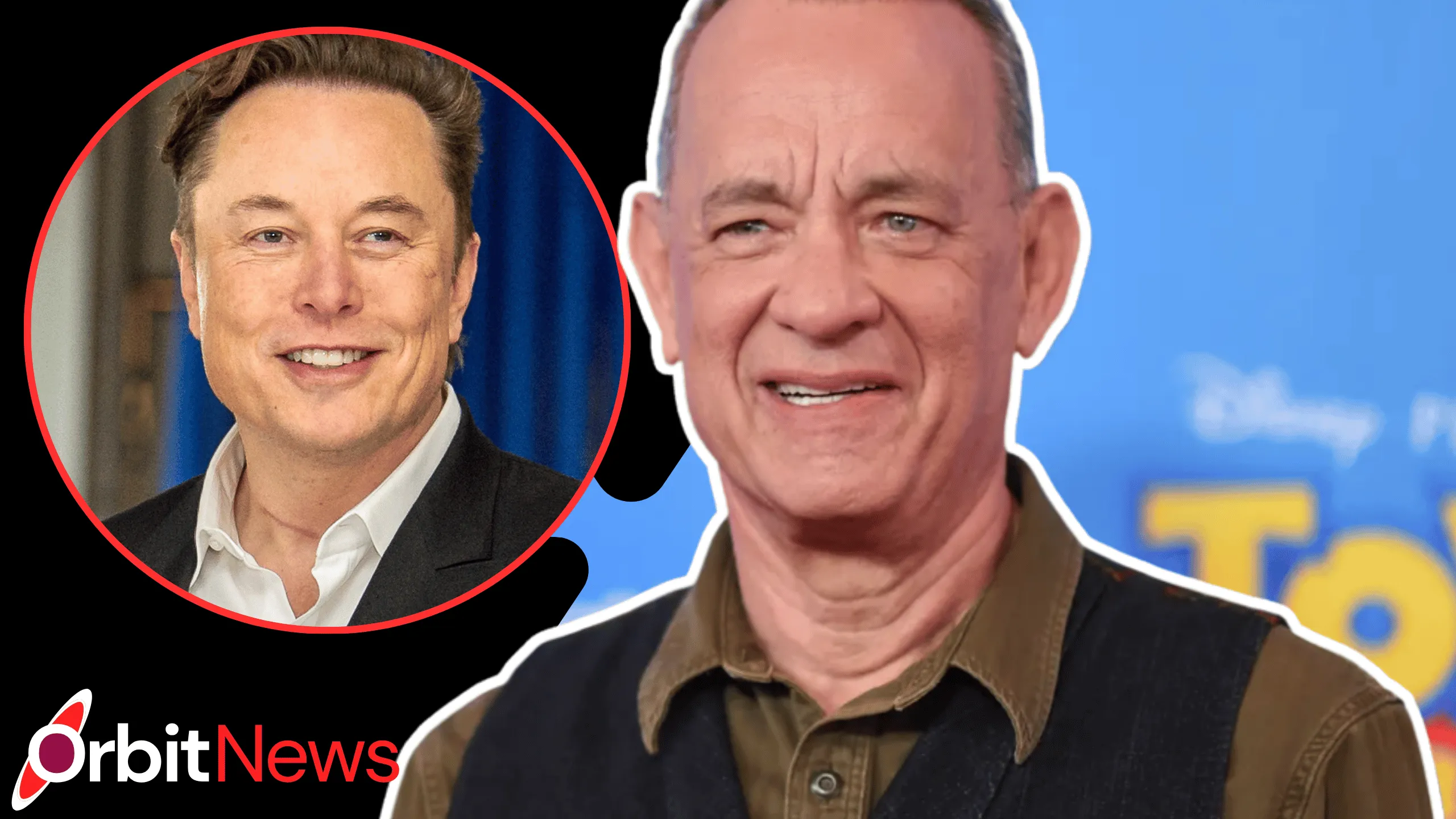
There is no well-documented personal, business, or professional partnership between Tom Hanks and Elon Musk. The strongest verified connection between their names is very different: both have become prominent targets of AI-generated impersonation, fake celebrity endorsements, and deepfake scams.
Hanks has publicly warned that artificial intelligence was used without his permission to imitate his face and voice in advertisements. Musk has likewise been impersonated extensively in cryptocurrency and investment scams. Consumer-protection agencies, researchers, and news organizations have cited both men when examining the growing problem of synthetic celebrity endorsements.
Why Are People Searching for Tom Hanks and Elon Musk?
Searches combining Tom Hanks and Elon Musk can create the impression that the actor and technology entrepreneur have worked together, invested together, or become involved in the same controversy.
Available reliable reporting does not establish such a relationship.
Hanks is an actor, filmmaker, producer, and two-time Academy Award winner. Musk is a technology executive associated with companies including SpaceX, Tesla, xAI, and X. Their careers operate in very different industries, and no substantial evidence reviewed for this article establishes a joint company, film project, investment, commercial endorsement, or continuing professional partnership between them.
Their names do repeatedly appear together in discussions of AI-generated deepfakes and online fraud, however. That overlap helps explain why someone encountering an advertisement, video, social-media post, or search result containing both celebrities might assume there is a deeper connection.
The Real Tom Hanks and Elon Musk Connection: AI Deepfakes
The clearest factual connection between Tom Hanks and Elon Musk involves unauthorized digital impersonation.
Both men possess instantly recognizable faces, voices, and public identities. Those qualities also make them valuable targets for scammers attempting to manufacture credibility.
A 2025 academic discussion of manipulated media cited fake Tom Hanks advertisements and fraudulent Elon Musk promotions as examples of how deepfake technology can be weaponized for financial deception. The examples included Hanks appearing to promote dental services and Musk supposedly advertising investment opportunities.
The OECD’s AI incident database has similarly documented the broader phenomenon of AI-generated videos impersonating celebrities including Tom Hanks, Elon Musk, and Gayle King to promote fraudulent products or investments.
The important distinction is that the presence of their likenesses in such material does not mean either celebrity participated.
Tom Hanks Warned About an AI Version of Himself
Tom Hanks became one of the most recognizable early examples of a celebrity publicly challenging an unauthorized AI-generated advertisement.
In September 2023, Hanks posted a warning about a video advertising a dental plan. According to Hanks, the advertisement contained an AI-generated version of him and had nothing to do with the real actor.
ABC News reported that the image appeared to portray a digitally younger version of Hanks. He did not identify the company responsible or disclose where the advertisement originated.
The incident attracted attention because Hanks had already discussed the consequences of artificial intelligence for actors.
Speaking before the controversy, he had talked about the possibility of technology recreating an actor’s appearance indefinitely. The issue was not simply visual effects. It raised questions about whether a recognizable face or voice could be commercially reproduced without the person’s participation or approval.
Tom Hanks Issued Another Warning in 2024
The dental advertisement was not an isolated problem.
In August 2024, Hanks published another public warning after discovering advertisements that he said falsely used his name, appearance, and voice to promote supposed medical products and treatments.
According to ABC News, Hanks said the advertisements had been created without his consent using AI. He explicitly denied involvement with the products and urged followers not to be deceived or lose money because of the promotions.
That second warning illustrated how quickly celebrity deepfake scams had evolved. A fraudulent advertisement no longer needed only a manipulated photograph. Generative AI could potentially reproduce a person’s face, speech patterns, and apparent voice, creating a much more convincing fake endorsement.
How Elon Musk Became a Major Impersonation Target
Elon Musk has faced a somewhat different version of the same problem.
His public association with Tesla, technology, cryptocurrency discussions, and high-profile business ventures has made his identity particularly attractive to financial scammers.
Long before today’s highly realistic AI video generators became widely accessible, fraudsters were already pretending to be Musk.
In 2021, the U.S. Federal Trade Commission reported that consumers had sent more than $2 million in cryptocurrency to Elon Musk impersonators during a six-month period. The typical scam promised that cryptocurrency sent to an address associated with the supposed celebrity would be multiplied and returned. It was not.
Generative AI later gave fraudsters a more sophisticated tool.
Instead of simply copying Musk’s name or profile picture, scammers could manufacture videos that appeared to show him discussing trading platforms, cryptocurrency opportunities, or supposedly exclusive investment systems.
Deepfake Elon Musk Videos Have Become Especially Common
Research published in subsequent years has shown how extensively Musk’s likeness has been targeted.
A 2025 analysis reported that Elon Musk accounted for a substantial portion of recorded celebrity deepfake incidents, while Tom Hanks was also among recognizable figures appearing in manipulated media. Fraud was one of the leading motives behind those incidents.
The scams commonly follow a recognizable formula.
A video appears to show Musk describing a highly profitable trading platform or investment opportunity. Viewers are directed to a website, registration form, cryptocurrency wallet, or supposed investment adviser. The celebrity endorsement supplies credibility, while urgent language encourages the victim to act quickly.
The real Elon Musk may have no involvement whatsoever.
The FTC specifically advises consumers not to regard a celebrity’s name as proof that a cryptocurrency opportunity is legitimate.
Did Tom Hanks and Elon Musk Make an AI Advertisement Together?
There is no reliable evidence that Tom Hanks and Elon Musk jointly created or endorsed the kinds of advertisements in which their names may appear.
That distinction matters because AI-generated media can fabricate not only individual endorsements but entire conversations.
A fake video could theoretically place Hanks and Musk in the same interview, presentation, investment announcement, podcast, medical advertisement, or promotional campaign even if the real people never participated.
Modern synthetic-media tools can reproduce facial movement, voice characteristics, and lip synchronization. A professionally edited fake may therefore look substantially more convincing than the obvious manipulated images common a few years ago.
Seeing two famous people together in a video is no longer sufficient evidence that the event actually occurred.
Also Read: Harry Styles and Elon Musk
Tom Hanks and Elon Musk Have Both Become Symbols of the Same AI Problem
The comparison between Hanks and Musk is useful because scammers exploit different kinds of public trust.
Tom Hanks brings decades of familiarity from film and television. A fake medical or consumer-product endorsement can exploit that familiarity.
Elon Musk represents technology, entrepreneurship, and enormous business ventures. Fraudsters often misuse that reputation when promoting cryptocurrency, artificial intelligence, or investment schemes.
In both situations, the underlying tactic is the same: borrow a recognizable identity to manufacture trust that the scammer has not earned.
AARP has specifically warned about celebrity impersonation scams involving figures including Musk and Hanks, noting that AI can turn traditional fake-profile schemes into much more convincing synthetic videos.
Why Celebrity Deepfakes Are Harder to Identify
Earlier deepfakes often contained visible errors. Facial expressions could look unnatural, lip movements might fail to match speech, and voices could sound robotic.
Those clues are becoming less dependable.
AI systems can now produce more realistic speech, facial animation, and video. Editing, compression, subtitles, background music, and short social-media formats can conceal imperfections even further.
That means verification should focus less on whether a video “looks fake” and more on whether its underlying claim can be independently confirmed.
For example, if a video supposedly shows Hanks promoting a medical treatment, check whether the endorsement appears through his verified channels or reputable reporting.
If Musk supposedly launches an investment platform promising unusually high profits, verify the announcement using official company communications and independent financial reporting rather than clicking the advertisement.
Warning Signs of a Fake Celebrity Endorsement
Several characteristics should raise suspicion when Tom Hanks, Elon Musk, or another celebrity apparently promotes something online:
- Guaranteed investment returns or promises of easy money
- Requests to transfer cryptocurrency directly to a wallet
- Claims that an opportunity is secret or available for only a few hours
- Medical products advertised as miracle cures
- Videos hosted only on unfamiliar websites or disposable social-media accounts
- A famous person’s voice paired with unnatural facial or lip movement
- Pressure to enter payment information immediately
- Articles designed to resemble legitimate news organizations but hosted on unrelated domains
Consumer Reports advises particular caution when famous personalities appear in videos promoting unusually profitable investments. Extraordinary guarantees and claims of exclusive access are common warning signs.
What Hanks Has Said About AI Beyond the Scams
Tom Hanks’ connection with artificial intelligence predates his deepfake warnings.
His film career has already involved digital representations of his appearance. The Polar Express, released in 2004, famously used performance-capture technology, while later productions employed digital techniques that could alter an actor’s apparent age.
The important distinction is authorization.
Digital effects created with an actor’s participation in a legitimate production are fundamentally different from an unknown third party generating a fake version of that actor for commercial purposes.
Hanks has publicly discussed the possibility that performers’ digital identities could continue to appear on screen independently of their physical age. His comments highlighted questions about ownership and control over a person’s face and voice that have since become increasingly significant.
Does Elon Musk’s Work in AI Connect Him to Tom Hanks?
Musk’s involvement in artificial intelligence does not establish a personal connection with Hanks.
Musk helped found OpenAI in 2015 before later separating from the organization, and he subsequently developed xAI, the company behind Grok. His businesses place him directly within debates surrounding generative AI and its applications.
Hanks approaches the issue primarily from the perspective of a performer whose digital likeness can be replicated.
Their stories therefore intersect conceptually around artificial intelligence, identity, authenticity, and synthetic media, but that is different from evidence of a collaboration between the two men.
Could a Tom Hanks or Elon Musk Video Be Completely Fabricated?
Yes.
A modern deepfake can potentially fabricate:
| Element | What AI can imitate |
|---|---|
| Face | Expressions, movement, apparent age |
| Voice | Tone, accent, cadence and speech |
| Lip movement | Synchronization with fabricated dialogue |
| Setting | Interviews, studios, conferences or offices |
| Dialogue | Statements the real person never made |
| Endorsement | Products or investments never approved by the celebrity |
This is why the authenticity of the source is often more important than the realism of the footage.
A polished video is evidence that somebody created a polished video. It is not, by itself, proof that the featured person actually made the statement.
What to Do If You See a Tom Hanks or Elon Musk Investment Ad
Do not send money simply because the advertisement contains a recognizable celebrity.
For cryptocurrency in particular, the FTC warns that scammers may impersonate celebrities and promise to multiply crypto sent by victims. It recommends researching the business independently and treating guaranteed returns as a major warning sign.
The same principle applies to products supposedly promoted by Hanks. His previous public warnings demonstrate that an advertisement containing his face or voice does not prove that he authorized it.
Verify the original source before purchasing, investing, entering personal details, or following instructions contained in a celebrity video.
FAQ
Are Tom Hanks and Elon Musk friends?
There is no well-supported public evidence establishing a close personal friendship between Tom Hanks and Elon Musk. They are internationally famous figures, but their careers and known professional activities are largely separate.
Have Tom Hanks and Elon Musk worked together?
No significant verified joint film, company, investment, commercial campaign, or professional partnership between them was identified in reliable publicly available reporting reviewed for this article.
Why are Tom Hanks and Elon Musk mentioned together in AI discussions?
Both have been targets of unauthorized digital impersonation. Hanks has been used in fake consumer and medical advertisements, while Musk’s identity is frequently exploited in fraudulent investment and cryptocurrency promotions.
Was the Tom Hanks dental advertisement real?
The advertisement existed, but Hanks said the version of him appearing in it was AI-generated and that he had no involvement with the dental plan.
Are Elon Musk investment videos always genuine?
No. Musk is one of the best-known targets of celebrity investment impersonation. The FTC has documented consumers losing money to people pretending to be Musk, and later AI technology has made fabricated celebrity promotions more convincing.
How can I verify a celebrity AI video?
Check the celebrity’s verified accounts, the relevant company’s official website, and reputable independent reporting. Do not rely solely on realistic appearance or voice because both can now be artificially generated.
Also Read: Grimes and Elon Musk
