


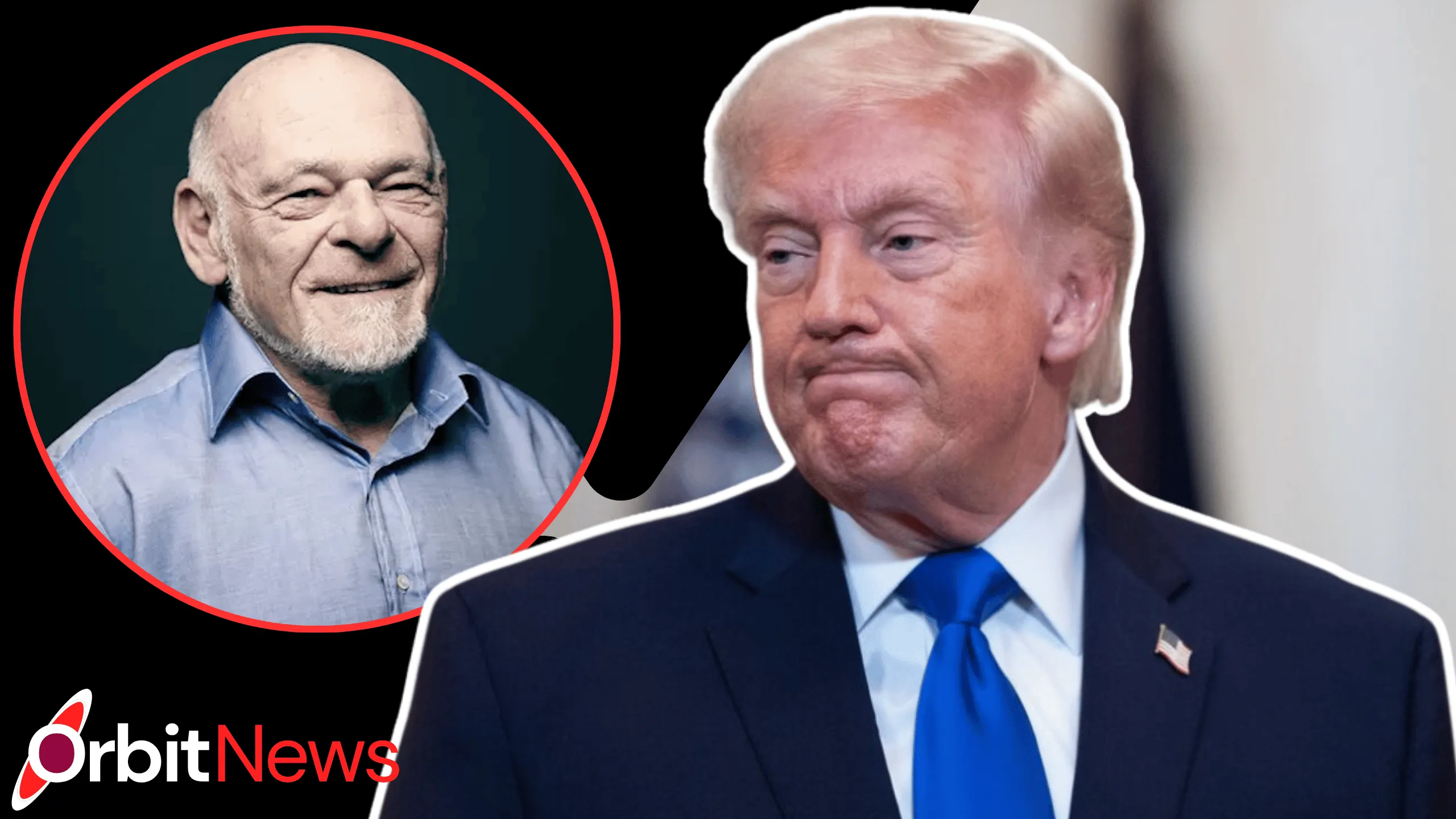
Sam Zell and Donald Trump were two influential American real estate billionaires who knew each other professionally but never became business partners. Although Trump approached Zell about a potential partnership, Zell declined because their investment philosophies and approaches to business were fundamentally different.
Their relationship became particularly interesting during Trump’s rise in American politics. Zell initially expressed reservations about Trump’s presidential ambitions but later praised several of his economic policies and acknowledged his influence on the country’s political landscape.
Both men built enormous fortunes through real estate, yet their contrasting strategies, public personalities, and political perspectives offer a fascinating look at two different approaches to American business success.

Who Were Sam Zell and Donald Trump?
Sam Zell and Donald Trump were prominent figures in American real estate long before Trump entered the White House. However, their backgrounds, business models, and paths to billionaire status were notably different.
Sam Zell: The Billionaire Real Estate Investor
Samuel Zell (1941–2023) was an American billionaire investor, entrepreneur, and founder of Equity Group Investments, a Chicago-based private investment firm established in 1968.
Born in Chicago on September 28, 1941, to Polish Jewish refugees, Zell developed an interest in entrepreneurship at an early age. He began managing student housing while attending the University of Michigan and gradually expanded his activities into commercial real estate.
Zell became known as the “Grave Dancer” because of his willingness to invest in distressed properties and businesses that other investors considered too risky.
His major business achievements included:
- Equity Group Investments: A private investment company with interests across multiple industries.
- Equity Residential: A major publicly traded apartment real estate investment trust.
- Equity LifeStyle Properties: A company focused on manufactured home communities and recreational properties.
- Equity Office Properties Trust: A commercial property business sold to Blackstone for approximately $39 billion in 2007.
- Equity International: An investment firm focused on real estate opportunities in international markets.
Zell helped popularize real estate investment trusts, commonly called REITs, which allow investors to own shares in companies that hold income-producing properties.
According to Nareit’s account of Zell’s career, he played an important role in developing the modern publicly traded real estate industry.
Donald Trump: Real Estate Developer and Political Leader
Donald Trump, born June 14, 1946, in Queens, New York, became widely known as a real estate developer, businessman, television personality, and eventually president of the United States.
After joining his family’s real estate business, Trump expanded into prominent Manhattan properties, luxury hotels, residential developments, casinos, golf courses, and branded real estate ventures.
Unlike Zell, Trump placed substantial emphasis on public visibility and the commercial value of his personal name.
Projects such as Trump Tower in Manhattan helped establish his reputation as a high-profile developer.
Trump later gained additional recognition through the television program The Apprentice before entering presidential politics. His business identity and personal brand remained central to his public image.
Sam Zell and Donald Trump: What Was Their Relationship?
Sam Zell and Donald Trump had a professional acquaintance based on their involvement in the real estate industry. They interacted over business opportunities, but Zell publicly confirmed that the two never became partners.
In a February 2016 interview with Maria Bartiromo, Zell explained that he had dealt with Trump professionally in real estate without establishing a formal partnership.
The Fox News interview transcript provides direct evidence of their business relationship.
Zell also described Trump as a tough businessman whose approach differed from conventional real estate practices.
Their professional connection should not be confused with a documented close friendship or long-standing investment alliance. Available interviews establish that they knew each other and considered working together, but they do not establish an enduring personal or commercial partnership.
Why Did Sam Zell Refuse to Partner With Donald Trump?
The most revealing episode in their relationship involved Trump’s attempt to persuade Zell to become a business partner.
During a Bloomberg Television interview in December 2015, Zell confirmed that Trump had approached him with a partnership proposal.
Zell explained that he did not believe the arrangement would work well for either businessman.
His explanation was particularly significant because both were experienced real estate investors who understood financing, property values, and the importance of negotiating favorable transactions.
In May 2016, Zell elaborated during an appearance on CNBC’s Squawk Box.
He explained that he had generally preferred keeping a lower profile while building businesses, whereas Trump had developed a much more public-facing identity.
Zell described their styles as incompatible and pointed out that he did not put his name prominently on buildings.
The contrast suggested that Zell preferred to build value through investment structures and financial performance, while Trump considered branding an important component of real estate development.
A May 2016 report discussing Zell’s CNBC remarks documents the disagreement between their business approaches.
Importantly, declining the partnership did not mean Zell considered Trump incapable of succeeding. He repeatedly acknowledged Trump’s business accomplishments while maintaining that they would not make suitable partners.
Two Different Approaches to Real Estate Investing
The comparison between Zell and Trump illustrates how successful property investors can follow different strategies.
| Business factor | Sam Zell | Donald Trump |
|---|---|---|
| Primary reputation | Investor and corporate dealmaker | Developer and brand-focused businessman |
| Major business approach | Acquiring, operating, restructuring, and selling assets | Developing, acquiring, managing, and branding properties |
| Public identity | Investment-focused, despite an outspoken personality | Highly visible personal brand |
| Well-known businesses | Equity Residential, Equity Office, Equity LifeStyle Properties | Trump Tower, Trump-branded hotels, golf properties |
| Capital strategy | Extensive use of public REITs and private investment vehicles | Private development ventures, debt financing, partnerships, and licensing |
| Geographic emphasis | United States and international investment markets | New York, other U.S. markets, and international branded projects |
Zell’s Focus on Asset Values and Market Timing
Zell became famous for identifying opportunities in overlooked or financially troubled assets.
Rather than buying properties primarily for prestige, he emphasized their underlying economic characteristics, including purchase price, cash flow, financing, and long-term investment potential.
His 2007 sale of Equity Office Properties Trust to Blackstone for approximately $39 billion became one of his defining transactions.
The deal closed shortly before the global financial crisis, highlighting his ability to recognize favorable selling conditions.
However, his investment record was not without failures.
In 2007, Zell led the acquisition of Tribune Company, a major American media business, through a heavily debt-financed transaction.
Tribune filed for bankruptcy protection in December 2008 amid declining advertising revenue, substantial debt, and severe financial pressure.
Zell later acknowledged that the investment had been a mistake.
These contrasting outcomes demonstrate that even experienced investors can make costly decisions when market conditions and financial structures change.
Trump’s Focus on Branding and High-Profile Properties
Trump pursued opportunities that frequently combined real estate development with the commercial value of his name.
His businesses included luxury residential towers, hotels, golf resorts, and licensing arrangements in which the Trump brand became a major selling point.
A revealing example appeared in a September 17, 1995, opinion article Trump wrote for The New York Times.
Responding to a discussion involving Sam Zell, Rockefeller Center, and Trump’s earlier purchase of the Plaza Hotel, Trump acknowledged that ego influenced his approach to property transactions.
He argued that the prestige and identity associated with a landmark building could create additional financial value.
The article, preserved in the Roll Call Factba.se transcript archive, provides an unusually direct explanation of Trump’s philosophy.
This difference helps explain why Zell and Trump could respect aspects of each other’s business accomplishments without necessarily wanting to invest together.
What Did Sam Zell Think About Donald Trump’s Presidential Campaign?
Sam Zell’s political views on Donald Trump evolved over time.
He was initially skeptical of Trump’s suitability for the presidency but became more favorable toward certain policies after Trump won the 2016 election.
2015: Skepticism About Trump’s Presidential Ambitions
During the Republican presidential primaries, Zell expressed doubts about Trump’s political positions and temperament.
In a December 2015 Bloomberg interview, he acknowledged Trump’s intelligence and accomplishments while questioning whether some of his views were appropriate for presidential leadership.
Zell also warned political observers against dismissing Trump’s appeal.
His comments demonstrated an important distinction: he could recognize Trump’s strengths as a communicator and business figure without supporting every aspect of his political platform.
2016: Recognizing Trump’s Political Appeal
As the presidential election approached, Zell increasingly emphasized that many political commentators misunderstood public frustration across the United States.
He believed economic anxiety, dissatisfaction with government, and resentment toward established institutions helped explain Trump’s growing popularity.
Following the November 2016 election, Zell discussed improving business expectations and the possibility that a more optimistic economic environment could encourage corporate investment.
His comments were generally more favorable to Trump’s potential economic impact than his earlier statements about the candidate’s political suitability.
However, recognizing Trump’s electoral appeal did not establish that Zell had become an official campaign adviser or financial backer.
How Zell Evaluated Trump’s Presidency
2017: Support for Pro-Business Economic Policies
During Trump’s first year in office, Zell expressed optimism about the administration’s potential to improve business conditions.
In a May 2017 interview with TheStreet, Zell argued that deregulation could create opportunities for economic expansion.
He believed reducing regulatory obstacles might encourage businesses to invest and expand without relying entirely on large government spending programs.
The original interview published by TheStreet documented his favorable assessment of Trump’s economic opportunities.
Nevertheless, Zell’s support was not unconditional.
He continued to distinguish between potentially beneficial economic policies and the president’s public conduct.
2018: A Mixed Assessment of Trump’s Performance
In June 2018, Zell discussed Trump’s performance during the Nareit REITweek conference.
He praised several areas of the administration’s record, including judicial appointments, tax legislation, and aspects of foreign policy.
However, he did not give Trump an unqualified endorsement.
Instead, he described his assessment of the president’s first 500 days as incomplete.
Zell also suggested that Trump’s election had extended the economic expansion beyond what he had previously anticipated.
These remarks reflected his tendency to evaluate political leadership primarily through its effects on business conditions and economic performance.
The comments were documented in Bisnow’s June 2018 conference coverage.
2019: Calling for More Centrist Political Leadership
By March 2019, Zell was emphasizing the importance of moderation and political cooperation.
During a CNBC appearance, he argued that the United States needed leadership capable of finding common ground between Republicans and Democrats.
His comments suggested concern that deep political divisions could interfere with the country’s long-term economic and institutional stability.
Rather than treating every political disagreement as a simple choice between opposing parties, Zell advocated a more centrist approach.
His views were explored in CNBC’s March 2019 interview.
2020: A More Positive View of Trump’s Political Impact
Following the November 2020 presidential election, Zell offered another assessment of Trump’s influence.
In an interview with Forbes, he suggested that Trump’s presidency had disrupted established political practices and challenged conventional expectations in Washington.
Zell believed that disruption could have lasting benefits, even though Trump had not fulfilled every political promise.
He also predicted that President-elect Joe Biden might govern closer to the political center than some observers expected.
These statements showed that Zell’s attitude toward Trump had become more favorable in some respects, particularly concerning political disruption and business-oriented policy.
However, the interview did not establish complete agreement between the two men on every major political issue.
The discussion appeared in Forbes’ November 17, 2020, interview with Sam Zell.
Did Sam Zell Financially Support Donald Trump?
Public reporting does not establish Sam Zell as a major financial supporter of Trump’s 2016 presidential campaign. In fact, a 2017 profile published by The New Yorker reported that Zell had not donated to Trump during that campaign.
Zell had a documented history of making political contributions, including donations benefiting Republican candidates and organizations.
An investigation by the Center for Public Integrity found that Zell’s contributions between the 1998 election cycle and 2007 generally favored Republican candidates, although he had also contributed to Democrats.
Those earlier contributions do not establish financial support for Trump’s later campaigns.
In the 2017 New Yorker interview, Zell described Trump as preferable to Hillary Clinton while criticizing aspects of his public image and explaining why many Americans supported him.
It is important to distinguish between supporting particular policies, expressing a political preference, donating to a campaign, and officially endorsing a candidate.
These are separate actions, and Zell’s favorable remarks should not automatically be interpreted as evidence of financial involvement.
Were Sam Zell and Donald Trump Friends or Rivals?
There is no reliable basis for describing Zell and Trump as either close personal friends or bitter long-term enemies.
Their relationship appears to have been primarily professional, shaped by the fact that both operated within the American real estate industry.
Zell was capable of praising Trump’s negotiating abilities and business experience while questioning his judgment and declining to become his partner.
Similarly, Trump’s public remarks about the real estate industry sometimes referred to Zell as a prominent participant in major financial transactions.
Their differences were most visible in their approaches to branding and investment.
Zell preferred a financial and organizational strategy centered on assets, companies, and capital markets.
Trump placed greater emphasis on public recognition, branded developments, and personal visibility.
Both approaches attracted attention, and both men experienced successes and setbacks over their careers.
The available evidence supports a relationship characterized by professional familiarity, different business philosophies, and changing political assessments, rather than a documented personal feud.
Sam Zell’s Wealth, Career, and Legacy
Sam Zell accumulated a multibillion-dollar fortune through real estate investments and holdings in other industries.
In November 2020, Forbes estimated his net worth at approximately $4.7 billion. This was a historical estimate, not a fixed value of his estate or the amount he personally held in cash.
His wealth was associated with interests in publicly traded companies, private investments, and other assets whose values changed over time.
Beyond real estate, his investments extended into logistics, manufacturing, energy, infrastructure, and healthcare.
Zell also supported entrepreneurship education at several prominent institutions, including the University of Michigan and Northwestern University’s Kellogg School of Management.
His 2017 memoir, Am I Being Too Subtle? Straight Talk From a Business Rebel, explored his unconventional investment philosophy and experiences in the business world.
When Did Sam Zell Die?
Sam Zell died on May 18, 2023, at age 81, due to complications from a recent illness.
His death was formally announced by Equity Group Investments and Equity Commonwealth.
According to the official Equity Commonwealth announcement, Zell remained chairman of several major real estate organizations at the time of his death.
His surviving family included his wife, Helen, three children, and nine grandchildren.
Zell’s death also means that any claims about his opinions on Trump’s subsequent political activities must be placed in the correct historical context.
He could not have commented on Trump’s 2024 presidential election victory or the policies of Trump’s second administration.
What Their Relationship Reveals About Business and Politics
The relationship between Sam Zell and Donald Trump offers several useful insights into the intersection of wealth, investment strategy, and political influence.
First, successful entrepreneurs do not necessarily share the same financial priorities. Two individuals can operate in the same industry and achieve extraordinary financial success through very different methods.
Second, professional respect does not automatically lead to a successful business partnership. Zell’s refusal to work with Trump illustrates the importance of compatible expectations, decision-making styles, and investment objectives.
Third, political opinions can change as circumstances develop. Zell’s assessment of Trump evolved from early skepticism to qualified support for several policies and a more positive interpretation of his political impact.
Finally, their careers demonstrate that personal branding and institutional investment management are distinct approaches to building business value.
Neither man’s achievements eliminate the setbacks, controversies, and financial risks associated with his career.
Understanding these distinctions provides a more accurate picture of their relationship than describing the two billionaires simply as allies or opponents.
Frequently Asked Questions
1. Did Sam Zell and Donald Trump ever work together?
Sam Zell and Donald Trump interacted professionally in the real estate industry, but they never became formal business partners. Zell confirmed in multiple interviews that he had declined a proposed partnership with Trump.
2. Why did Sam Zell reject Donald Trump’s partnership proposal?
Zell believed their business approaches were incompatible. He preferred focusing on investment opportunities and company performance, while Trump placed greater emphasis on public branding and prominent real estate developments.
3. Did Sam Zell support Donald Trump politically?
Zell expressed mixed views during Trump’s 2016 presidential campaign but later supported several of his economic policies. He praised certain aspects of Trump’s presidency without consistently endorsing every political decision or public statement.
4. Was Sam Zell richer than Donald Trump?
Both men were billionaires, but their estimated fortunes fluctuated over time. Forbes estimated Zell’s net worth at approximately $4.7 billion in November 2020. Any reliable comparison requires matching their wealth estimates to the same date and valuation methodology.
5. Did Sam Zell donate money to Donald Trump’s campaign?
A 2017 New Yorker report stated that Zell had not donated to Trump’s 2016 presidential campaign. Zell had a broader history of political contributions, but that does not establish donations to Trump in other election cycles.
6. Is Sam Zell still alive?
No. Sam Zell died on May 18, 2023, at age 81. He is remembered for his role in transforming the real estate investment trust industry, building major investment companies, and supporting entrepreneurship education.
Sources and References
- Equity Commonwealth: Official announcement of Sam Zell’s death, May 18, 2023.
- Nareit: Sam Zell’s role in developing the modern REIT industry.
- Fox News: February 2016 interview transcript discussing Zell’s professional relationship with Trump.
- The New Yorker: William D. Cohan’s 2017 interview examining Zell’s business history and views on Trump.
- TheStreet: Sam Zell’s assessment of Trump’s economic opportunities, May 2017.
- Bisnow: Sam Zell’s comments on Trump’s first 500 days, June 2018.
- Forbes: Christopher Helman’s November 2020 interview with Sam Zell.
- Roll Call Factba.se: Donald Trump’s September 1995 opinion article discussing real estate, ego, and Sam Zell.
- Center for Public Integrity: Investigation of Sam Zell’s historical political contributions.
