


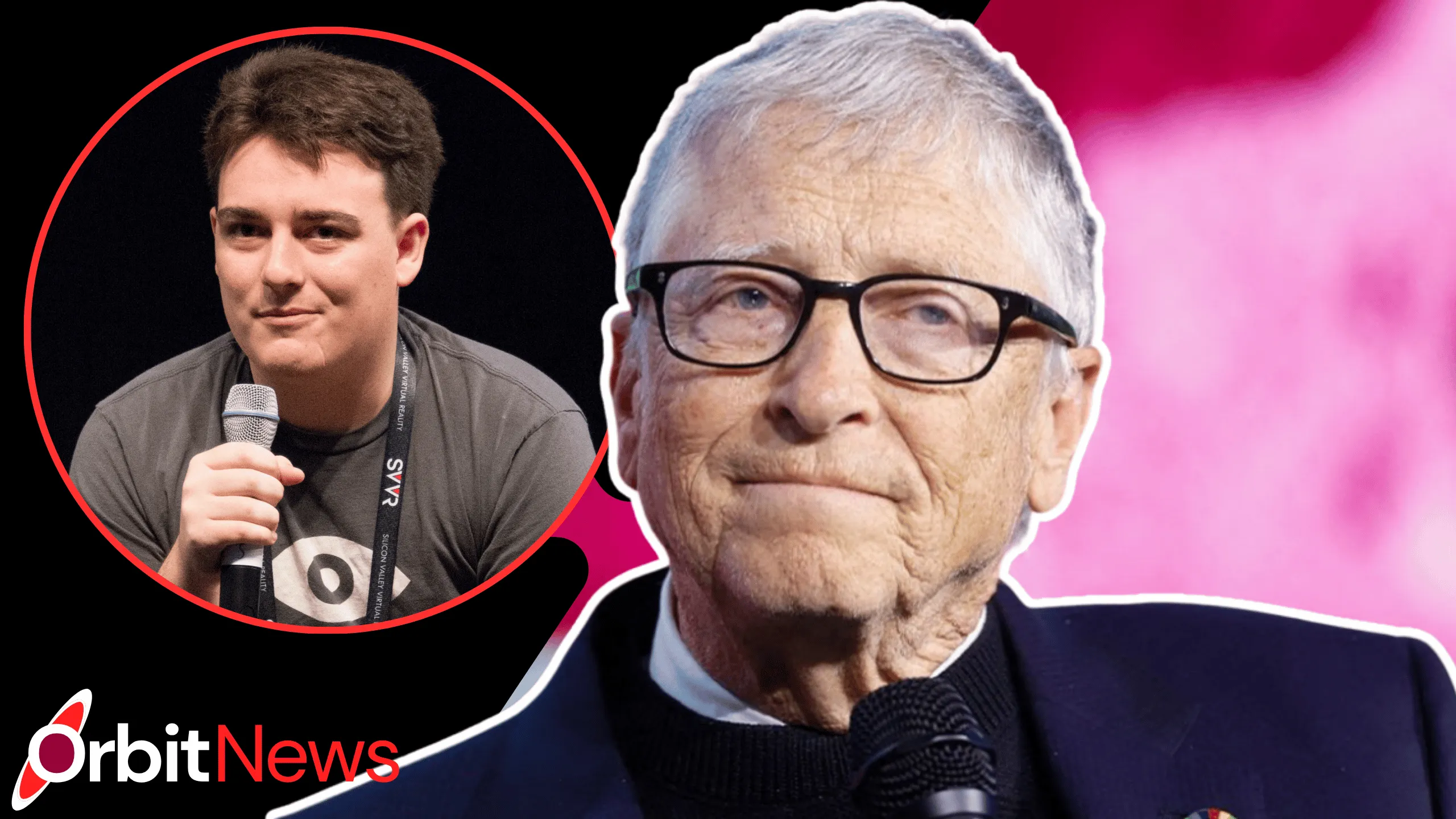
Palmer Luckey and Bill Gates do not have a publicly documented direct business partnership, family connection, or joint venture. The strongest verifiable link between them is indirect: Luckey’s defense company, Anduril Industries, became deeply involved with a U.S. Army mixed-reality program originally led by Microsoft, the technology company Gates co-founded.
That distinction matters because searches for Palmer Luckey and Bill Gates can make the relationship appear closer than the public record supports. Gates was no longer involved in Microsoft’s day-to-day management when the relevant military augmented-reality projects emerged, while Luckey has personally played a major role in Anduril’s work on them.
Is There a Direct Connection Between Palmer Luckey and Bill Gates?
There is no authoritative public record showing that Gates invested directly in Luckey, co-founded a company with him, employed him, or collaborated personally with him on Oculus or Anduril.
The concrete connection runs through Microsoft. Gates co-founded Microsoft with Paul Allen in 1975, while Luckey’s Anduril later partnered with Microsoft on the U.S. Army’s Integrated Visual Augmentation System, commonly called IVAS. The Army subsequently transferred Microsoft’s IVAS contract to Anduril in 2025.
| Person | Best known for | Relevant company | Connection |
|---|---|---|---|
| Palmer Luckey | Oculus Rift, Oculus VR, Anduril Industries | Anduril | Took a central role in military mixed-reality work previously led by Microsoft |
| Bill Gates | Co-founding Microsoft | Microsoft | Microsoft originally developed the Army’s IVAS system |
| Direct personal partnership | None publicly documented | None | The connection is primarily through Microsoft and its technology legacy |
Who Is Palmer Luckey?
Palmer Luckey is an American technology entrepreneur best known for creating the Oculus Rift and founding Oculus VR. He began Oculus in 2012 after years of experimenting with head-mounted displays and trying to make virtual reality hardware less expensive and more practical for consumers. Luckey has written that he left college at 19 to turn his headset hobby into a company.
Facebook announced in March 2014 that it would acquire Oculus for approximately $2 billion, consisting initially of $400 million in cash and Facebook shares valued at about $1.6 billion, with an additional performance-based earn-out. The transaction helped push modern consumer virtual reality into the technology mainstream.
After leaving Facebook, now Meta, Luckey helped found Anduril Industries in 2017. Instead of consumer VR, Anduril focuses on defense technology, including autonomous aircraft, surveillance systems, drones, artificial intelligence, command-and-control software and advanced military hardware.
His career therefore moved from creating digital environments for gamers to building technology intended for military operations in the physical world.
Who Is Bill Gates?
Bill Gates co-founded Microsoft with Paul Allen in 1975 and helped turn the company into one of the dominant businesses of the personal-computing era. His work was centered primarily on software and the expansion of personal computing rather than virtual-reality hardware.
Gates gradually reduced his operational responsibilities at Microsoft. He transitioned out of a day-to-day role in 2008, stopped serving as chairman in 2014, and resigned from Microsoft’s board in March 2020.
Today, his principal public role is as chair and board member of the Gates Foundation, where his work concentrates on areas including global health and development. He also pursues technology, climate and other projects through organizations including Gates Ventures and Breakthrough Energy.
This timeline is important when examining the Luckey connection. Microsoft’s later military headset work should not automatically be treated as a Bill Gates project simply because he founded the company decades earlier.
The Microsoft Link Behind Palmer Luckey and Bill Gates
The most meaningful overlap began with Microsoft’s work on military augmented reality.
The U.S. Army’s Integrated Visual Augmentation System was designed as a wearable mixed-reality platform combining digital information with a soldier’s real-world view. Early IVAS systems drew on Microsoft’s HoloLens technology and attempted to integrate capabilities such as navigation, sensors, night operations and tactical information into a head-mounted display.
For Luckey, this was particularly relevant because his original expertise was also head-mounted displays.
Anduril Joined Microsoft on IVAS
In 2024, Anduril announced a collaboration with Microsoft to integrate its Lattice software into IVAS. Lattice is Anduril’s software platform for combining information from sensors and systems so operators can understand what is happening around them.
Luckey described the program as a major priority for Anduril. The partnership brought together two different areas of expertise:
Microsoft contributed its mixed-reality, cloud and existing IVAS infrastructure, while Anduril contributed Lattice, defense software and Luckey’s background in designing head-mounted displays.
This is the clearest real-world reason the names Palmer Luckey and Bill Gates can appear in the same technological lineage. Gates helped create Microsoft, but Luckey was dealing with the modern Microsoft organization, not with Gates personally.
Also Read: Tom Cruise and Bill Gates
Anduril Eventually Took Microsoft’s IVAS Contract
The relationship moved beyond a conventional software partnership.
In February 2025, Anduril and Microsoft announced plans for Anduril to assume responsibility for the IVAS program, subject at that stage to government approval. Microsoft would remain involved through areas including Azure cloud infrastructure.
The transfer was subsequently approved. A 2026 U.S. Government Accountability Office assessment states that the Army approved the transfer of the contract from Microsoft to Anduril in April 2025.
That made Luckey particularly relevant to a technology program that had previously been closely associated with Microsoft.
The Original IVAS Program Did Not Become the Final Answer
It would be misleading, however, to say that Anduril simply inherited Microsoft’s headset and successfully continued the same program unchanged.
The GAO reported in 2026 that the Army decided not to field the existing IVAS versions. Earlier versions suffered from problems including poor low-light performance and wearability issues, while approximately 400 IVAS 1.2 units were instead intended to help inform a new rapid-prototyping effort.
The successor effort is known as Soldier Borne Mission Command, or SBMC.
A July 2026 Congressional Research Service report said the Army had awarded prototype contracts worth approximately $159 million to Anduril and $195 million to Rivet as part of SBMC. That means Anduril is an important participant, but the future system remains part of a competitive development process rather than an uncontested Anduril production program.
Luckey’s View of Microsoft Is More Nuanced Than Simple Competition
An interesting part of the story is that Luckey has publicly described himself as a longtime Microsoft enthusiast even while Anduril was taking greater control over technology previously managed by Microsoft.
Writing about the IVAS transition, Luckey said he had been a Microsoft fan for years and praised the company’s work in cloud computing and artificial intelligence. He argued that Microsoft could concentrate on areas such as cloud infrastructure while Anduril focused on the headset and battlefield technology.
That is different from portraying the situation as Palmer Luckey replacing Bill Gates.
Luckey was working with and eventually assuming responsibilities from Microsoft as a modern corporation, years after Gates had stopped running it.
Oculus, HoloLens and Two Different Visions of Head-Mounted Computing
Another reason the Luckey-Microsoft relationship is notable is the history of Oculus and HoloLens.
Oculus concentrated heavily on virtual reality, where the headset replaces much of the user’s visual environment with a computer-generated one. Microsoft’s HoloLens emphasized augmented or mixed reality, where digital information is placed over the user’s view of the physical world.
Luckey was initially skeptical about some augmented-reality applications. In 2015, while discussing Microsoft’s HoloLens, he said many proposed AR applications seemed less exciting than VR, although he acknowledged that augmented reality could eventually become as important or more important than virtual reality.
Years later, military mixed reality became one of his major priorities.
That shift illustrates how the use case changed. Features such as navigation, sensor information and instructions that can seem mundane in consumer AR can become highly significant when the wearer is a soldier operating in a complex environment.
Anduril’s New Mixed-Reality Direction
The Microsoft connection is now only one part of Luckey’s broader push into military wearable computing.
In 2025, Anduril announced a partnership with Meta to develop extended-reality technology for the U.S. military. The planned systems combine Meta’s work in AI and augmented reality with Anduril’s Lattice platform.
This created an unusual circle in Luckey’s career.
He founded Oculus, Facebook acquired Oculus, he later left Facebook, founded Anduril, and then eventually returned to working with Meta on military AR and AI. Meanwhile, Anduril also took over the Army contract originally managed by Microsoft.
By 2026, Anduril and Meta were working on the broader SBMC opportunity, while Anduril continued redesigning its approach to soldier-worn computing.
How Their Technology Careers Differ
Although both Luckey and Gates became wealthy technology founders at relatively young ages, their careers were built in very different eras.
Gates rose during the personal-computer revolution. Microsoft’s operating systems and productivity software made computing accessible to businesses and consumers on an enormous scale.
Luckey emerged several decades later, initially focusing on immersive hardware and then moving into autonomous defense systems, artificial intelligence and military mixed reality.
Their careers also show different approaches to hardware.
Microsoft became primarily known for software during Gates’s leadership, even though it later expanded substantially into devices and cloud infrastructure. Luckey, by contrast, has repeatedly built businesses around combinations of hardware and software, first through Oculus and later through Anduril.
How Large Is Anduril Today?
Anduril has grown far beyond the startup Luckey established after Oculus.
In May 2026, the company completed a $5 billion funding round at a reported $61 billion valuation. Reuters subsequently reported in July that Anduril was discussing another financing arrangement that could value it at roughly $100 billion, although those discussions were described as fluid and should not be confused with a completed $100 billion funding valuation.
Its increasing scale helps explain why Microsoft and other major technology companies now work with Anduril rather than treating it simply as a small defense startup.
Luckey is also only one part of Anduril’s leadership structure. He is its founder, while the company is run operationally by a broader executive team.
Does Bill Gates Have a Financial Stake in Palmer Luckey or Anduril?
There is no reliable public evidence establishing Bill Gates as a direct investor in Anduril.
This should not be confused with Gates investing in other technology businesses that use virtual reality. For example, Gates-backed investment entities have been associated with companies working with VR-related technologies, but that does not establish a financial relationship with Oculus, Luckey or Anduril.
Likewise, Microsoft’s collaboration with Anduril does not mean Gates personally owns part of Anduril.
Why the Palmer Luckey and Bill Gates Comparison Is Interesting
The useful comparison is not a hidden partnership. It is the evolution of the technology industry.
Gates helped build the software ecosystem that defined the personal-computer era. Luckey became prominent during the next generation of immersive computing and is now attempting to apply AI, autonomous systems and wearable displays to defense.
Their indirect connection through Microsoft illustrates how technologies often move between generations of companies. Microsoft’s HoloLens research helped shape IVAS, Anduril later assumed the IVAS contract, and Luckey’s own career began with another major head-mounted computing platform, Oculus.
The names therefore intersect through technology history, but the available evidence does not support presenting Palmer Luckey and Bill Gates as personal business partners.
Frequently Asked Questions
Are Palmer Luckey and Bill Gates business partners?
No publicly documented evidence shows Palmer Luckey and Bill Gates operating as direct business partners. Luckey’s company Anduril has partnered with Microsoft, the company Gates co-founded, but Gates himself was not leading Microsoft during that partnership.
Did Bill Gates invest in Palmer Luckey’s Anduril?
There is no reliable public record establishing Gates as a direct Anduril investor. Claims suggesting such an investment should be treated as unconfirmed unless supported by company filings, an investor announcement or another authoritative source.
What does Microsoft have to do with Palmer Luckey?
Microsoft originally led the U.S. Army’s IVAS mixed-reality program. Anduril first partnered with Microsoft to integrate its Lattice technology and later received the transferred IVAS contract after Army approval in April 2025.
Did Palmer Luckey take over Microsoft’s military headset project?
Anduril took over Microsoft’s existing IVAS contract, but the story has since evolved. The Army decided not to field the earlier IVAS systems and moved toward the newer Soldier Borne Mission Command prototyping effort, in which Anduril is one of the companies competing and developing technology.
Did Palmer Luckey create Oculus?
Yes. Luckey founded Oculus VR in 2012 after developing his own virtual-reality headset prototypes. Facebook announced its agreement to acquire Oculus in 2014 for approximately $2 billion, plus a potential additional earn-out.
Is Bill Gates still running Microsoft?
No. Gates left Microsoft’s day-to-day management in 2008, stopped serving as chairman in 2014 and left the board in 2020. His current work is primarily associated with the Gates Foundation and other philanthropic and innovation initiatives.
Also Read: Alex Gorsky and Heidi Capozzi
