


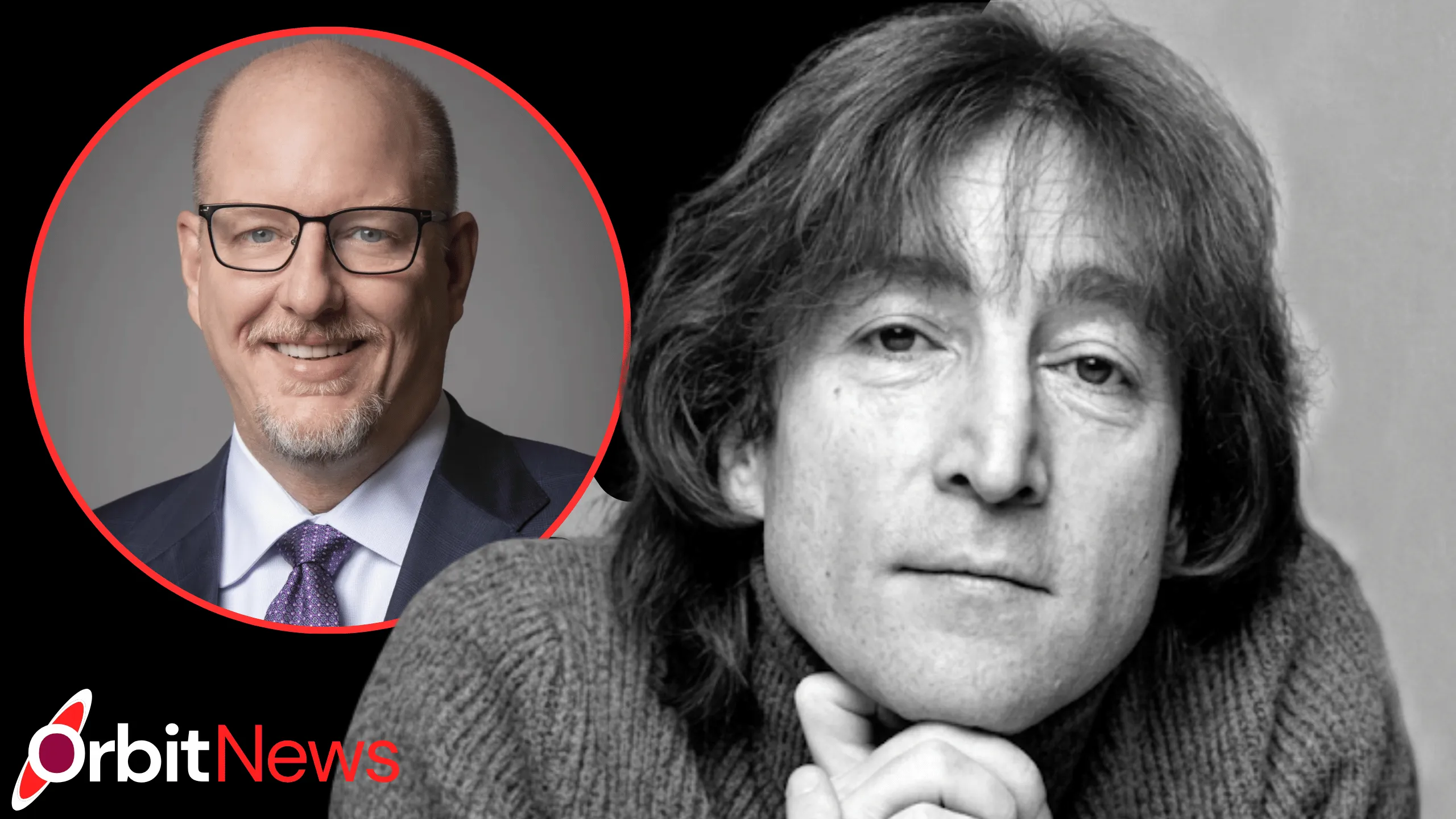

John Lennon and Robert Davis are linked by a documented fan story from Toronto in December 1969, but there is no reliable evidence that Davis was Lennon’s friend, colleague, business associate, or musical collaborator. Robert Davis was a 13-year-old Beatles fan whose mother attended a John Lennon and Yoko Ono press conference and obtained signed peace-campaign posters for him.
The distinction matters because “Robert Davis” is a common name, and several musicians and entertainment figures with similar names have connections to Lennon or the Beatles. The available evidence points to a much simpler story: a young Toronto fan, Lennon’s 1969 peace campaign, and two memorable autographs.

Who Was Robert Davis in the John Lennon Story?
The Robert Davis relevant to this search appears in an account originally published in the April/May 1985 issue of Beatlefan magazine and later republished online. Davis recalled being 13 years old in Toronto on December 17, 1969, when John Lennon and Yoko Ono were in the city promoting their peace activities.
According to Davis, his mother worked as secretary to the Toronto correspondent of The New York Times. When Lennon and Ono held a press conference at the Ontario Science Centre, Davis went to the venue with his mother but was not permitted inside because access was restricted to the press. His mother, however, was admitted using her press credentials.
This means the commonly implied “John Lennon and Robert Davis meeting” needs an important correction. Davis’s own account does not describe him personally sitting down with or speaking to Lennon. The direct encounter was between his mother and Lennon and Ono.
What Happened on December 17, 1969?
December 17 was part of an unusually active period in John Lennon and Yoko Ono’s international peace campaign.
Contemporary Canadian music publication RPM Weekly reported that the Ontario Science Centre was the site of a press conference involving Lennon, Ono and plans for a Toronto peace festival. Independent archival sources also date an Ontario Science Centre Lennon-Ono press conference to December 17, 1969.
The Toronto Star’s photographic archive likewise identifies photographs of John Lennon and Yoko Ono at the Ontario Science Centre press conference on December 17, 1969.
The event was therefore not something created years later by Davis’s recollection. The location and date at the heart of his story are independently documented.
The “War Is Over! If You Want It” campaign
Two days earlier, on December 15, Lennon and Ono had formally launched their international “WAR IS OVER! IF YOU WANT IT” campaign.
Their official campaign history says billboards carrying the message appeared in cities including:
- Toronto
- New York
- Los Angeles
- London
- Paris
- Rome
- Amsterdam
- Berlin
- Athens
- Tokyo
- Hong Kong
The campaign also used posters, newspaper advertisements, leaflets and radio announcements to spread its anti-war message.
Academic research on Lennon and the Beatles’ political activity also identifies the December 17 Ontario Science Centre press conference as a primary source connected with Lennon’s activism.
How Robert Davis Became Connected to John Lennon
Davis remembered seeing a peace message being written across the Toronto sky on the day of the press conference. He then wanted to attend Lennon and Ono’s appearance at the Science Centre.
When Davis himself could not enter the press event, he asked his mother to obtain an autograph.
According to his account, she managed to position herself near Lennon and Ono during the conference. She asked Ono to sign something for her son and also obtained Lennon’s signature.
The items were especially appropriate to the occasion. They were small versions of the “War Is Over! If You Want It” peace poster associated with Lennon and Ono’s campaign. Davis said Ono signed one as “Yoko Ono Lennon,” while Lennon signed another simply with his first name.
For Davis, the value of the objects was not primarily financial. They represented a personal connection with one of the most famous musicians in the world during a historically significant period in Lennon’s life.
Did John Lennon Personally Meet Robert Davis?
There is no solid evidence that John Lennon personally met Robert Davis at the December 17, 1969 press conference.
Davis’s own narrative indicates that he remained outside while his mother entered the event. She was the person who approached Lennon and Ono and requested the autographs on behalf of her son.
It is therefore more accurate to describe Davis as a Beatles fan connected to Lennon through the 1969 Toronto press conference and the autographs his mother obtained, rather than as a personal acquaintance of Lennon.
No reliable source found during research establishes a friendship, professional relationship, family link, musical collaboration, or continuing correspondence between the two men.
Also Read: Jodie Foster and Robert Davis
Why John Lennon Was in Toronto
Toronto already had an important place in Lennon’s life by late 1969.
Earlier that year, Lennon had appeared with the Plastic Ono Band at the Toronto Rock and Roll Revival, an important early public appearance for his post-Beatles musical direction. By December, Lennon and Ono were heavily focused on anti-war activism and media-based peace campaigns.
Their December visit included interviews, public appearances and discussions surrounding peace initiatives. Contemporary and archival records confirm the Ontario Science Centre press conference as part of those activities.
Lennon and Ono’s peace work during this period was not separate from their artistic identity. Academic analysis of the Beatles’ politics notes that Lennon increasingly used celebrity, popular music and mass media as channels for political expression during the late 1960s.
The “War Is Over” campaign was a clear example. Instead of promoting a record or concert, Lennon and Ono applied techniques normally associated with commercial advertising to an anti-war message.
What Happened to Robert Davis’s Lennon Autographs?
Davis wrote that he initially preserved the signed posters carefully and regarded them as treasured Beatles memorabilia.
After Lennon was killed in New York on December 8, 1980, Davis began thinking again about the autographs. When he eventually located them among belongings stored away for years, he discovered that both posters had been torn and subsequently taped back together. Unfortunately, the tape had been placed across the signatures.
Despite the damage, Davis wrote in his 1985 account that he continued to regard the posters as treasures because of their personal and historical significance.
His recollection also shows how Lennon’s death changed the meaning of ordinary fan memorabilia. What had originally been free campaign material became a physical connection to both Lennon’s peace activism and Davis’s childhood.
When Was Robert Davis’s Story Published?
The available reproduction states that Davis’s account originally appeared in Beatlefan magazine’s April/May 1985 issue. It was subsequently republished by the Beatles-history site Meet the Beatles for Real in 2009.
That publication history is important when assessing the evidence.
Davis’s descriptions of what his mother did inside the press conference are personal testimony rather than independent reporting. However, major surrounding facts can be checked independently:
| Detail | Evidence |
|---|---|
| Lennon and Ono were in Toronto in December 1969 | Independently documented |
| Ontario Science Centre press conference | Independently documented |
| Date of press conference: December 17, 1969 | Independently documented |
| “War Is Over” campaign active at the time | Confirmed by official Lennon/Ono sources |
| Toronto was part of the billboard campaign | Confirmed by official campaign records |
| Davis was 13 and his mother obtained the autographs | Based on Davis’s personal account |
| Exact circumstances surrounding the signatures | Based primarily on Davis’s personal account |
This makes the basic historical setting highly credible while correctly treating the personal details as Davis’s recollection.
John Lennon’s Position at the Time
John Lennon was still technically associated with the Beatles in December 1969, although the band was nearing the end of its existence.
The Beatles had played their final public performance together on the roof of Apple Corps headquarters on January 30, 1969. The group’s official history describes that rooftop performance as their final live gig.
Meanwhile, Lennon’s work with Ono was becoming increasingly central to his public life. His first solo single, “Give Peace a Chance,” had been released in 1969 after being recorded during Lennon and Ono’s Montreal Bed-In for Peace. The Recording Academy identifies it as Lennon’s first solo release and notes the international attention it received.
The Toronto episode involving Robert Davis therefore occurred at a transitional moment. Lennon was moving away from the Beatles as his primary public identity and toward solo music, collaboration with Ono and highly visible peace activism.
How the 1969 Campaign Led to “Happy Xmas (War Is Over)”
The posters that Davis’s mother reportedly had signed predated one of Lennon’s most enduring songs.
The official John Lennon website states that “Happy Xmas (War Is Over)” was written by Lennon and Ono and released in December 1971. Its central message directly echoed the 1969 campaign.
That gives Davis’s memorabilia an interesting historical context. The “War Is Over” slogan was already circulating through international billboards, posters and publicity in 1969, roughly two years before it became closely associated with the Christmas recording.
The Toronto poster was therefore not simply merchandise connected with a later hit song. It belonged to the original activist campaign from which the song’s famous refrain developed.
Robert Davis Should Not Be Confused With Rod Davis
One particularly easy mistake is to confuse Robert Davis with Rod Davis, who really did have a direct musical relationship with John Lennon.
Rod Davis played banjo in the Quarrymen, Lennon’s pre-Beatles group, during 1957. AllMusic records that he attended Quarry Bank High School with Lennon and played in the band during its skiffle period.
Rod Davis and Robert Davis are different people.
The distinction is important because searches combining “Davis,” “Lennon” and “Beatles” frequently surface Quarrymen history, which can create the false impression that Robert Davis was one of Lennon’s early bandmates.
He Was Also Not Jesse Ed Davis
Another Davis with a genuine musical connection to Lennon was Jesse Ed Davis, the American guitarist.
Official John Lennon album credits show Jesse Ed Davis playing guitar during Lennon’s 1973 and 1974 sessions for the album Rock ‘n’ Roll.
Again, Jesse Ed Davis has no known connection with the Robert Davis described in the Toronto fan account.
These similarly named individuals probably explain some of the confusion surrounding searches for john lennon and robert davis.
Was Robert Davis a Famous Musician or Lennon Associate?
There is no credible evidence that the Robert Davis in the 1969 Toronto story became part of Lennon’s professional circle.
A Toronto-based singer-songwriter, children’s entertainer and music historian named Robert Davis later maintained a music career and hosted the Hit Me podcast. His official website described him as an award-winning Toronto singer-songwriter, while podcast directories identify him as a music historian.
However, available reliable sources do not establish that this musician was the same Robert Davis who wrote the 1985 Beatlefan account. Because the name is common and no direct source links the identities, treating them as the same person would be speculation.
The safest conclusion is to keep the identities separate unless stronger documentation emerges.
What Is the Real John Lennon and Robert Davis Connection?
The verified connection is narrow but interesting.
Robert Davis was a young Beatles fan in Toronto during John Lennon and Yoko Ono’s December 1969 peace campaign. He went with his mother to the Ontario Science Centre when Lennon and Ono held a press conference there. Davis could not enter, but his mother did and obtained signed “War Is Over” campaign posters for him.
The press conference, its December 17 date and Lennon’s broader Toronto peace activities are independently documented.
What is not supported is any claim that Robert Davis was Lennon’s friend, bandmate, colleague or long-term associate.
FAQ
Who was Robert Davis to John Lennon?
Robert Davis was a teenage Beatles fan associated with a 1969 Toronto story involving Lennon and Yoko Ono. His mother attended their Ontario Science Centre press conference and obtained autographs for him. There is no verified evidence that Davis was a personal friend or professional associate of Lennon.
Did John Lennon meet Robert Davis?
Davis’s own account does not establish a face-to-face meeting. He said he was unable to enter the press conference, while his mother went inside and approached Lennon and Ono on his behalf.
What did John Lennon sign for Robert Davis?
According to Davis, Lennon signed a small “War Is Over! If You Want It” campaign poster. Yoko Ono signed another. The posters were obtained by Davis’s mother during the December 17, 1969 Toronto press conference.
Was Robert Davis a member of the Beatles or the Quarrymen?
No. The similarly named Rod Davis was a member of John Lennon’s Quarrymen in 1957. Robert Davis from the Toronto story was a Beatles fan, not a documented member of Lennon’s early group.
Was Robert Davis one of John Lennon’s guitarists?
There is no evidence of that. The guitarist with the similar surname who worked extensively with Lennon was Jesse Ed Davis, whose credits include Lennon’s Rock ‘n’ Roll sessions.
When did the John Lennon and Robert Davis story happen?
The central event occurred on December 17, 1969, during Lennon and Ono’s visit to Toronto and their press conference at the Ontario Science Centre. Davis later wrote about the experience for Beatlefan magazine in 1985.
Also Read: Conan O’Brien and Robert Davis
