


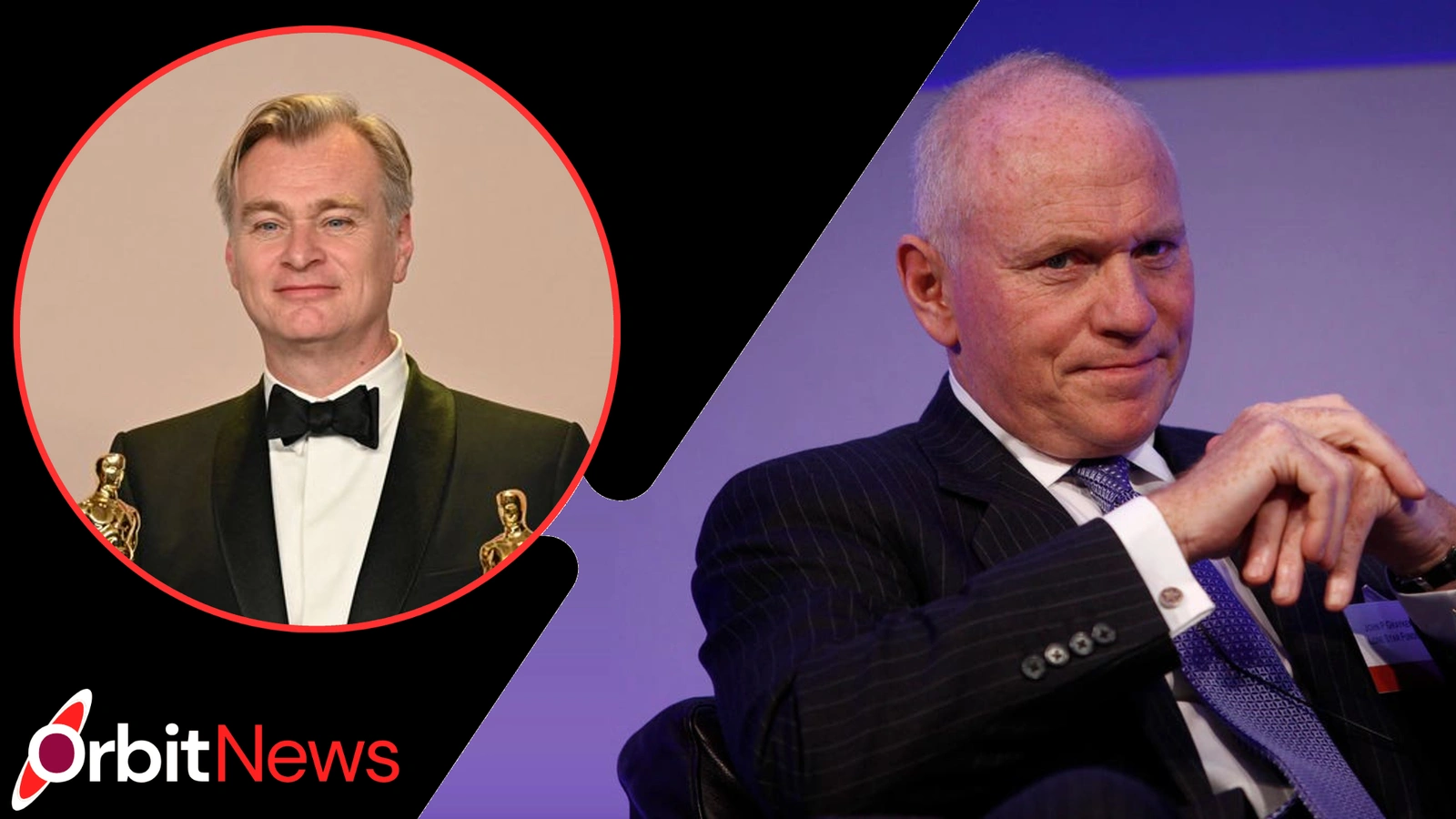
John Grayken has the larger published fortune in the Christopher Nolan and John Grayken net worth comparison. Forbes estimates Grayken at approximately US$7.5 billion as of 14 November 2026, while Celebrity Net Worth lists Nolan at US$250 million, checked that day. The estimated difference is US$7.25 billion, with Grayken’s figure about thirty times larger.
The pairing contrasts a filmmaker’s professional and production interests with ownership connected to an investment-management business. The central financial distinction is not simply the size of a fee. Money committed by investors to a fund, the value of a management business and the founder’s personal wealth are different measures that should not be combined casually.

Christopher Nolan and John Grayken Net Worth Comparison: A Clear Snapshot
The Grayken figure comes from Forbes’s real-time profile. The Nolan figure comes from Celebrity Net Worth’s profile. Both are third-party estimates, and their different methods and access to private information should remain visible beside the arithmetic.
| Person | Published estimate | Relevant economic context |
|---|---|---|
| Christopher Nolan | US$250 million | Filmmaking and production career |
| John Grayken | US$7.5 billion | Founder-related investment-business interests |
Thirty to one is the relationship between the rounded inputs, not a precise measurement of every privately held asset and liability. It does not establish that Grayken receives thirty times Nolan’s annual income or that the gap will remain unchanged. Net worth is a dated assessment rather than a forecast or universal career pay scale.
Nolan’s Career Combines Creative Work and Production
Nolan’s filmography includes Memento, The Dark Knight, Inception and Oppenheimer. These titles explain his unusual commercial and critical profile. They are career context, not separate assets whose entire receipts can automatically be added to the director’s personal fortune.
The Academy’s 2024 ceremony record identifies his directing win for Oppenheimer, which also won best picture. The recognition establishes professional achievement. It does not disclose a personal payment, a standard bonus or the detailed financial interests held by every producer and creative participant.
Directing, writing and producing can be distinct contributions within a production. One filmmaker can undertake several roles, but compensation and ownership depend on actual agreements. A collection of credits does not reveal a universal payment per role or establish that the person owns the entire finished film.
Box Office Is Not the Director’s Personal Revenue
Ticket receipts arise within a system involving cinemas, distributors, production financiers and contractual participants. The director’s economic benefit depends on an agreement rather than automatic ownership of the worldwide gross. A film can be strongly associated with one creator without giving that creator every dollar generated by audiences.
The same caution applies to production budgets. A budget supports the making of the film and many participants. It is not the director’s salary or personal asset value. Adding the budget to the film’s gross and then calling the combined amount personal wealth would mix incompatible measures and duplicate economic activity.
This article does not invent Nolan’s fee or profit-participation terms for a particular release. A reported compensation arrangement would need its own evidence and definitions. The published personal estimate supplies the scale used here without pretending that a filmography is a complete private financial account.
Grayken’s Founder Role Is Established by Lone Star
Lone Star’s official leadership biography identifies John P. Grayken as founder and chairman and dates the first fund to 1995. It also identifies him as Hudson’s founder. Those records establish the professional setting behind the wealth estimate, while leaving personal valuation and fund-level resources as separate questions.
A founder’s ownership interest in a business can have value beyond current employment compensation. The interest may reflect the ongoing economics of the organisation and attributable investment positions. That differs from receiving a fee for a single production or assignment, although both can contribute to accumulated personal assets.
The founder’s role does not mean that all investor money belongs to him. A fund’s commitments and assets operate under their own structures and obligations. The manager, the investors and the founder as an individual are different financial subjects, even when they are linked by a common public name.
Capital Commitments Are Not a Personal Bank Balance
A capital commitment describes an investor’s obligation under a fund arrangement. It should not be treated as unrestricted personal cash available to the firm’s founder. The deployment, ownership and return of that capital depend on the relevant structure, rather than simply on who leads the management business.
Assets managed or advised on also need a separate label. A large cumulative figure can describe the scale of an institution’s activity without establishing what any one person owns. Adding all those assets to a founder’s personal estimate would attribute resources belonging economically to other participants.
The comparison therefore does not substitute Lone Star’s fund totals or Hudson’s activity figures for Grayken’s US$7.5 billion Forbes estimate. Corporate information supplies context, while the personal-wealth publication supplies the attributed snapshot. Keeping those sources assigned to their actual purposes prevents an exaggerated financial ranking.
Why Both Careers Still Require an Ownership Map
A film production and an investment fund look very different, but each can involve several participants with distinct rights. A director is not automatically the owner of every production receipt, just as an investment manager is not automatically the owner of all capital they oversee. Visibility and responsibility are not complete economic ownership.
The personal question is what interest belongs to the individual and what obligations are attached. A business can create valuable opportunity while the actual position remains partly private. Without the relevant agreements and asset records, a writer should not fill the gaps with a guessed percentage merely to make the article look more detailed.
This also explains why annual pay would be an incomplete substitute. Existing interests can change in value independently of current work, while professional receipts can be spent, invested or used for liabilities. Accumulated wealth concerns what remains at a date, not every dollar ever mentioned around the career.
What the Thirty-to-One Scale Does and Does Not Say
The cited estimates place Grayken far ahead financially in this snapshot. The ratio communicates a broad difference in scale between the publication’s assessment of a private-equity founder and that of a prominent filmmaker. It is not a comparison of the artistic importance or social value of their work.
Nor does it establish immediate liquidity. A displayed wealth estimate can include interests that would take time or negotiation to sell. Transaction terms, costs and changing values can affect the amount ultimately realised. The article does not treat either estimate as a guarantee of an unrestricted cash balance.
OrbitNews’s Mario Gabelli comparison explores another investment-management distinction. Its Martin Scorsese article examines filmmaking economics without assigning the entire value of associated productions or institutions to the director.
Frequently Asked Questions
Who has the higher published net worth?
Grayken leads at approximately US$7.5 billion compared with Nolan’s US$250 million. The Forbes observation is dated 14 November 2026, and Nolan’s source was checked the same day. Both remain attributed estimates rather than complete personal accounts independently audited for this article.
Is the gap approximately US$7.25 billion?
That is the subtraction of the rounded figures used here. It is helpful for scale but should not be described as an exact audited difference. The sources do not reveal every private asset, obligation or valuation assumption underlying the personal estimates.
Does Grayken personally own all Lone Star investor capital?
No such conclusion follows from his founder and chairman roles. Fund capital, management-business interests and personal wealth are different financial subjects. The article does not assign all money committed by investors or all assets managed by associated businesses to Grayken’s personal fortune.
Does Nolan receive every dollar his films earn?
No. Film receipts are allocated within a production and distribution system under agreements. Directing or producing a successful title does not establish complete ownership of its revenue. The article uses his published personal estimate without substituting budgets, worldwide grosses or invented participation terms.
