


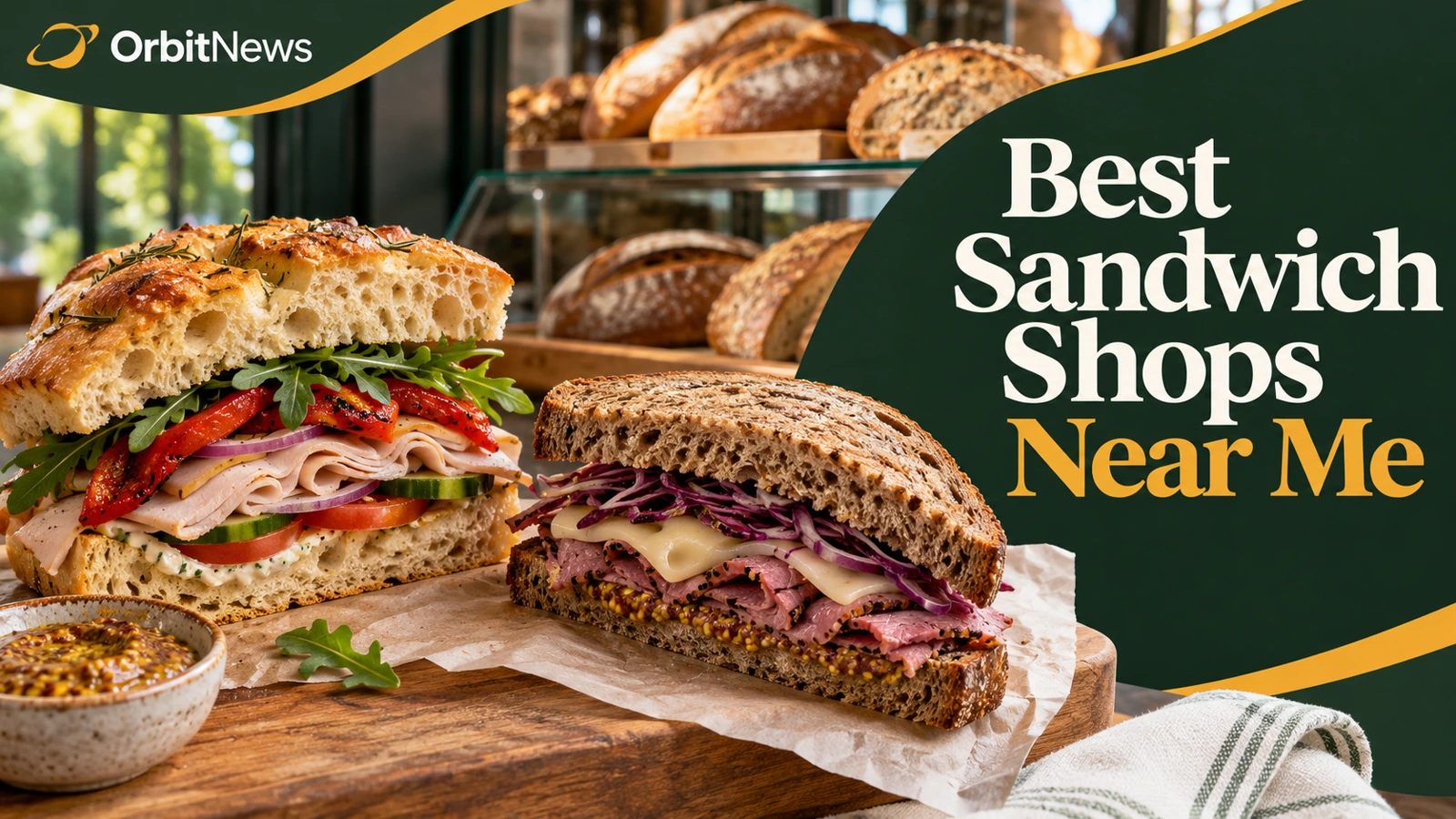
The best sandwich shops near me are the ones that match your preferred bread, filling, budget and available lunch time, with a current menu for the actual branch. Start with those details rather than assuming the shop with the largest online following is the best choice for your location.
Official menus provide useful examples of different approaches: Things In Bread lists familiar sandwich combinations in Leeds, TRADE focuses on sandwiches including its pastrami offering in London, and Sandwich Sandwich publishes several menu categories and location links. These are starting points for comparison, not a ranked list based on personal visits or a claim that every reader lives nearby.

Best Sandwich Shops Near Me: Choose Your Kind of Lunch First
A quick cold sandwich, a hot grilled sandwich and a large deli-style stack solve different problems. Decide whether you need something easy to eat at a desk, a warm lunch to enjoy immediately or a filling meal to take away. This narrows the search more effectively than the word best on its own.
Bread preference is a useful second filter. A soft sliced loaf, chewy roll, focaccia and toasted rye give different textures and handle fillings differently. If you know that you dislike a hard crust or want a particular bread, look for an explicit menu description instead of relying on an appealing cut-open photograph.
Then set a practical radius. Walking distance during a short lunch break is different from somewhere worth a weekend journey. Search using the neighbourhood or postcode where you will actually order, and check the individual shop’s page before making plans. A business may operate several branches with different service arrangements.
Leeds Example: Things In Bread
The official Things In Bread sandwich menu lists combinations including egg and cress, tuna crunch, a ploughman’s and tomato, mozzarella and pesto. It also describes a roast chickpea salad option. These examples make it easier to see the range of fillings than a vague statement that a shop offers something for everyone.
The page says sandwiches are available from opening to closing and points readers toward specials separately. That is a published service description, not a guarantee that every filling remains in stock until the final minute. If a particular sandwich is the reason for your visit, check the current order route or ask the shop before making a special journey.
This is a useful place to compare familiar combinations and ingredient descriptions. A vegetarian label does not automatically mean vegan, and a filling containing chickpeas can still include other ingredients that matter to your diet. Read the full description and clarify requirements with staff rather than deciding from the headline ingredient alone.
London Example: TRADE
The official TRADE website describes its London sandwich and coffee business and highlights a Reuben with pastrami, Swiss cheese and sauerkraut on toasted rye. It lists Commercial Street, Essex Road and Highgate, while marking Old Street temporarily closed at the check on 9 November 2026.
That branch distinction matters. A familiar brand name and an old map result do not establish that the location you plan to visit is trading normally. Use the current official location information and check the menu for your chosen café, particularly if you are fitting the stop around work or a train journey.
TRADE also states that prices and availability may vary by café. If you are comparing a hot sandwich here with a cold option elsewhere, compare the actual serving and total price rather than assuming that the same category name means an equivalent lunch. A toasted rye sandwich offers a different experience from a soft deli roll.
Another Menu Model: Sandwich Sandwich
The official Sandwich Sandwich menu page separates breakfast, house classics, hot stacks and other categories. It links to individual locations and describes ordering routes including in-store service and click and collect. Check the chosen branch and order screen for the items available to you.
This structure is useful when a group wants different styles of lunch. One person might prefer a hot sandwich while another wants a cold option or breakfast item. Establish the relevant service time and location before assuming every category is offered together whenever you arrive.
Avoid treating the size of a sandwich as a complete measure of quality. A larger portion may suit a substantial lunch, but a smaller well-balanced sandwich may be preferable before travel or a meeting. The appropriate choice depends on appetite, ingredients and the circumstances in which you will eat it.
What Good Bread and Filling Balance Mean
Think about how the bread supports the filling. A juicy mixture needs a structure that remains pleasant to hold and eat, while a lightly filled sandwich can feel overwhelmed by a very thick roll. These are practical tasting criteria, not claims that any named shop has passed an independent inspection by OrbitNews.
Consider the distribution of ingredients as well as the amount. A sandwich can look impressive at its cut edge but deliver uneven bites if everything is piled in the centre. A menu cannot prove the final construction, although clear ingredient descriptions help you decide whether the intended combination sounds balanced.
Ask about sauces if they strongly affect your preference. Mustard, mayonnaise, chutney and pesto can change the flavour substantially. If a sandwich is assembled to order, a change may be possible; if it is prepared ahead, removing one ingredient might not be practical. Establish that before paying rather than expecting every recipe to be fully customisable.
Comparing Value Without Guessing Prices
Use the current branch menu to calculate the whole order. Include any extras, drink, side and collection or delivery fees that you intend to purchase. A low base price may no longer be the cheaper lunch after the additions you want are included.
If two shops offer very different portions, compare them against your actual appetite. Buying the largest sandwich and leaving much of it uneaten is not automatically better value. Likewise, a small sandwich that leaves you buying another meal may not satisfy your original budget.
Check whether the quoted amount belongs to in-store service or an ordering platform. Different channels can show different totals and offers. Avoid publishing or relying on a supposed universal price when the menu itself asks you to choose a location or ordering method first.
Dietary Choices and Allergies
Read both the bread and the filling information. A vegetable filling can still include dairy, egg or another ingredient relevant to your diet, while a sauce can introduce something not obvious in the sandwich name. If you need a specific change, ask whether the shop can prepare it and what that means for the finished order.
The government’s eating-out allergy guidance advises discussing your requirements with the food business. For an allergy, identify the ingredient and ask about preparation as well as the recipe. A choice of alternative bread should not be taken as a guarantee about shared equipment or handling.
For a group order, make the individual requirements clear and check how each sandwich will be identified. A vague request for one special sandwich among many similar packages is easy to misunderstand. Confirm the arrangement with the business, especially when someone else will collect and distribute the food.
Reviews, Queues and Collection Timing
Recent reviews can help identify practical issues such as queues or a popular filling selling out, but they are individual experiences. Look for descriptions that explain what was ordered and at which branch. A review of a different shop in the same group may not answer your immediate question.
If you have a short break, check whether advance ordering or click and collect is available. Use the confirmed collection time rather than assuming a busy shop can produce a large order immediately. For office lunches, allow for collecting the food and getting it back to the group, not just the time spent at the counter.
For delivery, think about texture as well as convenience. A sandwich intended to be eaten hot and crisp may travel differently from a cold deli sandwich. Ask about packaging or choose a style suited to the journey instead of expecting every format to arrive as if it had just left the grill.
Turning a Shortlist Into a Useful Local Choice
Choose two or three realistic options and compare the same details: current branch, suitable filling, preferred bread, total cost and collection timing. That produces a decision you can act on. A long national list becomes less useful when it does not explain whether any of its shops fits your day.
If you are looking for a different meal, OrbitNews’s arroz negro guide and guiso de lentejas guide use the same principle of checking official menus. For sandwiches, the final choice should come from the menu and location you can actually use, rather than a universal claim about the best shop for everyone.
Frequently Asked Questions
How do I find a good sandwich shop close to me?
Add your town, postcode or neighbourhood to the search, then check the actual branch menu. Compare the bread, filling, price and collection arrangements against the lunch you want.
Are the shops here ranked from best to worst?
No. They are official-menu examples showing different sandwich styles. This guide does not claim first-hand visits or rank an untested nationwide winner.
Does a vegetarian sandwich have to be vegan?
No. Cheese, egg, mayonnaise or other ingredients may be included. Read the full description and ask the shop about the actual preparation if vegan suitability matters.
Should I check the branch before travelling?
Yes. Branch status and availability can differ. TRADE’s official site, for example, marked Old Street temporarily closed when checked, while listing other London cafés.
Is click and collect always quicker?
It can help organise timing when offered, but use the confirmed collection slot. Do not assume the same service or waiting time at every shop or branch.
