


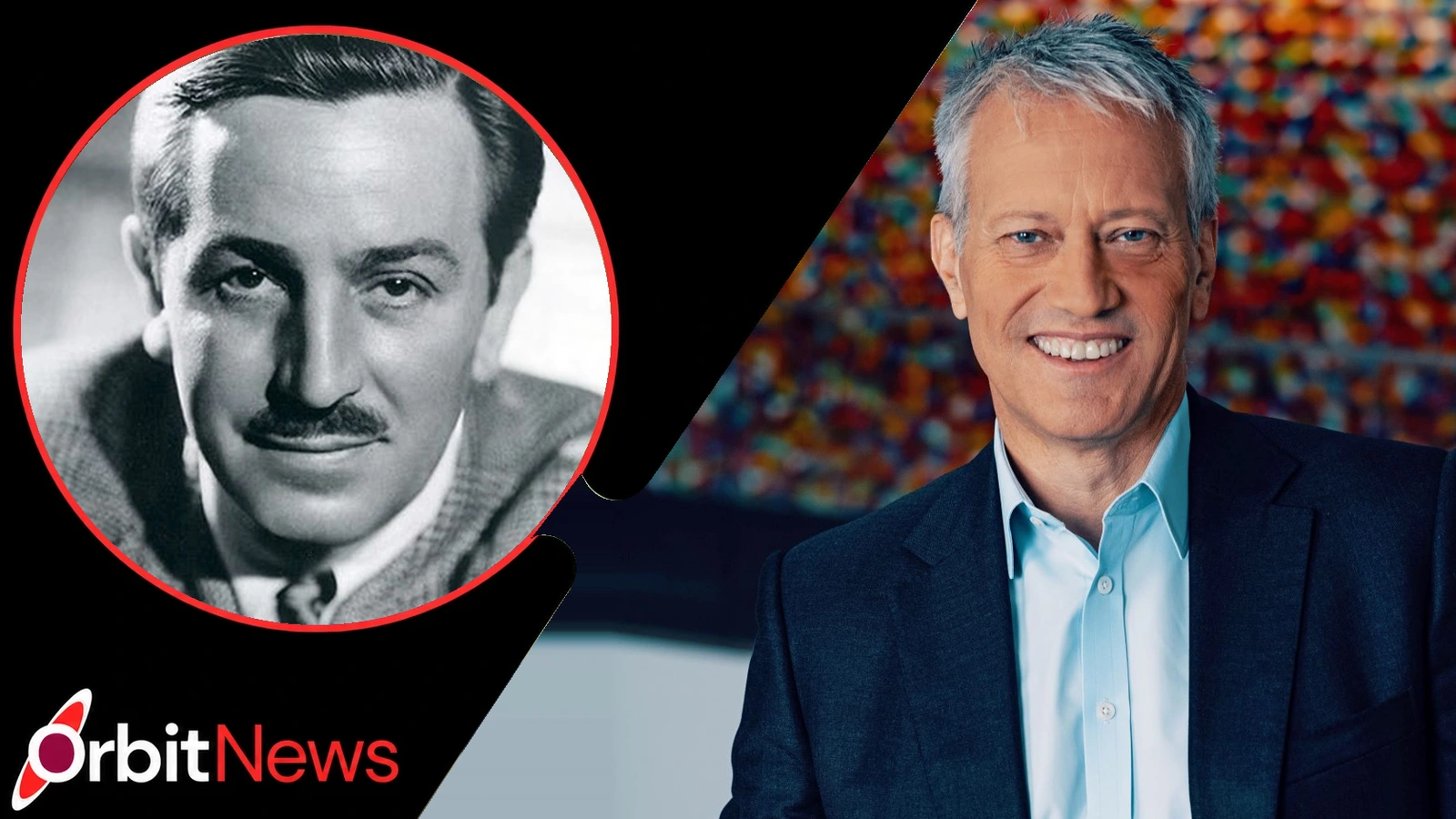
Walt Disney and James Quincey belong to different generations of business history. The verified connection relevant to this pairing is the longstanding relationship between The Walt Disney Company and Coca-Cola, not a documented personal partnership between Disney and Quincey.
Disney died in 1966, decades before Quincey joined Coca-Cola in 1996. Their names are therefore most usefully compared through brand-building, organisational leadership and the distinction between a historical founder and a later executive at a partner company.

Walt Disney and James Quincey: The Connection Is Institutional
A company can maintain relationships long after its founder’s death. Later executives may lead one of the businesses involved without having worked with the founder personally. That is the central distinction in this comparison.
The linked records document Disney’s life, Disneyland’s opening and the companies’ commercial relationship. They do not identify a meeting, joint venture or personal business partnership between the two men. A corporate alliance should not be rewritten as an individual relationship across generations.
Walt Disney’s Place in the Timeline
The D23 biography of Walt Disney records his birth on 5 December 1901 and death on 15 December 1966. It describes his work in animation, film, television and the development of Disneyland.
These dates matter more to this pairing than a speculative story about personal contact. A historical biography explains the founder’s own period of activity. Later decisions by The Walt Disney Company belong to the people and organisations responsible at that later date, even when the company continues to bear his name.
Disneyland Opened in 1955
Disney’s history of building Disneyland dates the park’s opening to 17 July 1955. It explains the project as an extension of an entertainment business into a physical visitor experience.
That creates a useful point of comparison with consumer brands: a story or character can become part of a place people visit, while other businesses provide products and services within the experience. The commercial relationships involved should be checked against their own records rather than attributed automatically to one founder’s personal decisions.
What Disney’s Coca-Cola Alliance Release Actually Says
A 2002 Disney alliance announcement states that Coca-Cola had played a role in refreshing visitors at Walt Disney attractions since 1955. The release describes an expanded multi-year strategic alliance between the two companies.
This is evidence of a company-level relationship and its historical framing. It does not say that Quincey created the original 1955 arrangement, and the release should not be used to imply that Disney was alive for later expansions of the alliance. The event date, organisations and individuals must remain distinct.
| Timeline point | Documented event | What it means for this pairing |
|---|---|---|
| 1955 | Disneyland opened; Disney’s later release dates Coca-Cola involvement from that year | The relationship began in an earlier corporate era |
| 1966 | Walt Disney died | His personal career ended long before later executive tenures |
| 1996 | Quincey joined Coca-Cola | His company career began decades later |
| 2002 | Disney announced an expanded company alliance | A corporate relationship continued beyond the founder |
| 2026 | Quincey became executive chairman after CEO succession | His current office differs from his earlier CEO role |
Quincey Is a Later Corporate Leader
Coca-Cola’s current Quincey biography identifies him as executive chairman and records his earlier CEO and chairman appointments. It also states that he joined the company in 1996 and stepped down as CEO in 2026.
His relevance to the pairing comes from leadership of a company associated with Disney’s wider corporate history. That is different from being a founder of Coca-Cola, an executive at Disney or a personal collaborator of Walt Disney. None of those roles should be inferred from the shared headline.
Founder-Led Creation and Stewardship Are Different Jobs
A founder can help define an organisation’s initial products, identity and ambitions. A later executive inherits an existing structure and faces the task of adapting it. Both can shape a business, but the starting conditions are different.
For this comparison, Disney represents creative and entrepreneurial development in his own era. Quincey represents later corporate stewardship within Coca-Cola. The distinction allows readers to compare kinds of leadership without pretending that the two men competed for the same job or operated in the same market at the same time.
Why Brand Partnerships Can Last Across Generations
A partnership can be useful because two organisations reach related audiences or provide complementary parts of an experience. A theme park and a beverage supplier illustrate how different businesses can participate in the same customer visit.
The existence of a long relationship does not prove that every term remains unchanged. Contracts, products and leadership can evolve. Use the announcement relevant to the period being discussed and avoid treating a historical press release as a complete description of every current commercial arrangement.
Do Not Confuse Walt Disney With The Walt Disney Company
The name can refer to a person, a corporate group or a brand used in many contexts. A statement about one does not automatically describe the others. This is especially important when an article combines a deceased founder’s name with a living executive.
For example, a company announcement made after 1966 cannot be presented as something Walt Disney personally said or approved. Similarly, a quote from Quincey’s biography should not be attributed to the Disney company. Keeping the entities clear prevents a seemingly small wording change from becoming a factual error.
A Historical Comparison Without Invented Contact
The documented material supports discussing creative expansion, consumer experiences and the continuity of corporate relationships. It does not require a claim that Disney and Quincey met, corresponded or worked together.
That boundary leaves a useful story: organisations can preserve recognisable identities while leadership and commercial arrangements change. The people’s different positions in the timeline explain why the company-level alliance is meaningful and why a personal partnership is not established by the same evidence.
Two Brands, Two Different Parts of a Visitor Experience
The Disney and Coca-Cola relationship offers a practical way to understand complementary businesses. A park sells admission to an organised entertainment experience. A beverage company supplies products that visitors may consume during that visit. The customer encounters both, but the companies contribute different things. Their visibility in the same setting does not make their founders or executives business partners in a personal capacity.
For the park operator, consistency matters across many small interactions, including refreshments, service and the surroundings. For a beverage business, the setting can place its products within an experience customers remember. This is a business interpretation of why the categories can fit together, rather than a claim about confidential contract terms. The public alliance announcement supports the existence of the relationship, while the economics of a particular agreement require separate evidence.
Reading the Alliance Across Four Corporate Eras
The strongest account follows the chronology instead of putting both names into a single imagined meeting. First comes Disneyland’s opening and the historical start date given for Coca-Cola’s involvement. Next comes the period after Walt Disney’s death, when the organisation continued under other leaders. The 2002 expansion announcement then provides a dated example of the companies describing their relationship publicly. Quincey’s later leadership belongs to another stage of Coca-Cola’s development.
This sequence helps answer a common question about famous business names: how can a founder remain associated with a relationship managed many years later? The answer is institutional continuity. A company can retain its name, brands and commercial relationships while its directors and executives change. Recognising that continuity gives Disney his historical place without crediting him with decisions made after his lifetime, and gives Quincey his own career without assigning him events that predated it.
There is also a useful distinction between a brand appearing inside an attraction and ownership of that attraction. Supplying refreshments does not, by itself, establish ownership, management authority or responsibility for creative decisions. Likewise, the existence of an alliance does not tell readers which individual negotiated each agreement. Those questions need contracts, named announcements or other specific records. Keeping these distinctions visible makes the company relationship understandable without turning ordinary commercial participation into an unsupported claim of control.
Frequently Asked Questions
Did Walt Disney and James Quincey work together?
No working relationship was established here. Disney died in 1966; Quincey joined Coca-Cola in 1996.
What is the documented connection?
Disney’s corporate release describes a longstanding Disney–Coca-Cola relationship, with involvement dating from 1955.
When did Disneyland open?
The cited Disney history gives 17 July 1955.
Did Quincey create the original 1955 arrangement?
The reviewed sources do not support that claim.
What is Quincey’s current role?
Coca-Cola identifies him as executive chairman after its 2026 CEO transition.
Related Reading on OrbitNews
For more researched profiles, browse OrbitNews biographies and OrbitNews business coverage.
