


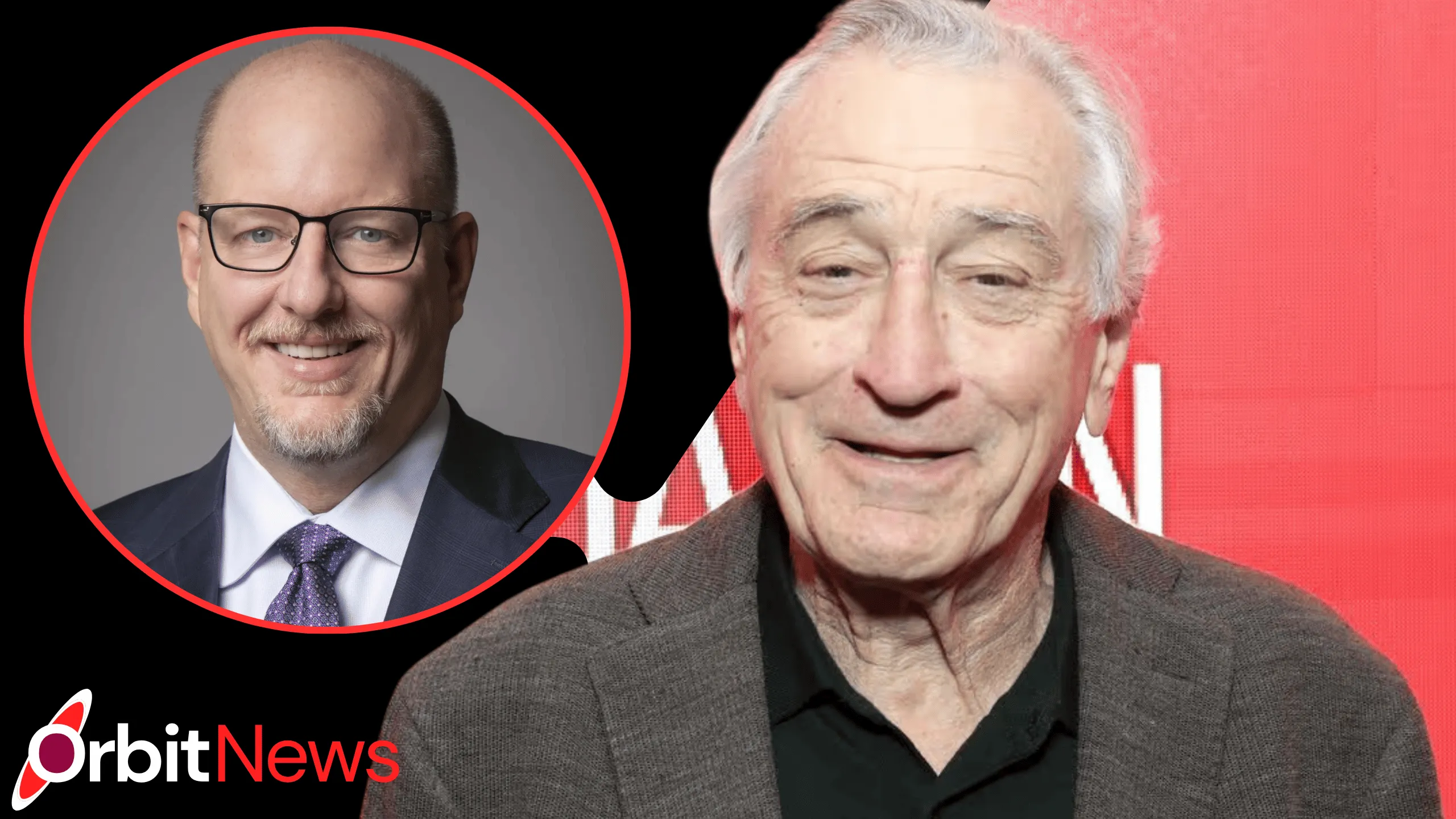
Robert De Niro and Robert Davis are connected through a proposed luxury hotel development in London, not through family, film, or a known private business partnership. Davis, then a senior Westminster City Council figure responsible for planning, met De Niro and dealt with the planning process for De Niro’s proposed Wellington Hotel in Covent Garden. Official council minutes directly document their contact.
The connection later attracted attention because Davis’s wider relationships with property developers and his acceptance of gifts and hospitality became the subject of a Westminster City Council investigation. That investigation raised concerns about standards and public perception, but it expressly said there was no evidence that Davis had actually been influenced in his duties and found that accepting the hospitality was not itself unlawful.

Who Are Robert De Niro and Robert Davis?
Robert De Niro is the American actor, producer, director and businessman known for films including The Godfather Part II, Taxi Driver, Raging Bull, Goodfellas and The Irishman. He won Academy Awards for The Godfather Part II and Raging Bull and has built interests outside acting, particularly in entertainment and hospitality.
De Niro also helped establish Tribeca alongside Jane Rosenthal and has long been involved in businesses connected with New York’s Tribeca neighborhood. Tribeca’s official history credits De Niro and Rosenthal with founding the festival after the September 11 attacks as part of efforts to support Lower Manhattan.
Robert Davis MBE DL is a British solicitor and former Westminster City councillor. According to the Greater London Lieutenancy, he served on Westminster City Council from 1982 until 2018, was deputy leader, chaired the council’s planning committee for 17 years and previously served as Lord Mayor of Westminster. He remains listed by the Lieutenancy as a Deputy Lieutenant.
That planning role is the key to understanding why Robert De Niro and Robert Davis appear together in historical reports.
How Did Robert De Niro and Robert Davis Meet?
Their documented contact developed around De Niro’s plan to create a luxury boutique hotel in Covent Garden.
In 2016, De Niro joined Capital & Counties Properties, commonly called Capco, and hotel operator BD Hotels in proposals for the Wellington Hotel. The planned property was to contain 83 rooms and occupy a collection of historic buildings around Wellington Street, Tavistock Street, Burleigh Street and Exeter Street.
Davis was deeply involved in Westminster’s planning system at the time. The official minutes from the Planning Applications Sub-Committee meeting on August 16, 2016 provide unusually clear evidence of his connection with De Niro.
Before consideration of the Wellington application, Davis formally declared that he knew directors connected with the applicant and hotel project, including Robert De Niro. The minutes state that Davis had met De Niro, had held meetings with the applicant and had been given a tour of De Niro’s Greenwich Hotel in New York. Davis also declared that he knew directors at Gerald Eve, the planning consultancy working on the scheme.
This is stronger evidence than vague online claims that the two simply “knew each other.” Their contact is documented in the council’s own record and was specifically disclosed before the planning application was considered.
What Was the Wellington Hotel Project?
The Wellington Hotel was intended to bring a version of De Niro’s New York hospitality interests to central London.
The proposal covered a block in Covent Garden and involved six buildings, several of them historically protected. Plans included the hotel itself, restaurants, a spa, retail space, a private members’ club and other facilities. Architect Kohn Pedersen Fox was involved in designing the project.
Westminster’s official planning minutes described extensive redevelopment behind partially retained historic facades, along with restaurants, retail, a spa, offices and a private members’ club. On August 16, 2016, the planning subcommittee resolved to grant conditional planning permission, subject to conditions and a Section 106 legal agreement covering matters including construction management, employment opportunities and highway works.
De Niro said when announcing the project that he wanted the hotel to respect Covent Garden’s heritage while bringing elements of what his partners had developed in New York.
Also Read: David Taylor and Robert Davis
What Role Did Robert Davis Play in the Approval?
Davis was both a senior Westminster politician and an important figure in its planning system. However, describing the Wellington permission as something Davis personally granted would be misleading.
The official record shows that the application went before Westminster’s Planning Applications Sub-Committee. Davis chaired the process, but the permission was recorded as a committee resolution rather than a unilateral decision by him.
Before the application was considered, Davis also made declarations about his professional contacts. He explained generally that his planning responsibilities meant regularly meeting developers, consultants, architects and other parties during pre-application discussions. For the Wellington application specifically, he disclosed his contacts with the project’s participants and his meetings involving De Niro.
Following approval, Davis publicly praised the proposed hotel, describing it as one of the strongest Covent Garden schemes considered by the council in years and saying its design combined old and new architecture.
Why Did the Robert De Niro and Robert Davis Connection Later Receive Attention?
The De Niro meeting became notable because of a much broader controversy surrounding Davis’s contacts with London’s property industry.
In 2018, The Guardian reported that Davis had met De Niro in New York and had also received hospitality connected with the actor’s development partner and the project’s planning consultant. The newspaper highlighted the episode as part of its investigation into the large volume of gifts and hospitality Davis had declared while holding senior council and planning responsibilities.
It is important not to turn that sequence of events into a claim that the Wellington planning decision was bought, improperly influenced, or corrupt. The available official findings do not establish that.
Westminster later conducted a formal investigation into Davis’s gifts and hospitality more generally. Its report said that accepting large amounts of hospitality was not automatically unlawful and that Davis had followed the procedure for registering his gifts and hospitality.
At the same time, the investigation concluded that the scale of hospitality created serious questions about judgment and perception. It said accepting hospitality from developers or their agents around planning decisions could place an officeholder in a position where others might seek to influence them. Crucially, the independent review also stated that it had seen no evidence that such influence actually occurred.
The report further concluded that the scale of Davis’s hospitality had not met the council code’s requirement to promote high standards of conduct through leadership and example.
Davis disputed negative interpretations of his conduct and maintained that he had acted independently and transparently. He resigned from Westminster City Council in October 2018 after 36 years as a councillor. Westminster’s own council papers record his resignation on October 10, 2018.
Was Robert De Niro Accused of Wrongdoing?
No reliable source reviewed for this article establishes wrongdoing by Robert De Niro in connection with the Wellington Hotel planning application.
Reporting about Davis concerned the councillor’s own obligations, declarations, contacts and acceptance of hospitality. The 2018 Westminster investigation specifically addressed Davis’s conduct as a public officeholder rather than making a finding that De Niro improperly influenced the planning process.
The distinction matters. De Niro was participating in a commercial property project that required local planning approval. Meetings between applicants, developers and planning officials can form part of a planning process. The controversy concerned whether Davis’s much wider pattern of hospitality across the property industry created inappropriate perceptions or potential obligations, not a finding that De Niro had corrupted the Wellington decision.
Were Robert De Niro and Robert Davis Personal Friends?
The public record proves that they met, but it does not establish a close personal friendship.
Westminster’s minutes are particularly useful here. When discussing his relationships with people involved in planning applications, Davis explicitly explained that knowing or meeting individuals through his council duties did not necessarily mean that they were his personal friends. For the Wellington application, he separately declared that he knew De Niro and had met him.
Therefore, describing De Niro and Davis simply as “friends” would go further than the strongest available documentary evidence.
A more accurate description is that they were professional acquaintances connected through a London property and hotel planning project.
Are Robert De Niro and Robert Davis Related?
There is no credible evidence that Robert De Niro and Robert Davis are relatives.
Their names appear together because Davis dealt with the planning environment surrounding De Niro’s proposed Covent Garden hotel. De Niro’s father was the American artist Robert De Niro Sr., not Robert Davis.
There is likewise no reliable evidence that Davis was one of De Niro’s film collaborators, relatives, agents, or long-term hospitality business partners.
What Happened to De Niro’s London Hotel?
Despite winning planning approval, the Wellington Hotel was never completed under the De Niro and BD Hotels proposal.
In July 2018, BD Hotels confirmed that the project would not proceed. Co-founder Ira Drukier said the changing economic environment had made the development financially marginal, while Capco said satisfactory commercial terms had not been reached with BD Hotels.
This point is sometimes missed in older articles. Reports published in 2016 often said that construction would begin in 2017 and that the hotel would open in 2019. Those were projections at the time, not what eventually happened. The De Niro-linked Wellington scheme was subsequently abandoned.
Robert De Niro and Robert Davis Timeline
| Date | What happened |
|---|---|
| May 2016 | De Niro, Capco and BD Hotels publicly advanced plans for an 83-room Wellington Hotel in Covent Garden. |
| August 16, 2016 | Robert Davis disclosed that he knew De Niro, had met him and had been given a tour of the Greenwich Hotel in New York. |
| August 16, 2016 | Westminster’s planning subcommittee resolved to grant conditional permission for the Covent Garden development. |
| 2018 | Davis’s wider gifts and hospitality declarations became the subject of extensive scrutiny and a formal council investigation. |
| July 2018 | De Niro and BD Hotels’ Wellington project was reported as scrapped for commercial and economic reasons. |
| October 2018 | Davis resigned from Westminster City Council following completion of the council investigation into his gifts and hospitality. |
What the Verified Record Shows
The documented relationship between Robert De Niro and Robert Davis is narrower than the keyword can make it appear.
They met in connection with De Niro’s planned Wellington Hotel in London. Davis’s own declaration confirms that he knew De Niro, had met with people involved in the application and had toured De Niro’s Greenwich Hotel in New York. Davis then chaired the Westminster planning subcommittee that considered the London development.
Later scrutiny of Davis’s extensive hospitality from the property industry brought the De Niro meeting back into the news. The official investigation raised concerns about Davis’s judgment and the appearance created by such hospitality, while also stating that it found no evidence that he had actually been influenced and that the acceptance of hospitality was not itself unlawful.
The evidence therefore supports a planning and professional connection, not claims of kinship, a Hollywood collaboration, or a proven improper arrangement between the two men.
FAQ
Why are Robert De Niro and Robert Davis mentioned together?
They are linked through the proposed Wellington Hotel in Covent Garden. Davis was a senior Westminster planning figure, while De Niro was part of the group proposing the luxury hotel. Westminster’s official minutes confirm that the two had met.
Did Robert Davis meet Robert De Niro personally?
Yes. Davis formally told Westminster’s planning subcommittee that he knew De Niro and had met him. He also disclosed that he had toured the Greenwich Hotel in New York.
Are Robert De Niro and Robert Davis related?
No credible evidence establishes any family relationship between them. Their documented connection concerns the proposed Covent Garden hotel and Westminster’s planning process.
Did Robert Davis personally approve De Niro’s hotel?
Not by himself. The official record shows that the Wellington proposal was considered by a Westminster planning subcommittee, which resolved to grant conditional permission. Davis chaired the committee and disclosed his relevant contacts beforehand.
Was improper influence proven in the De Niro hotel decision?
No. Westminster’s later investigation into Davis’s hospitality said such relationships could create a perception or possibility of influence, but the independent reviewer explicitly stated that he had seen no evidence that actual influence occurred.
Did Robert De Niro’s Wellington Hotel ever open?
No. The project was reported as scrapped in July 2018 after BD Hotels and Capco failed to reach satisfactory commercial terms and the economics of the development were considered unfavorable.
Also Read: Dennis Muilenburg and Robert Davis
