


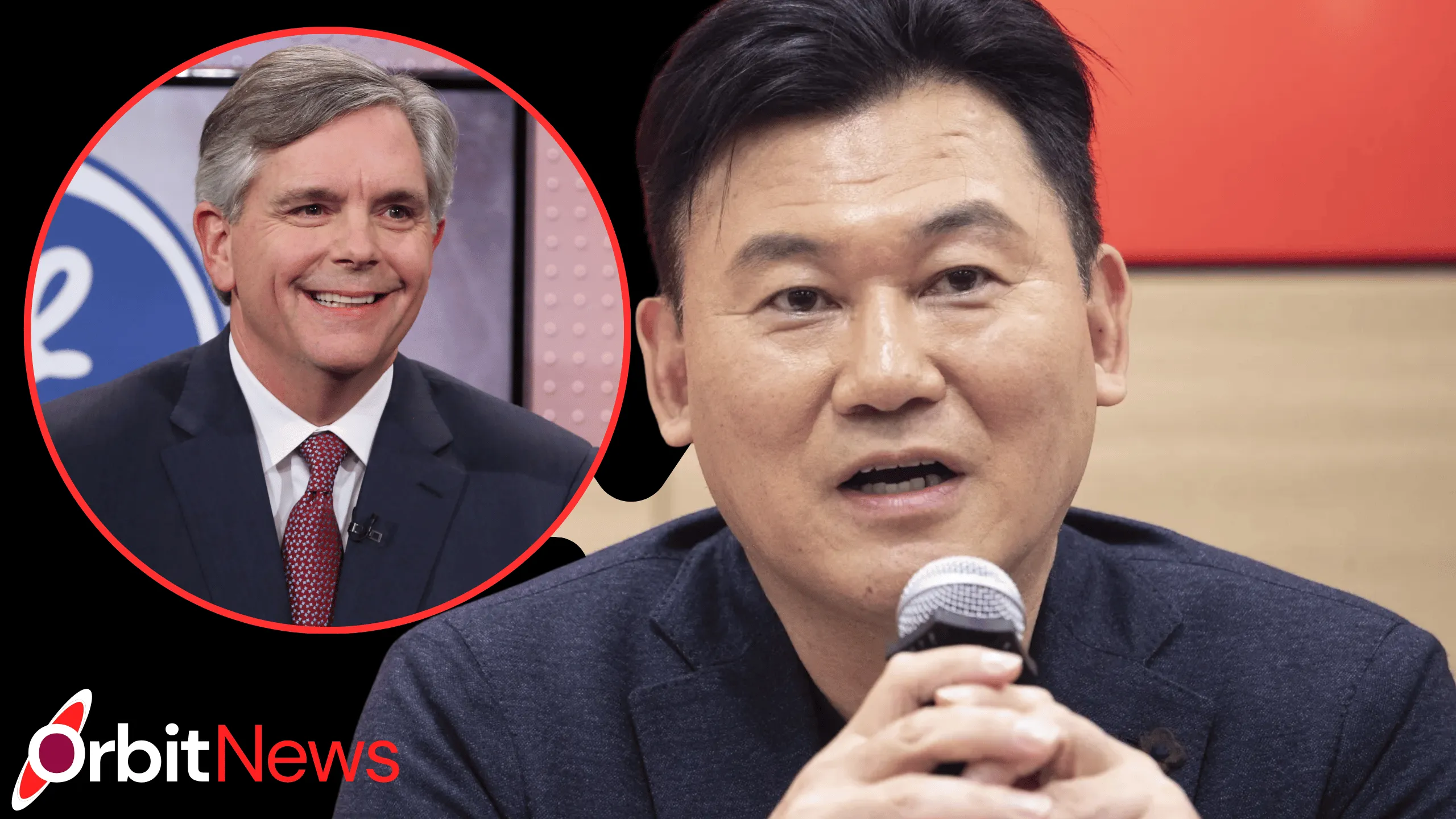
Hiroshi Mikitani and Larry Culp are prominent global business leaders, but there is no verified public evidence that they are business partners, colleagues, or members of the same corporate board. Their clearest documented connection is Harvard Business School: Culp earned his MBA there in 1990, Mikitani in 1993, and both later received the school’s highest alumni honor.
As of September 2026, Mikitani remains the founder and chief executive of Japan’s Rakuten Group, while Culp serves as chairman and CEO of GE Aerospace. Their careers have developed in very different industries, but there are notable parallels in education, corporate transformation, international expansion, and their emphasis on changing how large organizations operate.

Who Are Hiroshi Mikitani and Larry Culp?
Hiroshi “Mickey” Mikitani is the founder of Rakuten Group, one of Japan’s major technology and internet-services groups. Rakuten’s businesses span e-commerce, financial services, mobile communications, digital content and related technology operations. Mikitani currently holds the positions of Representative Director, Chairman, President and CEO of Rakuten Group.
H. Lawrence “Larry” Culp Jr. is chairman and CEO of GE Aerospace. Before GE Aerospace became an independent public company, he led General Electric through the restructuring that ultimately produced three standalone companies: GE Aerospace, GE HealthCare and GE Vernova. He previously spent roughly 25 years at Danaher, including more than a decade as its president and CEO.
| Area | Hiroshi Mikitani | Larry Culp |
|---|---|---|
| Current principal role | Chairman, President and CEO, Rakuten Group | Chairman and CEO, GE Aerospace |
| Main industry | E-commerce, fintech, mobile and digital services | Aerospace engines, systems and services |
| Harvard Business School | MBA 1993 | MBA 1990 |
| HBS Alumni Achievement Award | 2012 | 2026 |
| Major leadership theme | Entrepreneurship and ecosystem expansion | Lean management and operational improvement |
| Verified direct business relationship | No publicly documented relationship identified | No publicly documented relationship identified |
What Is the Connection Between Hiroshi Mikitani and Larry Culp?
The strongest verifiable connection between Hiroshi Mikitani and Larry Culp is Harvard Business School.
Culp graduated from HBS with an MBA in 1990. Mikitani graduated three years later, in 1993. There is no indication that they were classmates, since their MBA years did not overlap.
More unusually, both were eventually selected for the Harvard Business School Alumni Achievement Award, which HBS describes as its highest alumni honor.
Mikitani received the award in 2012 for a career centered on entrepreneurship and the development of Rakuten.
Culp received the same honor in 2026. HBS highlighted his work at Danaher and GE, including GE’s restructuring and the creation of GE Aerospace, GE HealthCare and GE Vernova as separate public companies.
That shared educational and alumni distinction is a real connection. It should not, however, be mistaken for evidence that the two executives have worked together.
Is There a Rakuten-GE Partnership Involving Them?
No significant partnership directly linking Mikitani and Culp is disclosed in their current official biographies or the recent corporate materials of Rakuten Group and GE Aerospace.
There is also no verified evidence in those materials of the two serving together on a corporate board, jointly investing in a company, founding a venture together or participating in a disclosed strategic transaction.
Their names may therefore appear together online because they fit similar categories, particularly internationally prominent CEOs, Harvard Business School alumni and recipients of the HBS Alumni Achievement Award. That association is different from a direct commercial relationship.
Hiroshi Mikitani’s Career and the Rise of Rakuten
Mikitani was born in Kobe, Japan, on March 11, 1965. He studied at Hitotsubashi University before joining the Industrial Bank of Japan in 1988. He subsequently attended Harvard Business School and completed his MBA in 1993.
His time at Harvard proved influential. HBS’s profile of Mikitani says the experience helped expose him to American entrepreneurial culture and contributed to his decision to eventually leave banking and start a company.
He founded the business that became Rakuten in 1997.
Rakuten began with an online marketplace model but expanded far beyond conventional e-commerce. Its present ecosystem includes internet services, financial businesses and mobile telecommunications. Mikitani has also taken leadership roles across other Rakuten-related organizations, including Rakuten Mobile, Rakuten Symphony and Rakuten Medical.
Rakuten’s Position in 2026
Rakuten entered 2026 after several years in which the cost of building its mobile network had weighed heavily on group earnings. By the second quarter of 2026, the financial picture had improved considerably.
For Q2 FY2026, Rakuten reported:
- Consolidated revenue of ¥665.5 billion, up 11.6% year over year.
- Non-GAAP operating income of ¥42.0 billion.
- IFRS operating income of ¥20.0 billion.
- Net income attributable to owners of the parent of ¥7.7 billion.
- Its first quarterly net income at that level in six years.
- Approximately 10.75 million Rakuten Mobile subscriptions at the end of June 2026.
For the first six months of 2026, Rakuten recorded consolidated revenue of approximately ¥1.31 trillion and operating income of ¥50.44 billion under IFRS.
These figures matter when assessing Mikitani’s current position because mobile expansion has been one of the biggest strategic and financial challenges of his later career.
Mikitani’s Ownership Connection to Rakuten
Mikitani is not simply a hired chief executive. He remains financially connected to the company he founded.
A Rakuten disclosure published in May 2026 listed Hiroshi Mikitani directly as holding 8.14% of Rakuten Group shares. The same disclosure separately listed Crimson Group LLC with a 10.43% stake. Mikitani’s official biography identifies him as the representative partner of Crimson Group.
Those figures establish a substantial ownership connection, although they should not automatically be combined into a personal ownership percentage without considering the legal ownership structure and applicable disclosure rules.
Larry Culp’s Career Before GE Aerospace
Larry Culp followed a considerably different route.
He earned his undergraduate degree from Washington College and an MBA from Harvard Business School. He entered the Danaher organization through Veeder-Root in 1990 and subsequently held a series of increasingly senior roles. Culp became Danaher’s president and CEO in 2001 and remained in that position until 2014.
His tenure became closely associated with the Danaher Business System, an operating framework influenced by lean manufacturing and continuous improvement principles.
After Danaher, Culp served as a senior lecturer at Harvard Business School from 2015 to 2018 and also worked as a senior adviser to Bain Capital Private Equity.
He joined GE’s board in April 2018 and became CEO later that year. HBS says his tenure included reducing GE’s debt by more than $100 billion and restructuring the group into three separate public companies.
GE Aerospace emerged as an independent company in April 2024, with Culp serving as chairman and CEO.
Culp’s GE Aerospace Strategy in 2026
Culp’s current management approach centers heavily on FLIGHT DECK, GE Aerospace’s proprietary lean operating model.
The model emphasizes continuous improvement around safety, quality, delivery and cost. GE Aerospace has repeatedly linked operational changes under FLIGHT DECK with production, services and financial performance.
The company’s 2025 results showed adjusted revenue growth of 21%, operating profit of $9.1 billion and free cash flow of $7.7 billion. GE Aerospace also reported a backlog of roughly $190 billion at the end of that period.
Momentum continued into 2026. In the second quarter, GE Aerospace reported:
- $16.5 billion in orders
- $13.3 billion in GAAP revenue
- $2.8 billion in GAAP profit
- $3.0 billion in free cash flow
- A backlog exceeding $210 billion by mid-2026
In September 2026, GE Aerospace also agreed to acquire Consolidated Precision Products for $11.75 billion. CPP manufactures specialized castings used in aerospace and other industrial applications. GE said the transaction was intended to increase access to mission-critical casting capacity as demand for engines, aftermarket services and defense products grows.
The acquisition illustrates Culp’s current emphasis on industrial capacity and supply-chain execution rather than the portfolio separation that dominated his earlier GE leadership.
How Their Leadership Styles Differ
Mikitani and Culp are both associated with major corporate transformations, but the transformations are fundamentally different.
Mikitani Built an Ecosystem
Mikitani’s career has largely been about creating businesses and connecting them.
Rakuten developed from an internet marketplace into an ecosystem containing commerce, payments, banking, securities, insurance, telecommunications, digital media and other services. The underlying idea is that different businesses can reinforce each other through a shared customer base and loyalty infrastructure.
His approach is therefore strongly associated with entrepreneurship, expansion and business creation.
Culp Reshaped Existing Organizations
Culp is more strongly identified with operating systems and restructuring.
At Danaher, his reputation developed around disciplined execution and the Danaher Business System. At GE, he inherited a complicated industrial conglomerate and eventually oversaw its separation into independent businesses.
At GE Aerospace, the emphasis has shifted toward using lean methods to improve factory output, engine servicing, supply chains and financial performance.
His career is therefore more closely associated with operational discipline, decentralization and continuous improvement.
An Important Similarity: Both Challenged Traditional Corporate Models
Despite their different industries, there is an interesting strategic parallel.
Mikitani left an established Japanese banking career to become an entrepreneur at a time when that path was much less conventional in Japan. HBS records his account of how studying entrepreneurship during his MBA helped reshape his ambitions.
Culp eventually became the first outsider to lead General Electric in its long corporate history. Rather than preserving GE’s traditional conglomerate structure, his tenure culminated in the creation of separate publicly traded businesses.
Both careers therefore involve breaking with established corporate assumptions, although one did it primarily by building a new enterprise and the other through transforming mature industrial businesses.
Their Shared Harvard Business School Legacy
Harvard Business School provides the clearest institutional bridge between the two executives.
Mikitani’s HBS experience directly preceded the entrepreneurial phase of his career. He later remained involved with the school and was recognized with the 2012 Alumni Achievement Award. HBS also lists him among the founding donors supporting its online education initiative.
Culp’s relationship with HBS eventually moved beyond alumni status. He served as a senior lecturer and helped teach strategy execution before returning to full-time corporate leadership. In May 2026, HBS named him an Alumni Achievement Award recipient, with the award presented during commencement on May 28.
This means the two executives now belong to a relatively specific shared category: Harvard Business School MBA graduates who later received the school’s highest alumni distinction.
That is considerably more precise than suggesting an unverified corporate or personal partnership.
Where Hiroshi Mikitani and Larry Culp Stand Today
As of September 2026, both executives remain actively involved in running major public companies.
Mikitani is leading Rakuten during a period in which improving the economics of its mobile operation and strengthening group profitability remain important priorities. Rakuten’s Q2 2026 results showed significant improvement, including its first quarterly net income in six years.
Culp is leading GE Aerospace amid strong commercial aviation and defense demand, a backlog exceeding $210 billion and continued efforts to expand production and supplier capacity. The September 2026 CPP acquisition agreement represents one of the company’s most consequential recent strategic moves.
Their companies operate in fundamentally different markets, and current public disclosures do not establish a direct strategic relationship between Rakuten and GE Aerospace involving the two leaders.
FAQ
Are Hiroshi Mikitani and Larry Culp business partners?
No verified public information establishes Mikitani and Culp as business partners. Their principal documented connection is through Harvard Business School, where both earned MBAs and later received Alumni Achievement Awards.
Did Hiroshi Mikitani and Larry Culp attend Harvard together?
No. Larry Culp is an HBS MBA Class of 1990 graduate, while Hiroshi Mikitani graduated in 1993. Their enrollment periods therefore were not the same graduating class.
What award did Hiroshi Mikitani and Larry Culp both receive?
Both received the Harvard Business School Alumni Achievement Award, which HBS identifies as its highest alumni honor. Mikitani received it in 2012 and Culp in 2026.
What company does Hiroshi Mikitani run?
Mikitani is the founder and currently serves as Representative Director, Chairman, President and CEO of Rakuten Group, Inc. Rakuten operates businesses across internet services, financial technology and mobile communications.
What company does Larry Culp run?
Larry Culp is chairman and CEO of GE Aerospace. He previously led General Electric and served as president and CEO of Danaher.
Have Rakuten and GE Aerospace announced a partnership?
No major current corporate disclosure establishes a partnership between Rakuten Group and GE Aerospace centered on Mikitani and Culp. Claims suggesting that the two executives have a direct commercial relationship should therefore be treated as unconfirmed unless supported by a specific company announcement or regulatory filing.
