


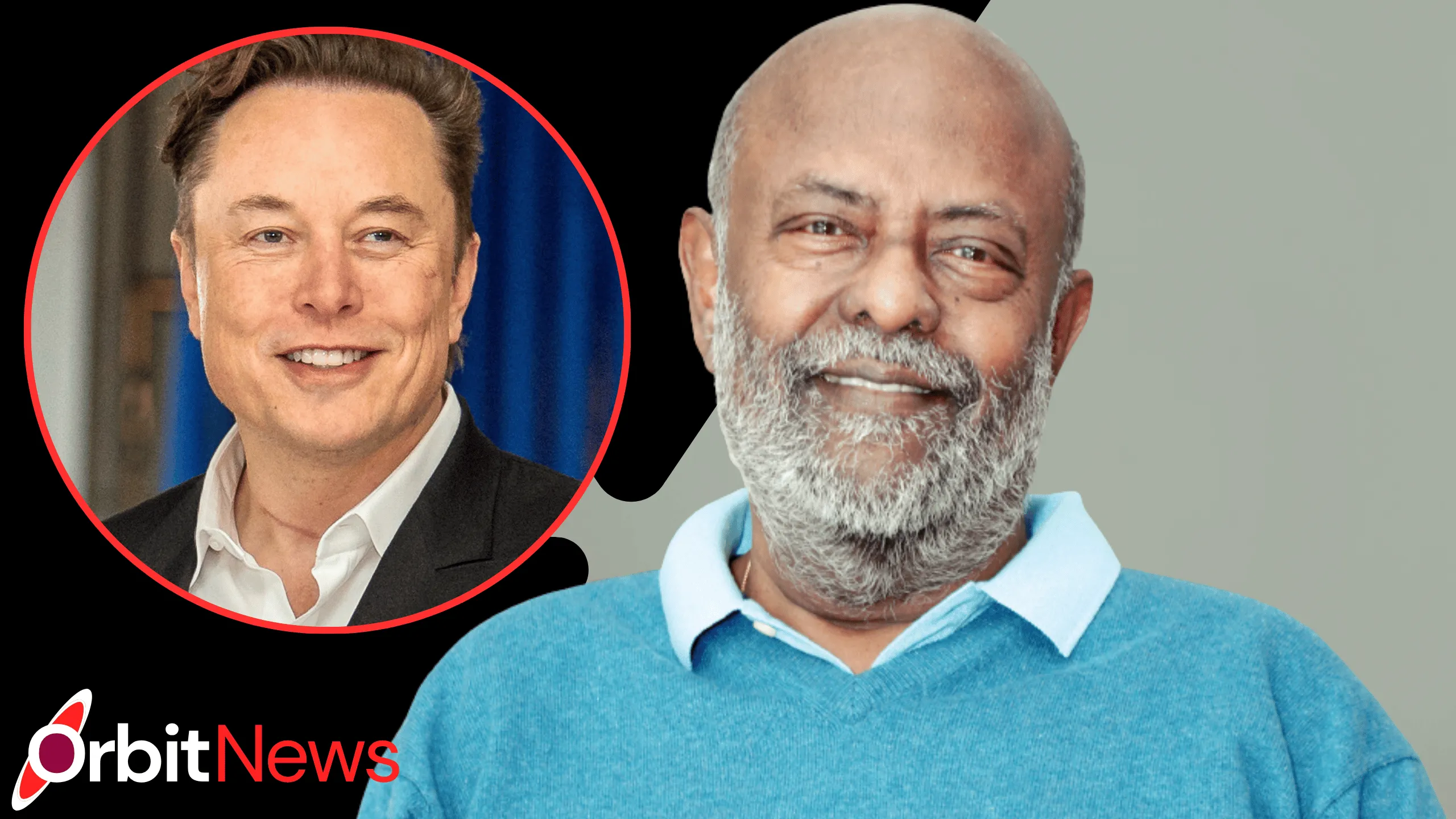
There is no verified public evidence of a direct business partnership, investment, family relationship, or personal association between Shiv Nadar and Elon Musk. They are connected mainly by the broader technology industry: Nadar built HCL into a global IT and engineering enterprise, while Musk built and leads companies centered on electric vehicles, space technology, artificial intelligence, infrastructure, and other advanced technologies.
The comparison is still interesting because both men became enormously influential technology entrepreneurs, but they did so in different countries, different eras, and through very different business models. Understanding those distinctions is more useful than assuming that searches for Shiv Nadar and Elon Musk point to a hidden partnership.
Who Is Shiv Nadar?
Shiv Nadar is an Indian technology entrepreneur, philanthropist, and the founder of HCL Group. He is currently identified by HCLTech as its Chairman Emeritus and Strategic Advisor to the Board, while also remaining the founder of the Shiv Nadar Foundation.
Nadar helped establish HCL in 1976 after recognizing the commercial potential of the emerging microprocessor industry. What began as a technology hardware business eventually developed into a much broader global IT organization covering software, engineering, digital services, cloud technology, cybersecurity, artificial intelligence, and enterprise transformation.
HCLTech describes itself as a roughly $14.8 billion global organization with more than 223,000 professionals operating across 60 countries. The company’s history makes Nadar an important figure in the development of India’s modern technology industry.
He stepped down as chairman of HCL Technologies in 2020, with his daughter Roshni Nadar Malhotra succeeding him as chairperson. Nadar nevertheless continues to be associated with HCLTech as founder, chairman emeritus, and strategic adviser.
Who Is Elon Musk?
Elon Musk is a technology entrepreneur whose businesses span electric vehicles, rockets, artificial intelligence, social media, brain-computer interfaces, and infrastructure.
Tesla’s official investor-relations biography identifies Musk as the company’s Technoking and chief executive officer, a position he has held since October 2008. He joined Tesla’s board in 2004. The same biography lists his involvement with SpaceX, Neuralink, The Boring Company, and earlier businesses including PayPal and Zip2.
Musk founded SpaceX in 2002 and has remained central to the company’s development of launch vehicles, spacecraft, satellite infrastructure, and space transportation technology.
His business empire therefore differs significantly from Nadar’s. HCL became primarily a technology services and engineering company serving enterprises around the world, while many of Musk’s companies build and operate their own products, vehicles, spacecraft, software platforms, and technology infrastructure.
Are Shiv Nadar and Elon Musk Directly Connected?
Based on publicly available information reviewed for this article, no documented direct relationship between Shiv Nadar and Elon Musk could be established.
There is no reliable evidence showing that:
- Shiv Nadar personally invested in one of Musk’s companies.
- Musk invested in HCL or the Shiv Nadar Foundation.
- They founded or operated a company together.
- Nadar serves on the board of Tesla, SpaceX, xAI, Neuralink, or another major Musk company.
- Musk serves on an HCL or Shiv Nadar Foundation board.
- They have announced a joint philanthropic initiative.
- They have a known family relationship.
Public biographies from HCLTech, the Shiv Nadar Foundation, and Tesla describe their respective careers without identifying a direct relationship between the two men.
This distinction matters because search-engine queries combining two famous business figures can sometimes create the impression that a formal relationship exists even when the names are simply being searched together.
Where Shiv Nadar and Elon Musk Do Overlap
Although there is no established personal partnership, their business worlds intersect at the level of major technology trends.
Technology and Engineering
Both men built businesses around major shifts in computing and engineering.
Nadar’s early conviction was that the microprocessor would fundamentally change technology. HCL subsequently moved from computer hardware into software services, engineering, digital transformation, and research-intensive technology services.
Musk’s businesses have similarly targeted areas undergoing significant technological change, including electric vehicles through Tesla, reusable rocket systems through SpaceX, artificial intelligence, robotics, neural interfaces, and infrastructure.
The similarity lies in identifying technologies with the potential to reshape industries. The underlying business models, however, are very different.
Automotive Technology
HCLTech also operates extensively in the automotive technology sector, giving it an indirect industry-level connection to the technological transformation associated with Tesla.
The company provides services relating to electric vehicles, software-defined vehicles, advanced driver-assistance systems, connected vehicles, batteries, powertrains, cybersecurity, cloud systems, infotainment, and automotive engineering. HCLTech says its automotive operations work with nine of the world’s top 10 automotive manufacturers and eight of the top 10 suppliers, although its public automotive page does not identify those clients individually.
HCLTech itself has discussed Tesla as an example of the shift toward vertically integrated and software-driven vehicle companies. In a 2023 article discussing electric and software-defined automobiles, an HCLTech executive cited Tesla as one of the newer companies challenging traditional automotive manufacturers.
That reference demonstrates an industry connection, not evidence that HCLTech or Shiv Nadar has a direct commercial partnership with Musk.
Shiv Nadar vs. Elon Musk: Their Business Models
| Area | Shiv Nadar | Elon Musk |
|---|---|---|
| Main historical business | HCL | Tesla and SpaceX |
| Core model | Enterprise technology, engineering and IT services | Technology products, manufacturing and infrastructure |
| Major industries | IT services, engineering, cloud, AI, cybersecurity | EVs, aerospace, AI, robotics, infrastructure |
| Major company founded | HCL | SpaceX |
| Current HCL/Tesla role | Chairman Emeritus and Strategic Advisor at HCLTech | CEO of Tesla |
| Major philanthropic focus | Education and institution building | No equivalent foundation central to his public business identity |
| Geographic business origins | India | United States |
| Direct relationship between them | No verified relationship identified | No verified relationship identified |
The table illustrates why comparing them purely as technology billionaires can hide significant differences.
Nadar built much of his fortune through enterprise technology and services. Musk’s wealth is tied heavily to ownership stakes in companies such as Tesla and SpaceX.
Their Approaches to Building Technology Companies
Shiv Nadar: Building a Long-Lived Institution
Nadar’s career is closely associated with institutional development.
HCL began during the early microcomputer era and survived multiple transformations in the technology industry. It shifted from hardware toward software and global IT services, ultimately developing substantial engineering and research capabilities.
HCLTech says Nadar’s emphasis on engineering and research helped create what became one of the company’s most important technology capabilities.
His later career increasingly focused on education and philanthropy rather than direct operational control of HCLTech.
Elon Musk: Building Companies Around Difficult Engineering Problems
Musk’s strategy has generally involved companies targeting technically difficult industries where software, hardware, manufacturing, and engineering have to operate together.
Tesla combines automobiles, battery systems, software, charging infrastructure, energy products, AI, and manufacturing.
SpaceX combines rocket design, engines, manufacturing, launch services, spacecraft, satellite communications, and reusable launch systems.
Tesla’s corporate biography also identifies Musk as a founder of Neuralink and The Boring Company, further reflecting his interest in engineering-heavy businesses.
Their Different Roles in the AI and Engineering Era
One useful way to understand Shiv Nadar and Elon Musk is to look at opposite sides of today’s technology economy.
HCLTech increasingly supplies engineering, software, cloud, AI, cybersecurity, semiconductor, and digital-transformation expertise to companies building complex products and services.
For example, HCLTech says it has supported more than 400 automotive programs and maintains a global automotive semiconductor engineering workforce exceeding 7,000 people.
Musk’s companies generally sit closer to the product and platform side of that ecosystem. They develop vehicles, rockets, satellites, AI systems, infrastructure, and related technologies themselves.
That means Nadar’s corporate legacy is strongly connected to the global technology-services layer, while Musk’s businesses are primarily associated with developing and owning technology platforms and physical products.
Also Read: Donald Trump and Elon Musk
Shiv Nadar’s Philanthropy Sets Him Apart
One of the clearest differences between the two entrepreneurs is the central role philanthropy plays in Nadar’s public legacy.
He established the Shiv Nadar Foundation in 1994, focusing largely on education, leadership development, research, and institution building.
The foundation says it has invested approximately $1.85 billion across its institutions and initiatives and has directly reached tens of thousands of students and alumni. Its institutions include education initiatives ranging from schools and rural leadership programs to universities and research-focused organizations.
The foundation describes its philosophy as “creative philanthropy,” meaning it emphasizes building institutions intended to produce long-term social impact rather than focusing only on short-term interventions.
This has become an important part of Nadar’s legacy alongside HCL.
Shiv Nadar and Elon Musk Net Worth Comparison
Both men rank among the world’s wealthiest technology entrepreneurs, but their fortunes are dramatically different in scale.
Forbes listed Shiv Nadar’s real-time net worth at approximately $28.2 billion on September 16, 2026. Because his wealth is connected largely to listed holdings and other investments, the figure changes with market prices.
Musk’s fortune is substantially larger and especially volatile because of the value of his major corporate holdings. Forbes estimated his real-time wealth at approximately $886.4 billion on September 15, 2026. Forbes’ September 2026 annual ranking separately valued him at about $908 billion, illustrating how quickly billionaire estimates can change depending on the valuation date and methodology.
Forbes reported that Musk briefly crossed the trillion-dollar threshold earlier in 2026 before subsequent valuation changes reduced his estimated fortune.
These figures should therefore be treated as dated estimates rather than fixed personal bank balances.
Why People Search for Shiv Nadar and Elon Musk Together
There are several reasonable explanations for the combined search term.
Both are internationally recognized technology entrepreneurs and billionaires. Both became associated with technological disruption, although during different generations of the computer industry.
There is also significant overlap between HCLTech’s current areas of expertise and industries central to Musk’s companies, particularly AI, automotive software, electric vehicles, digital engineering, semiconductors, cloud infrastructure, and connected systems.
But technological overlap should not be confused with a personal or corporate relationship.
As of September 2026, publicly available authoritative sources do not establish a significant direct partnership between the two men.
What Shiv Nadar and Elon Musk Have in Common
Despite their differences, several broad similarities stand out.
Both built careers around technological transitions rather than remaining in mature, conventional industries. Both have placed significant emphasis on engineering and innovation. Both also created organizations that expanded far beyond the products or services with which they initially became associated.
Nadar’s journey began during the rise of microprocessors and personal computing. Musk’s largest businesses developed during the expansion of internet services, commercial electric vehicles, reusable spaceflight, artificial intelligence, and advanced automation.
Their careers therefore represent two different generations of technology entrepreneurship.
Key Differences Between Shiv Nadar and Elon Musk
The major difference is not simply their wealth.
Nadar’s business legacy centers on creating a large enterprise technology organization that provides services and engineering expertise to other companies. His later work has increasingly emphasized education and philanthropy.
Musk remains deeply involved in operating companies that build products and infrastructure, particularly Tesla and SpaceX. His public profile is therefore much more closely tied to ongoing product development, corporate strategy, technology launches, and operating decisions.
The two entrepreneurs also emerged from very different economic environments. HCL was founded during an early period in India’s domestic computing industry, while many of Musk’s major ventures developed within the U.S. venture-capital and technology ecosystem decades later.
Frequently Asked Questions
Are Shiv Nadar and Elon Musk business partners?
No verified evidence shows that Shiv Nadar and Elon Musk are business partners. Their companies operate in some overlapping technology sectors, but publicly available authoritative sources do not establish a direct partnership between the two individuals.
Has Shiv Nadar invested in Elon Musk’s companies?
No reliable public evidence reviewed for this article confirms that Shiv Nadar personally invested in Tesla, SpaceX, xAI, Neuralink, or another Musk-controlled company. Private investments can sometimes remain undisclosed, so the claim should not be made without documentation.
Does HCLTech work with Tesla?
HCLTech provides technology and engineering services to major automotive companies and says nine of the world’s top 10 automotive OEMs are clients. However, the company does not name all of those customers on its public automotive page, so that statement alone cannot be used to verify Tesla as an HCLTech client.
Who is richer, Shiv Nadar or Elon Musk?
Elon Musk’s estimated fortune is substantially larger. Forbes estimated Musk’s wealth at about $886.4 billion on September 15, 2026, while its September 16 estimate for Shiv Nadar was approximately $28.2 billion. Billionaire wealth estimates fluctuate with company valuations and market prices.
What is Shiv Nadar best known for?
Shiv Nadar is best known for founding HCL, helping build one of India’s major global technology enterprises, and establishing the Shiv Nadar Foundation. His foundation concentrates heavily on education, research, leadership development, and institution building.
What connects Shiv Nadar and Elon Musk?
Their strongest verified connection is thematic rather than personal. Both are major technology entrepreneurs, while HCLTech operates in several industries relevant to Musk’s companies, including automotive software, electric mobility, AI, engineering, semiconductors, and cloud technology. No significant direct relationship between Nadar and Musk has been publicly established.
Also Read: Dave Chappelle and Elon Musk
