


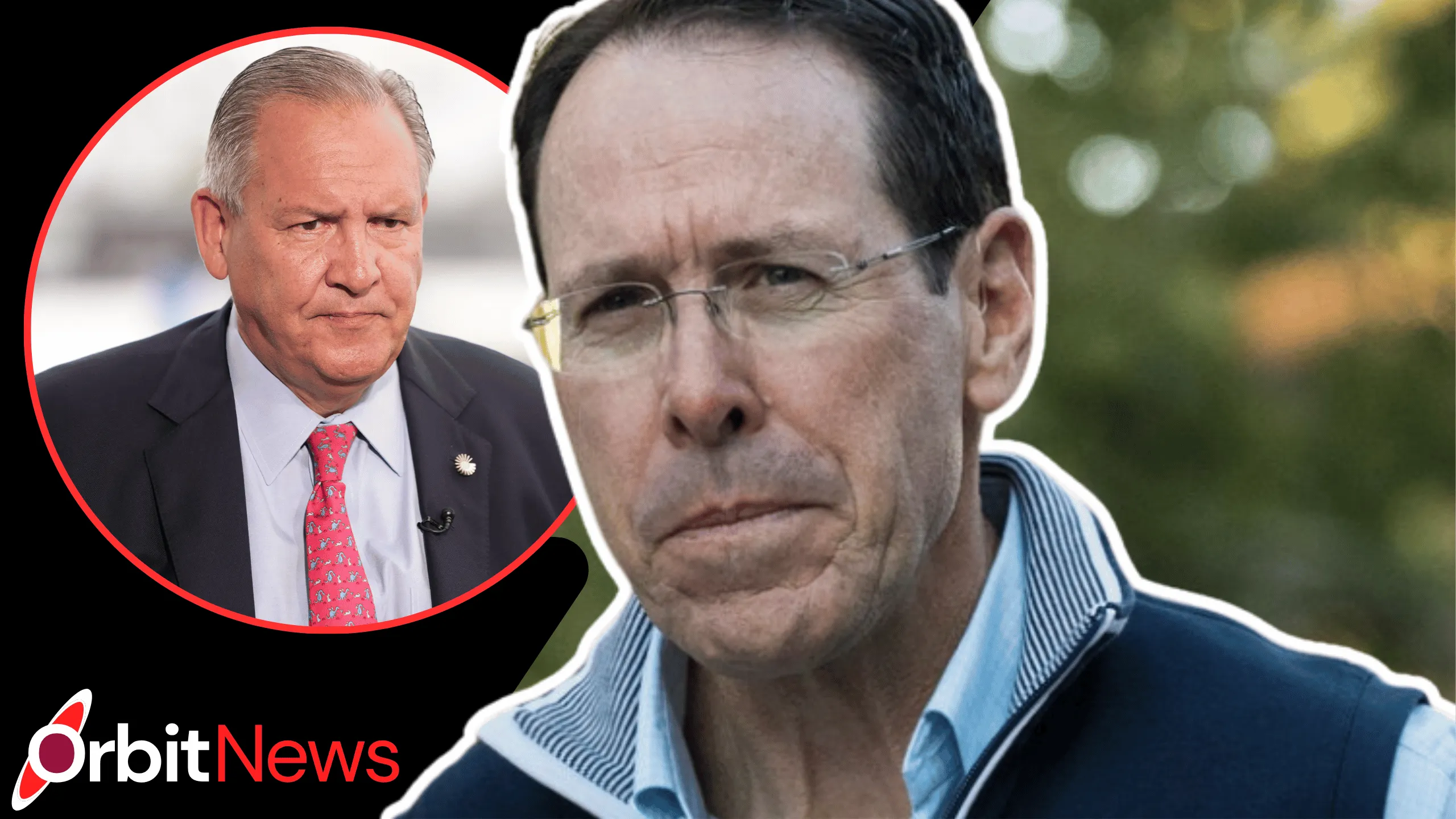
Randall Stephenson and Greg Hayes are veteran American corporate executives whose clearest documented connection is through Business Roundtable, where they served together on its board and policy leadership. Stephenson represented AT&T and chaired the Technology Committee, while Hayes represented United Technologies and chaired the Tax and Fiscal Policy Committee.
There is no well-documented evidence that the two men are relatives, longtime business partners, or former colleagues at the same corporation. Their connection is better understood as an overlap in senior U.S. corporate leadership, governance, and public-policy work.
Randall Stephenson and Greg Hayes at a Glance
| Detail | Randall Stephenson | Greg Hayes |
|---|---|---|
| Full name | Randall L. Stephenson | Gregory J. Hayes |
| Best known for | Former Chairman and CEO of AT&T | Former Chairman and CEO of United Technologies and RTX |
| Major industry | Telecommunications and media | Aerospace, defense and industrial technology |
| Key shared organization | Business Roundtable | Business Roundtable |
| BRT role in 2020 | Board member, Chair of Technology Committee | Board member, Chair of Tax and Fiscal Policy Committee |
| Current major board role in 2026 | Lead Independent Director, Walmart | Lead Independent Director, Phillips 66 |
| Other current work | Chair of Athletics and Special Advisor at University of Oklahoma | Director of Becton, Dickinson and Company |
Their careers followed different industrial paths, but both eventually became influential figures in corporate governance after spending decades managing large, highly regulated U.S. companies.
What Is the Connection Between Randall Stephenson and Greg Hayes?
The strongest verified connection between Randall Stephenson and Greg Hayes is their simultaneous service in Business Roundtable, the association of chief executives from major U.S. companies.
Business Roundtable’s 2019 leadership roster listed Stephenson, then AT&T’s chairman and CEO, as Chair of the Technology Committee. The same roster named Hayes, then chairman and CEO of United Technologies Corporation, as Chair of the Tax and Fiscal Policy Committee.
The overlap continued into 2020. Business Roundtable explicitly listed both men among the members of its 2020 Board of Directors, again identifying Stephenson with the Technology Committee and Hayes with the Tax and Fiscal Policy Committee.
That placed them within the same senior corporate-policy body at a time when U.S. chief executives were debating issues ranging from technology and taxation to regulation, workforce development, trade and corporate responsibility.
Their Business Roundtable Roles
The two executives brought very different areas of expertise to the organization.
Stephenson’s role naturally reflected AT&T’s position in telecommunications. His work with Business Roundtable included issues involving 5G, technology policy, innovation and digital infrastructure. In 2019, he publicly discussed the economic potential of 5G while serving as chair of the organization’s Technology Committee.
Hayes’ responsibilities focused more heavily on corporate taxation and fiscal policy. In September 2019, Business Roundtable identified him as chair of its Tax and Fiscal Policy Committee while discussing proposed changes to international taxation through the OECD.
Their overlap therefore does not appear to have been based on operating the same business. It came from representing large American corporations in a common governance and policy organization.
They Were Also Part of the Corporate-Purpose Debate
Another important point of overlap came in 2019, when Business Roundtable issued its revised Statement on the Purpose of a Corporation.
The statement, originally signed by 181 chief executives, argued that companies should create long-term value not only for shareholders but also for customers, employees, suppliers and communities.
Stephenson was among the executives associated with the statement while serving as AT&T’s chairman and CEO. Contemporary material identified him among the participating CEOs.
United Technologies’ 2020 proxy statement explicitly noted that Hayes had personally signed the Business Roundtable statement.
This does not mean Stephenson and Hayes jointly developed a separate corporate philosophy. It does show that both participated in the same broader CEO-led effort concerning corporate governance and stakeholder responsibilities.
Who Is Randall Stephenson?
Randall L. Stephenson spent almost four decades at AT&T and its predecessor organizations. He began his career with the company in 1982, became chief financial officer in 2001, chief operating officer in 2004 and chairman and CEO in 2007.
Stephenson remained CEO until July 2020, when John Stankey succeeded him. He then became executive chairman before retiring from AT&T in January 2021.
His years running AT&T included a period of major strategic expansion. Most notably, AT&T completed its acquisition of Time Warner in June 2018, bringing Warner Bros., HBO and Turner together with AT&T’s telecommunications and distribution businesses. Stephenson presented the transaction as part of AT&T’s strategy to combine premium content, direct consumer distribution and high-speed networks.
Stephenson also had considerable experience outside AT&T. He served on Boeing’s board from February 2016 until December 2017 and previously served on the board of Emerson Electric. Boeing originally recruited him in part for his experience overseeing a large and complex global company.
He also chaired Business Roundtable earlier in his career, from 2014 through 2015, giving him a longer history with the organization before his direct overlap with Hayes on its later board.
Who Is Greg Hayes?
Gregory J. Hayes built his career primarily within United Technologies Corporation and the businesses that ultimately became RTX.
RTX says Hayes spent nearly 21 years at United Technologies, working in senior positions involving finance, strategy and business development before becoming CEO in 2014 and chairman in 2016.
His tenure included several transactions that reshaped United Technologies. These included the sale of Sikorsky Aircraft in 2015, the acquisition of Rockwell Collins in 2018, and the 2020 separation of Carrier and Otis into independent companies.
Hayes then oversaw one of the most consequential changes in the company’s history. United Technologies’ remaining aerospace businesses combined with Raytheon Company in April 2020 to form what was initially called Raytheon Technologies, now RTX. Hayes became chief executive of the combined organization.
He eventually served as chairman and CEO of RTX before Christopher Calio became CEO in May 2024. Hayes moved into the executive-chairman role and stepped down from both that position and the RTX board on April 30, 2025. He then served as a special advisor to the CEO through January 2, 2026.
Also Read: Simone Biles and Greg Hayes
How Their Corporate Careers Compare
Although Stephenson and Hayes interacted within the same top-level business-policy community, their operating careers were substantially different.
Stephenson Focused on Communications and Media
Stephenson spent his executive career dealing with telecommunications networks, wireless services, broadband, media distribution, consumer technology and large-scale regulatory issues.
His tenure reflected the changing nature of the telecommunications industry, particularly the movement from traditional telephone services toward smartphones, broadband, streaming, content and 5G.
Hayes Focused on Aerospace and Industrial Transformation
Hayes came from a finance and industrial-management background. Much of his later career involved aerospace manufacturing, aircraft engines, avionics, defense technology and complicated corporate transactions.
Under Hayes, United Technologies moved away from its former conglomerate structure and concentrated more heavily on aerospace before combining with Raytheon.
The Common Ground Was Governance
Their greatest similarity is therefore not industry expertise. It is experience governing enormous, highly regulated companies.
Both dealt with acquisitions, capital allocation, government regulation, technological change, shareholders and long-term corporate strategy. Those backgrounds help explain why each later moved into prominent independent board positions.
Did Randall Stephenson and Greg Hayes Work at the Same Company?
No documented career history shows Stephenson and Hayes working for the same corporation.
Stephenson’s career was overwhelmingly tied to AT&T and its predecessor businesses. Hayes’ career was centered on United Technologies and later RTX.
They did, however, serve simultaneously on the Business Roundtable Board of Directors in 2020. That distinction matters because Business Roundtable is an executive association rather than an operating company.
Was There a Direct AT&T and United Technologies Partnership Between Them?
Publicly available records establish their Business Roundtable relationship far more clearly than any direct Stephenson-Hayes corporate transaction.
AT&T and United Technologies were major companies capable of having ordinary commercial relationships with numerous suppliers and customers, but such corporate interactions should not automatically be described as a personal partnership between their CEOs.
No major merger, joint venture or investment publicly identified with both Stephenson and Hayes has emerged as the central connection between them. Their shared Business Roundtable governance work is the more specific and verifiable link.
Where Is Randall Stephenson Now?
Stephenson remains active in governance rather than day-to-day telecommunications management.
As of 2026, he is Lead Independent Director of Walmart. Walmart’s 2026 proxy statement says he joined the board in 2021 and became its Lead Independent Director immediately following the company’s 2025 annual shareholders’ meeting. He was reelected to Walmart’s board in June 2026.
He is also involved with the University of Oklahoma. In January 2026, the university confirmed that Stephenson would continue as Chair of Athletics and Special Advisor to the OU President and Director of Athletics, a role he had held since 2024.
His current work therefore combines public-company governance with advisory responsibilities in college athletics.
Where Is Greg Hayes Now?
Hayes has similarly moved from full-time corporate management into board leadership.
Phillips 66 appointed Hayes Lead Independent Director in May 2026. He had served on the energy company’s board since 2022.
Hayes is also a director of Becton, Dickinson and Company, commonly known as BD. The medical-technology company appointed him to its board effective March 26, 2025, citing his experience in finance, strategy, mergers and acquisitions, corporate transformation and management of large global businesses.
By September 2026, describing Hayes as the current CEO or chairman of RTX would therefore be outdated. His executive-chairman tenure ended in April 2025, and his special-advisor period concluded in January 2026.
A Timeline of the Randall Stephenson and Greg Hayes Connection
| Period | Randall Stephenson | Greg Hayes | Relevance |
|---|---|---|---|
| 2014-2015 | Chairman of Business Roundtable | Senior UTC executive | Stephenson already held national corporate-policy leadership |
| 2019 | AT&T Chairman and CEO; BRT Technology Committee Chair | UTC Chairman and CEO; BRT Tax and Fiscal Policy Committee Chair | Both were part of Business Roundtable’s 2019 board leadership |
| 2019 | Participated in BRT corporate-purpose initiative | Signed BRT corporate-purpose statement | Shared involvement in broader corporate-governance debate |
| 2020 | BRT board member and Technology Committee Chair | BRT board member and Tax and Fiscal Policy Committee Chair | Clearest direct organizational overlap |
| 2020 | Transitioned from AT&T CEO to Executive Chairman | Became CEO of newly formed Raytheon Technologies | Both entered major leadership-transition periods |
| 2021 | Retired from AT&T; joined Walmart board | Continued leading Raytheon Technologies | Careers moved in different directions |
| 2025-2026 | Walmart Lead Independent Director; OU athletics advisor | Left RTX leadership; became Phillips 66 Lead Independent Director | Both now concentrate heavily on governance |
What Their Connection Actually Tells Us
The keyword Randall Stephenson and Greg Hayes can suggest a specific deal, friendship or corporate partnership, but the evidence points to something narrower and more concrete.
They belonged to the same small circle of CEOs shaping Business Roundtable policy during 2019 and 2020. Stephenson brought telecommunications and technology expertise, while Hayes brought aerospace, industrial, financial and tax-policy experience. Their professional paths intersected through corporate governance and national business-policy work rather than through running a company together.
Their careers have an interesting parallel today. Both have left the companies that made them widely known as CEOs, yet both continue to hold influential lead independent director positions at major public corporations, Stephenson at Walmart and Hayes at Phillips 66.
Frequently Asked Questions
Are Randall Stephenson and Greg Hayes related?
There is no credible public evidence establishing a family relationship between Randall Stephenson and Greg Hayes. Their documented connection is professional, particularly through Business Roundtable.
Did Randall Stephenson and Greg Hayes work together?
They did not work as executives at the same operating company, but they served together on the Business Roundtable Board of Directors in 2020. Stephenson chaired its Technology Committee and Hayes chaired its Tax and Fiscal Policy Committee.
What company did Randall Stephenson run?
Randall Stephenson was chairman and CEO of AT&T from 2007 until 2020. He subsequently served as executive chairman before retiring from the company in January 2021.
What company did Greg Hayes run?
Greg Hayes led United Technologies Corporation and later became CEO of the company created by the merger of United Technologies’ aerospace businesses with Raytheon. That business became RTX Corporation.
What is Randall Stephenson doing in 2026?
Stephenson is Lead Independent Director of Walmart and serves as Chair of Athletics and Special Advisor to the University of Oklahoma’s president and athletics leadership.
What is Greg Hayes doing in 2026?
Hayes is Lead Independent Director of Phillips 66 and serves on the board of Becton, Dickinson and Company. He is no longer chairman or CEO of RTX.
Also Read: Kendall Jenner and Greg Hayes
