


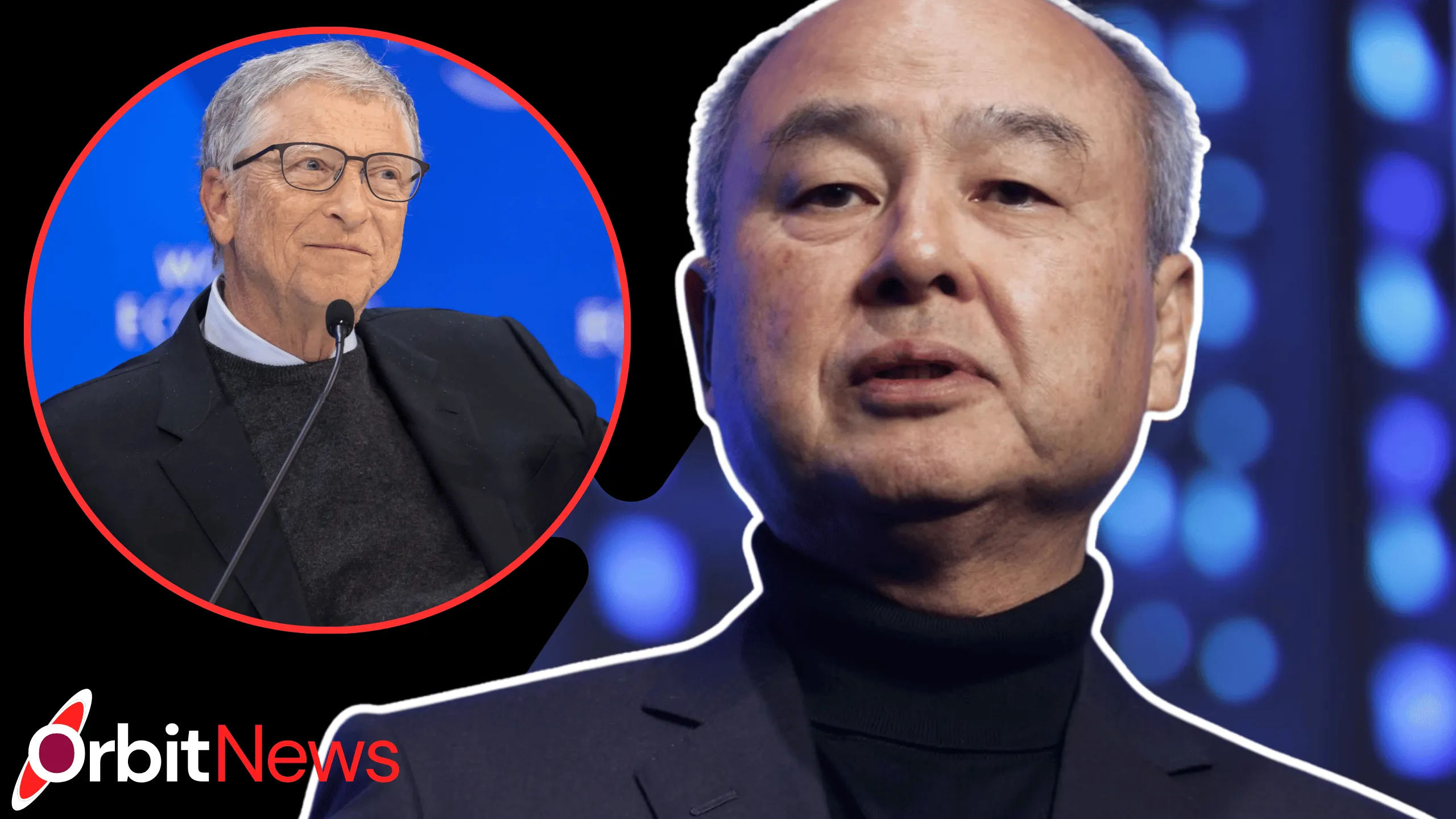
Masayoshi Son and Bill Gates have a longstanding business relationship dating back to the early personal computer industry, with later collaboration involving climate technology. One documented example is Son’s $100 million commitment to Breakthrough Energy, described by Gates in a 2024 interview with Diamond Online.
Their names also appear together in accounts of the dot-com boom, when Son reportedly briefly overtook Gates in estimated wealth. But their connection extends beyond billionaire rankings. It brings together two different paths through the technology industry: building software and financing businesses that could reshape markets.

How Are Masayoshi Son and Bill Gates Connected?
Gates has confirmed that he and Son knew each other during the early development of Japan’s personal computer industry. He also said they invested together in internet-related ventures and remained in contact about digital technology and climate change. These are documented professional ties, rather than a connection inferred simply from their wealth. See Gates’s account of their relationship.
The historical context helps explain the association. Gates co-founded Microsoft with Paul Allen in 1975, while Son founded SoftBank in 1981 as a software wholesaler. Their businesses occupied different parts of the expanding computer market: Microsoft developed software, while SoftBank initially helped distribute it. Sources include the Gates Foundation’s biography and TIME’s profile of Son.
That distinction remained important as their careers developed. Gates became closely identified with a global software company. Son increasingly became known for investing in, acquiring, and supporting technology businesses.
The $100 Million Breakthrough Energy Connection
According to Gates’s June 2024 interview, he approached Son during fundraising for Breakthrough Energy in 2015 and initially requested $50 million. Son instead committed $100 million. Gates also said Son supported a subsequent funding round. The amount and circumstances are Gates’s firsthand account; the interview does not disclose the full investment terms. Diamond Online’s interview is the source for this story.
Breakthrough Energy supports the development and adoption of technologies intended to reduce emissions. Its investment arm, Breakthrough Energy Ventures, finances companies working toward an emissions-free economy. That makes the collaboration a connection through climate innovation and investment, not evidence that Son gave Gates money for personal use. The organization’s investment role is explained in oneworld’s announcement of its fund with Breakthrough Energy Ventures.
It is also important to distinguish Breakthrough Energy from the Gates Foundation. Gates founded the former to support climate solutions, while the foundation pursues philanthropic goals involving health, poverty, and equity. Their association with the same founder does not make them interchangeable organizations. The official Gates biography explains these separate activities.
Also Read: John Oliver and Bill Gates
Why Their Business Models Are Different
Son and Gates both recognized opportunities in computing, but the organizations associated with them developed differently. Microsoft’s story centers on software products and services. SoftBank’s later identity centers heavily on ownership interests in other businesses and the allocation of investment capital.
| Comparison | Masayoshi Son | Bill Gates |
|---|---|---|
| Principal business association | Founder of SoftBank | Co-founder of Microsoft |
| Early business activity | Software distribution | Software development |
| Later emphasis | Technology investment and ownership | Philanthropy, alongside technology and climate work |
| Organizational measure of success | SoftBank emphasizes increasing net asset value | The Gates Foundation emphasizes improving lives and reducing inequity |
| Documented overlap | Support for Breakthrough Energy | Founder of Breakthrough Energy |
The comparison draws on SoftBank’s chairman’s message, the Gates Foundation biography, and the historical sources above.
SoftBank describes its primary financial objective as increasing net asset value, meaning the value of its equity holdings minus net interest-bearing debt. This helps explain why changes in the value of portfolio companies matter so much to the group. It also shows why SoftBank’s investment performance should not be confused with revenue from selling a single product.
Neither a company’s total valuation nor an investment fund’s assets represent money personally owned by its founder. That distinction matters when comparing headlines about Son’s investments with estimates of Gates’s wealth.
Was Masayoshi Son Richer Than Bill Gates?
Son reportedly overtook Gates briefly during the dot-com boom. In a February 2026 profile, TIME stated that Son became the world’s richest person for three days in February 2000. This should be understood as a historical estimate linked to stock-market valuations, rather than a measure of cash available to spend. TIME’s account supports the claim.
Contemporary coverage provides useful context. In March 2001, The Wall Street Journal reported that Son’s fortune had fallen from more than $70 billion to approximately $6 billion as technology shares collapsed. However, that report described earlier speculation about whether he would overtake Gates, rather than confirming the exact three-day ranking. See the Journal’s contemporary report.
The careful distinction is that Son’s extraordinary rise and subsequent losses are well documented, while the precise duration of his lead is a retrospective reported claim. It should not be presented as an independently audited financial fact.
A present-day wealth comparison would require estimates from the same provider on the same date. Combining an old figure for Son with a recent figure for Gates would produce a misleading result.
What Are Their Main Priorities Now?
Masayoshi Son’s focus on artificial intelligence
SoftBank’s official website identifies Son as its chairman and CEO. In his published strategy message, he places artificial superintelligence at the center of the group’s ambitions and identifies Arm as an important technological foundation. Sources are SoftBank’s corporate website and Son’s chairman’s message.
Artificial superintelligence generally refers to a proposed form of AI that would exceed human capabilities across a broad range of tasks. Son’s statements about its future arrival express his expectations and investment thesis. They should not be treated as an established scientific timetable.
His current emphasis continues the broader pattern of backing technologies he believes could transform entire industries. Whether those expectations produce strong financial returns remains a separate question from the ambition itself.
Bill Gates’s focus on philanthropy and innovation
Gates’s current official biography identifies him as chair and board member of the Gates Foundation. He left Microsoft’s day-to-day operations in 2008 and stepped down from its board in March 2020. Microsoft’s announcement said he would continue as a technology adviser at that time. See Microsoft’s board announcement.
In May 2025, Gates announced that he intended to give away virtually all his wealth through the foundation over the following 20 years. He set December 31, 2045, as its planned closing date and expected it to spend more than $200 billion during that period. That projected spending includes the foundation’s existing endowment and his future contributions; it is not simply a statement of his personal net worth. Gates’s announcement explains the distinction.
Their present roles therefore differ substantially. Son continues to lead a major technology investment group, while Gates’s principal institutional role is philanthropic.
Frequently Asked Questions
Are Masayoshi Son and Bill Gates business partners?
They have collaborated on investments, including Breakthrough Energy. Describing them as investment collaborators is supported by Gates’s account, but it does not mean they jointly own or manage Microsoft and SoftBank.
Did Masayoshi Son give Bill Gates $100 million?
Gates said Son committed $100 million to Breakthrough Energy. The account concerns funding for the initiative, not a personal gift to Gates.
Why is Masayoshi Son called Japan’s Bill Gates?
The nickname reflects Son’s prominence as a technology entrepreneur. It appeared in major news coverage by 1995.
Did Masayoshi Son become the world’s richest person?
TIME reported that he briefly held that position in February 2000. The specific three-day duration is a retrospective estimate associated with the dot-com boom.
Does Bill Gates still run Microsoft?
No. Gates left Microsoft’s daily operations in 2008 and its board in 2020. His official current biography identifies his role as chair of the Gates Foundation.
Also Read: Marilyn Monroe and Bill Gates
