


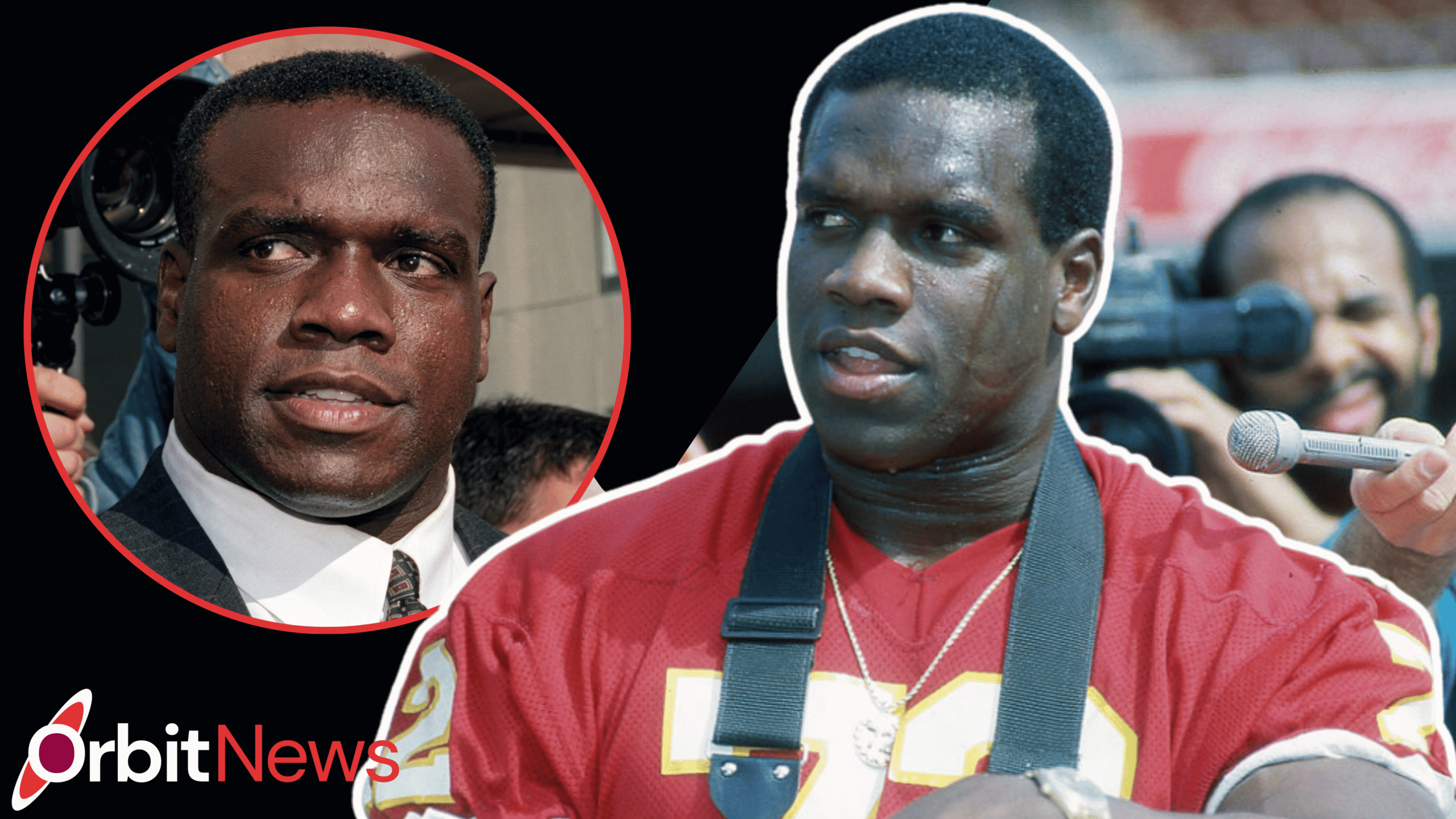
Dexter Manley’s net worth is not publicly verified. Recent third-party estimates generally place his wealth somewhere between $1 million and $3 million, but no authoritative financial disclosure, tax record, or verified statement from Manley establishes an exact figure. The safest conclusion is therefore a reported estimate rather than a confirmed net worth.
Dexter Keith Manley is a former American professional football defensive end best known for his dominant years with the Washington Redskins, now the Washington Commanders. Born February 2, 1959, in Houston, Texas, Manley became one of Washington’s most recognizable defensive players, won two Super Bowls, earned a Pro Bowl selection and first-team All-Pro honors in 1986, and remains the franchise’s all-time sack leader according to the Commanders.
Fast Facts
| Category | Verified information |
|---|---|
| Full Name | Dexter Keith Manley |
| Date of Birth | February 2, 1959 |
| Age | 67 as of September 7, 2026 |
| Birthplace | Houston, Texas, United States |
| Nationality | American |
| Profession | Former professional football player, defensive end |
| College | Oklahoma State University |
| NFL Draft | 1981, Round 5, Pick 119 |
| Primary NFL Team | Washington Redskins, 1981–1989 |
| Other NFL Teams | Phoenix/Arizona Cardinals, Tampa Bay Buccaneers |
| Height | 6 ft 3 in |
| Playing Weight | 253 lb |
| NFL Experience | 11 seasons |
| Career NFL Games | 143 |
| NFL Sacks | 97.5 official Washington/NFL statistical figure; Pro Football Reference lists 103.5 career sacks using its historical accounting |
| Pro Bowl | 1986 |
| First-Team All-Pro | 1986 |
| Super Bowl Titles | 2 |
| Washington Honor | Washington Commanders Ring of Fame |
| Nickname | “Secretary of Defense” |
| Estimated Net Worth | Not officially disclosed; third-party estimates commonly range from about $1 million to $3 million |
| Official Social Handles | No first-party verified social account could be reliably established |
The core biographical information is supported by NFL, Pro Football Reference, Oklahoma State and Washington sources.
Early Life, Family and Education
Dexter Manley grew up in Houston, Texas, and attended Jack Yates High School. He went on to Oklahoma State University, where he lettered in football from 1977 through 1980. Oklahoma State’s historical records confirm his four years with the Cowboys, while the school’s draft records show that Washington selected him 119th overall in the fifth round of the 1981 NFL Draft.
Manley’s path to professional football was closely connected to educational challenges that later became one of the most important parts of his life story. Contemporary Washington Post reporting documented that he had significant difficulty reading and that his learning disability affected him during childhood, high school and college. Rather than simply treating the issue as a footnote to his athletic career, Manley eventually made overcoming it a highly public part of his personal journey.
His family life was also established relatively early. A 1989 Washington Post profile reported that he married Stephayne before graduating high school in 1977 and that they had a newborn son, Derrick, at the time. Later reporting documented additional children and a second marriage, showing that Manley’s family circumstances changed over the years.
One of the better-documented family stories involves his daughter Dalis, whose unusual name became part of Washington football folklore because Manley was famously hostile toward the Dallas Cowboys. The Washington Post later reported that Dalis became a passionate Cowboys supporter despite her father’s intense Washington-Dallas rivalry, and that Manley and his daughter remained close despite their football loyalties.
Career Trajectory and Rise With Washington
Washington drafted Manley in 1981 despite his relatively low fifth-round selection. His rookie season immediately showed why the team had taken a chance on him. NFL statistics credit him with 16 games, nine starts and six sacks in 1981, followed by another strong campaign in 1982.
His rise was rapid. By 1983 he had become a major part of Washington’s defensive front, and in 1984, 1985 and 1986 he recorded 13.5, 15 and 18.5 sacks, respectively. The 1986 season was the statistical peak of his Washington career.
Washington’s own historical material describes Manley as the franchise’s career sack leader and notes that he made the 1986 Pro Bowl after registering 18.5 sacks. Pro-Football-Reference similarly lists 1986 as his first-team All-Pro season and shows how exceptional that campaign was relative to his career.
His major career achievements include:
- Two-time Super Bowl champion
- 1986 Pro Bowl selection
- 1986 first-team All-Pro
- 103.5 career sacks according to Pro-Football-Reference’s historical career accounting
- 97.5 official sacks in the NFL statistic set used by NFL.com and the Washington franchise
- Washington Commanders Ring of Fame member
The sack total deserves a brief explanation. NFL.com records 97.5 sacks for Manley, while Pro-Football-Reference lists 103.5. The difference comes from how historical sacks are accounted for, particularly the treatment of Manley’s 1981 season. For publication accuracy, the two numbers should not be presented as contradictory claims about different careers. They represent different statistical conventions.
The 1986 Breakout and His Peak Earnings
Manley’s financial situation changed dramatically as his production increased. His first NFL contract was modest by modern standards. A 1987 Washington Post report said his original deal included a $25,000 signing bonus and salaries of $40,000, $50,000 and $60,000. The same report said he worked as a Fairfax County deputy sheriff during the offseason, in part because he wanted another career and needed the income.
After establishing himself as a premier pass rusher, Manley fought for a much larger contract. In August 1986, the Washington Post reported that he signed a four-year contract worth nearly $1.6 million, with incentive clauses capable of adding more than $100,000 per year.
His compensation continued to rise. A January 1989 Washington Post salary survey listed Manley at $405,000 in base salary for 1988, making him one of Washington’s better-paid defensive players. Another contemporary report said his annual salary was around $500,000, with roughly another $500,000 in off-field earnings at that point.
These figures are useful when considering the origins of the modern Dexter Manley net worth question. They confirm that he earned substantial professional football income, but they do not tell us how much money he retained after taxes, expenses, investments, legal costs, family obligations and later periods away from football.
Dexter Manley Net Worth
There is no independently verified public figure for Dexter Manley’s current net worth as of September 2026.
Several modern websites publish estimates. One 2026 estimate puts Manley’s net worth at approximately $1 million to $2 million, while another recent estimate suggests a broader $1 million to $3 million range. Neither appears to be based on a publicly released financial statement, audited portfolio, court-certified personal balance sheet or direct disclosure from Manley. Those numbers should therefore be treated as unverified estimates, not established facts.
A useful way to understand the financial picture is to separate documented earnings from speculation.
| Financial factor | What is publicly documented |
|---|---|
| Early NFL contract | $25,000 signing bonus; $40,000, $50,000 and $60,000 salaries |
| 1986 contract | Nearly $1.6 million over four years |
| 1988 salary reporting | About $405,000 base salary |
| Contemporary earnings estimates | Around $500,000 NFL salary plus similar off-field earnings in one 1990 report |
| Current investments | Not publicly verified |
| Current real estate holdings | Not publicly verified |
| Current endorsements | No reliable public valuation |
| Current net worth | Not officially disclosed |
| Third-party 2026 estimates | Roughly $1 million–$3 million, unverified |
The documented numbers demonstrate that Manley earned millions of dollars across his playing career and other activities, but career earnings and net worth are not the same thing. A player’s lifetime gross income can be substantially reduced by taxation, management costs, family expenses, debt, legal expenses, periods without employment and other financial obligations.
Historical Net Worth Estimates
A year-by-year net worth table would be misleading because there are no reliable public records establishing Manley’s personal wealth for each year. Claims assigning exact figures to 1985, 1990, 1995, 2005, 2020 or 2026 are generally based on estimation rather than disclosed financial statements.
| Period | Verified financial position |
|---|---|
| Early 1980s | Relatively modest NFL salary and signing bonus documented |
| Mid-1980s | Rapid income growth after becoming an elite pass rusher |
| 1986–1989 | Major NFL contract and substantially higher compensation documented |
| 1990s | Income disrupted by football suspensions, legal problems and incarceration |
| 2000s | Public reports show work and rehabilitation efforts, but no verified net-worth figure |
| 2020s | Continued public connection with Washington football and community-facing work |
| 2026 | Exact wealth remains undisclosed; third-party estimates roughly $1M–$3M, unverified |
That distinction is important for anyone searching specifically for Dexter Manley net worth. Publishing a single precise number such as $2 million or $5 million without qualification would create a level of certainty that the available evidence does not support.
How Addiction and Legal Problems Affected His Finances
Manley’s financial story cannot be separated from the serious personal problems that interrupted his football career. During the 1980s and early 1990s, he publicly struggled with alcohol and drug addiction, went through rehabilitation and faced multiple suspensions under the NFL’s substance-abuse policy. The Washington Post reported that he entered Hazelden in 1987 for treatment of alcohol abuse, while later reports documented his repeated drug-related suspensions.
In December 1991, Manley retired from the Tampa Bay Buccaneers after failing another league drug test. Contemporary coverage reported that it was his fourth strike under the NFL’s policy at that time, ending his professional football career.
The financial consequences were considerable. The Washington Post reported in 1990 that Manley was earning about $500,000 from football and a similar amount away from football, while also noting that his suspension meant a loss of football income. Those numbers illustrate how sharply his earning power could change when he was unable to play.
Later reporting documented incarceration and additional struggles. A 2005 Washington Post profile described how Manley worked to rebuild his life after prison and eventually took a community-facing position with Second Genesis, where his public profile was used in fundraising and outreach.
Personal Life, Marriage and Children
Manley’s personal life has been documented unevenly over the decades, so it is important not to treat every online biography as current.
His first marriage was to Stephayne, whom the Washington Post reported he married in 1977. Later reporting identified Lydia Manley as his wife during his post-football life. A 2006 Washington Post report described Lydia as being with him during recovery from major brain surgery.
His children have also appeared in major newspaper reporting. The Washington Post identified sons including Derrick/Derek and a daughter, Dalis, and later described Manley as having three children. Because different contemporary reports spell or reference family names differently, it is safer to rely on the original reporting rather than repeating every online family-tree claim.
Manley’s relationship status should therefore be described carefully. He was married to Lydia Manley during documented periods of his later life, but there is not enough recent first-party evidence to confidently state his exact present marital status in 2026.
Education, Literacy and Overcoming Adversity
One of the most significant parts of Manley’s biography has little to do with football statistics.
For years, Manley struggled with reading because of a learning disability. His educational difficulties were serious enough to become public knowledge, and in 1989 he testified before a U.S. Senate subcommittee dealing with adult illiteracy. The Washington Post’s detailed reporting on his education described his years of difficulty as well as the efforts he later made to improve his reading skills.
The Washington Commanders later highlighted this achievement as one of Manley’s proudest personal accomplishments, specifically noting his success in learning to read and overcoming a lifelong learning disability.
That part of his story has become central to his legacy. His football career gave him fame, but his willingness to publicly discuss addiction, literacy and recovery gave his post-football life a very different dimension.
Brain Surgery and Later Life
In June 2006, Manley underwent lengthy brain surgery at Georgetown University Hospital to remove a colloid cyst. The Washington Post reported that the operation lasted approximately 11 hours and that he experienced some short-term memory loss afterward. His wife Lydia and children were part of the emotional story surrounding the surgery.
The surgery became another chapter in a life marked by unusually public adversity. Manley’s health, recovery and later community work were frequently discussed alongside his efforts to maintain sobriety and rebuild his personal reputation.
His post-football identity has increasingly centered on resilience rather than simply his old playing statistics.

Legacy With Washington
Manley’s connection with Washington has lasted far beyond his final NFL game.
The Commanders’ official history lists him among the franchise’s greatest figures and identifies him as a defensive end from 1981 through 1989. The organization credits him with being its career sack leader and emphasizes both his 1986 Pro Bowl season and his role in Washington’s championship era.
He is also a member of the Washington Commanders Ring of Fame, a distinction confirmed by both the Commanders’ official Ring of Fame archive and the Pro Football Hall of Fame’s Washington team history.
His greatest football achievements include:
| Achievement | Year/Period |
|---|---|
| NFL debut | 1981 |
| Washington Redskins | 1981–1989 |
| First major double-digit sack season | 1984 |
| 15-sack season | 1985 |
| 18.5-sack career peak | 1986 |
| Pro Bowl | 1986 |
| First-team All-Pro | 1986 |
| Super Bowl champion | XVII and XXII |
| Washington Ring of Fame | Yes |
| NFL final season | 1991 |
What Is Dexter Manley Doing Today?
Although he retired from the NFL decades ago, Manley has remained connected to Washington football and the wider sports community.
A recent official Washington Commanders program featuring Manley describes him as a franchise legend and includes him discussing his historic career, lessons learned and overcoming a lifetime of adversity to inspire the next generation. That recent appearance demonstrates that his public role remains tied to both Washington football and his broader personal story.
His modern relevance therefore comes less from active football and more from his status as a respected franchise figure whose life story includes elite sports performance, addiction recovery, educational challenges and resilience.
Is Dexter Manley in the Pro Football Hall of Fame?
No. Dexter Manley has not been elected to the Pro Football Hall of Fame. Pro-Football-Reference explicitly lists him as not being a Hall of Fame inductee, although he is recognized in Washington’s Ring of Fame and remains one of the franchise’s most notable defensive players.
How Many Sacks Did Dexter Manley Have?
The answer depends on the statistical source. NFL.com lists 97.5 sacks, while Pro-Football-Reference lists 103.5 career sacks under its historical statistical accounting. Washington’s own historical material has also used the 97.5 figure for his franchise career.
How Many Super Bowls Did Dexter Manley Win?
Dexter Manley was part of two Washington championship teams, winning Super Bowl XVII and Super Bowl XXII. Pro-Football-Reference lists him as a two-time Super Bowl champion, while Washington’s franchise history recognizes his role in the team’s championship era.
What Was Dexter Manley’s Highest Salary?
Contemporary reporting shows his compensation rising sharply during his best years. A 1986 Washington Post report said he signed a four-year deal worth nearly $1.6 million, while a 1990 report put his Redskins salary at around $500,000 annually.
What Is Dexter Manley’s Net Worth in 2026?
There is no verified official net-worth figure for Dexter Manley in 2026. Current online estimates generally cluster around $1 million to $3 million, but these figures are based on third-party calculations rather than a publicly disclosed financial statement. For that reason, $1 million–$3 million should be treated as an estimated range, not a confirmed fortune.
Is Dexter Manley Still Married?
Historical reporting confirms marriages to Stephayne Manley earlier in his life and Lydia Manley during his later years. However, recent authoritative first-party reporting does not provide enough evidence to establish his exact marital status as of September 2026, so claiming a current status with certainty would go beyond the available evidence.
Final Perspective on Dexter Manley’s Wealth and Legacy
Dexter Manley’s financial story is much less straightforward than many online celebrity-net-worth pages suggest. He earned substantial money during an NFL career that included major contracts, elite sack production and two Super Bowl championships, but later career interruptions and serious personal difficulties make it impossible to reconstruct his present wealth from salary figures alone.
The strongest evidence supports a different conclusion from a simple dollar figure. Manley’s most firmly established legacy is as one of Washington’s greatest pass rushers, a two-time Super Bowl champion, a Ring of Fame member and a public figure whose later life became a story of recovery and resilience. His exact 2026 net worth remains private, and any precise figure should be labeled an estimate rather than presented as fact.
Also Read: Raymond Arroyo Net Worth, Biography, Career & Family

1 Comment
Pingback: Damon Darling Net Worth, Biography, Career & Personal Life in 2026